Garden & Landscape Sculptures: 15 Ideas for Estates in India

Best Sculptures for Gardens: 15 Ideas That Transform Outdoor Spaces
By Abhinav Goyal, Founder — FormForge Studio | Updated April 2026
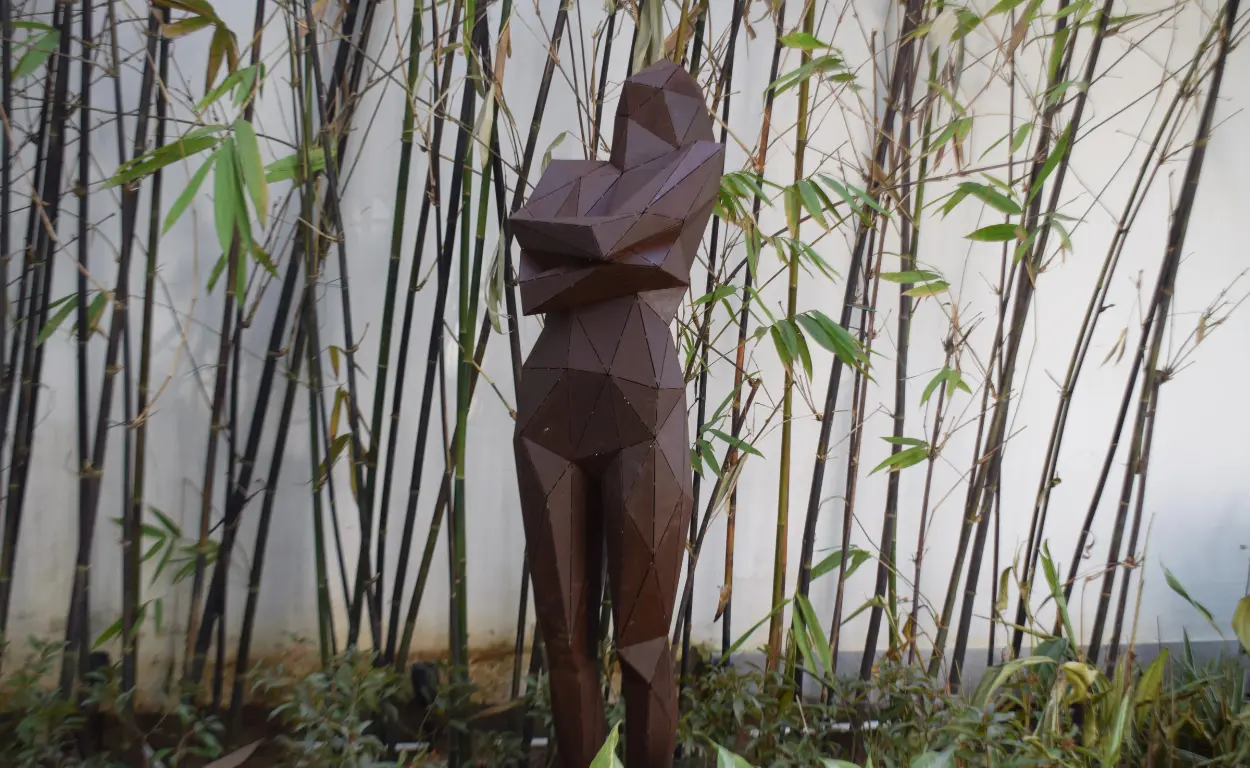
Planning to add a sculpture to your garden? Whether you have a sprawling villa courtyard, a compact urban terrace, or a commercial landscape, a commissioned garden and landscape sculpture can anchor the space. This guide covers 15 approaches by style, material, and setting.
Why Garden Sculptures Work
A garden without a focal point is just landscaping. A well-placed sculpture gives the eye somewhere to land — it creates a sense of arrival, marks a transition between zones, or anchors a sightline from inside the home. Unlike furniture or planters, a sculpture doesn't serve a function. It exists purely to elevate the space. That's what makes it powerful.
The best garden sculptures don't compete with nature — they respond to it. The material weathers alongside the plants. The form catches light differently through the seasons. The scale relates to the trees, the walls, the sky.
15 Garden Sculpture Ideas by Style and Material
1. Abstract Corten Steel Forms
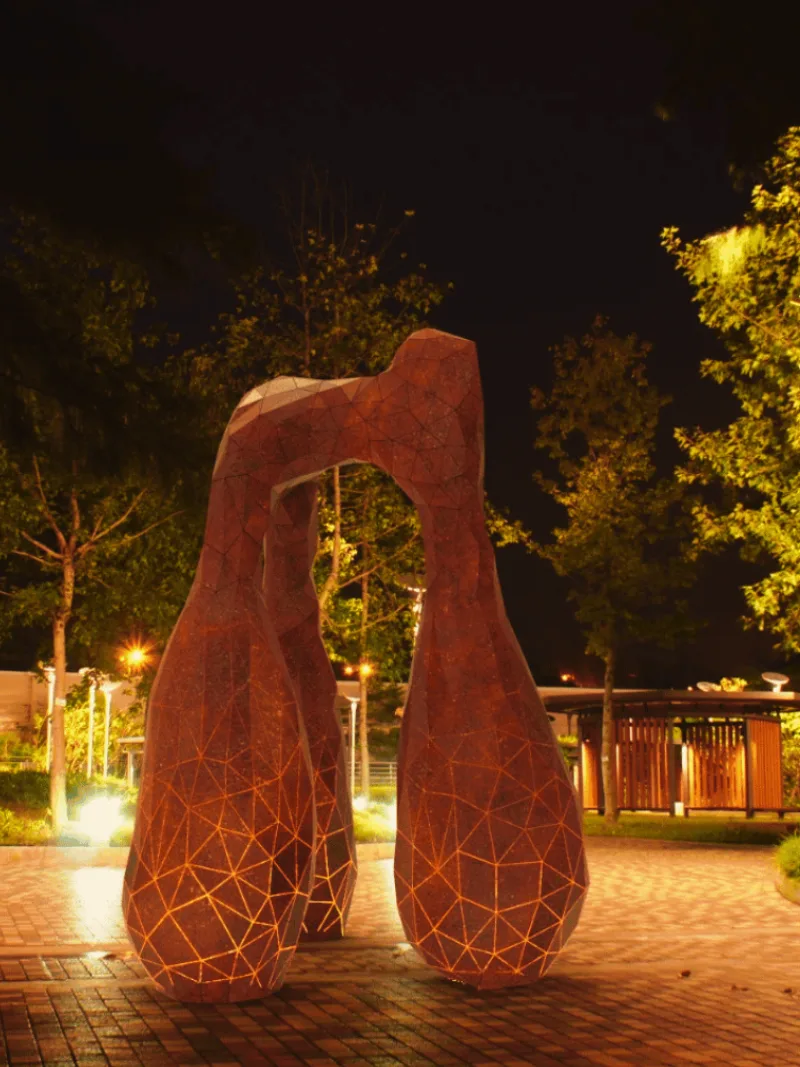
Corten steel is the most popular material for contemporary garden sculpture — and for good reason. It develops a warm, rust-coloured patina that deepens over years, blending naturally with soil, stone, and foliage. Unlike painted metal, corten never peels or fades. It ages with the garden.
Abstract corten forms work especially well in minimalist landscapes, Japanese-inspired gardens, and modern villa courtyards. The earthy tones complement green foliage, grey stone, and timber decking without visual competition.
2. Mirror-Polished Stainless Steel Sculptures
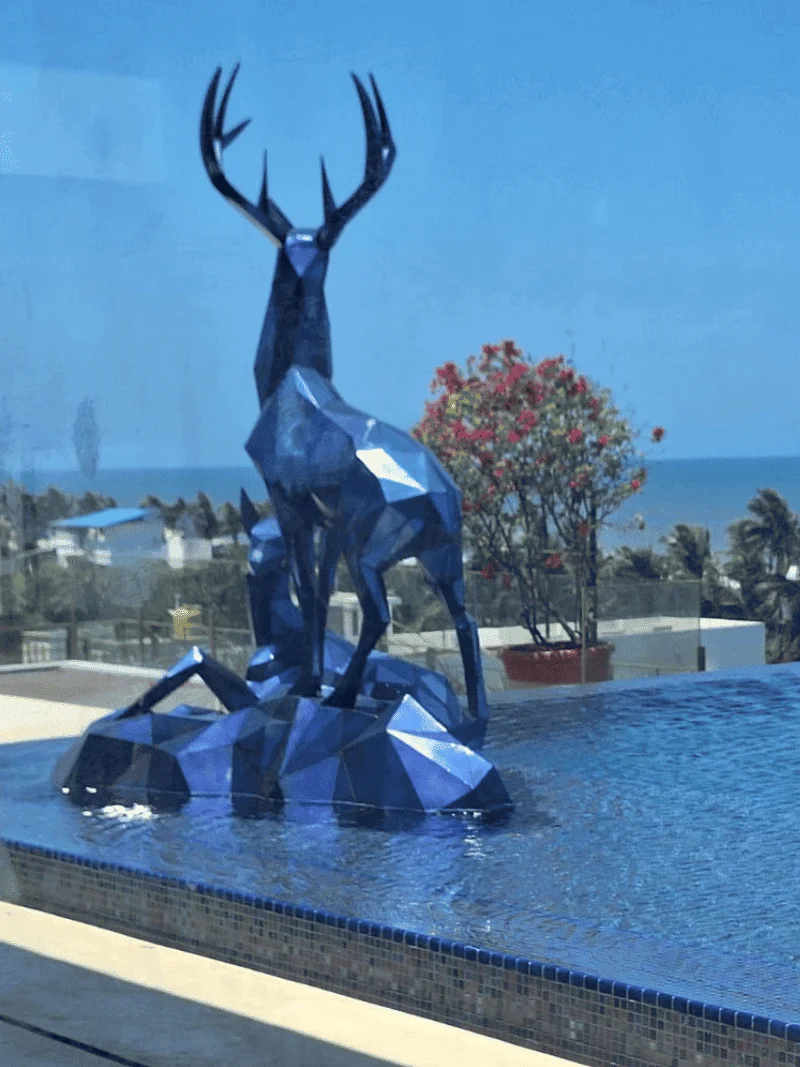
Mirror-polished stainless steel does something no other material can — it disappears and reappears depending on the angle. A polished steel form in a garden reflects the sky, the trees, the changing light. It becomes a living element that shifts with the time of day and season.
These sculptures create a striking contrast against natural greenery. The ultra-modern finish against organic plantings produces a tension that makes both elements more interesting.
3. Geometric and Faceted Metal Sculptures
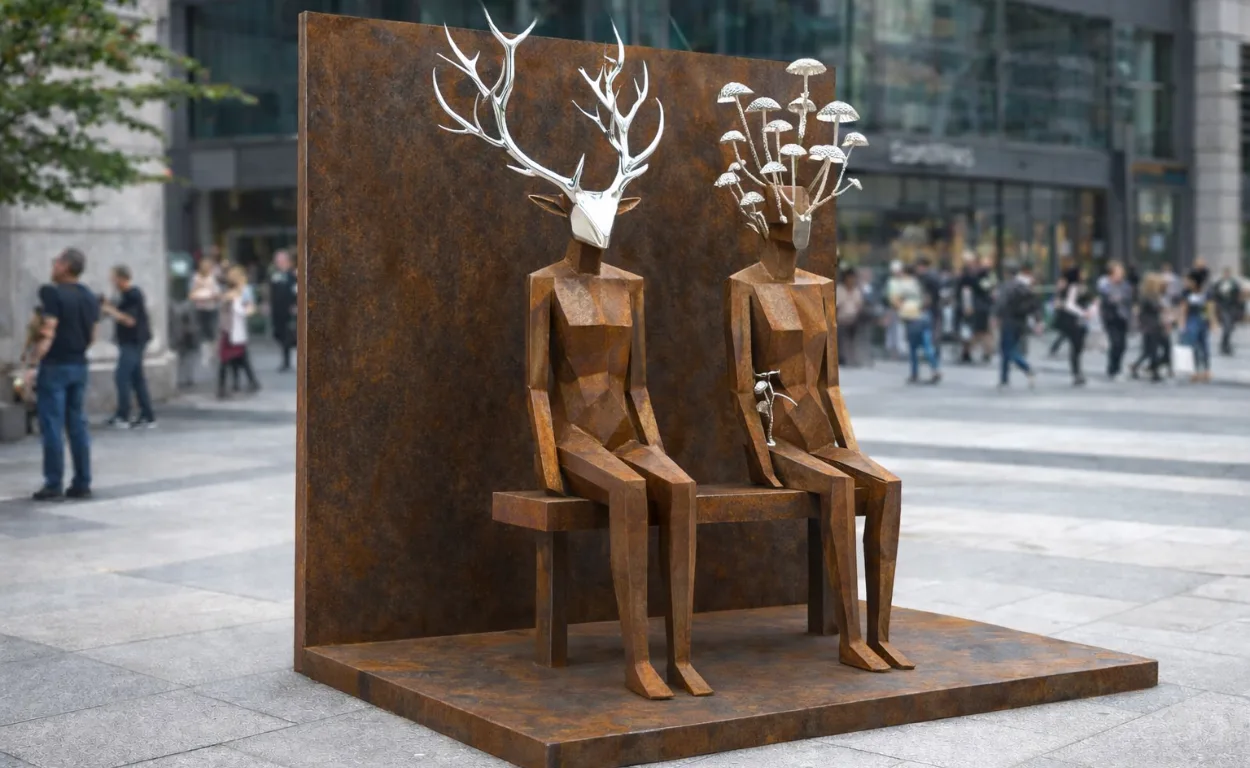
Faceted sculptures — built from flat planes welded together to form angular, crystalline shapes — bring an architectural quality to garden spaces. These pieces look like they've been carved from a single block of metal, with sharp edges catching sunlight and casting dramatic shadows.
Geometric sculptures are particularly effective when placed against soft, organic planting. The contrast between rigid metal geometry and flowing grasses or rounded shrubs creates visual energy.
4. Organic and Flowing Forms

Not every garden sculpture needs hard edges. Organic forms — curves inspired by wind, water, growth patterns, and natural movement — bring a sense of fluidity to outdoor spaces. These pieces often reference natural phenomena without literally depicting them.
A sweeping stainless steel curve rising from a bed of ornamental grasses. A twisted corten form emerging from ground cover. These sculptures feel like they belong in the landscape because they speak the same visual language as the plants around them.
5. Kinetic Wind Sculptures

Kinetic sculptures move with the wind — spinning, rocking, or pivoting on bearings. They add a fourth dimension to the garden: time. A kinetic piece is never the same twice. It responds to weather, creating gentle movement on calm days and dramatic motion in strong winds.
These work best in open areas where wind is consistent — hilltops, coastal gardens, open lawns, and rooftop terraces.
6. Monumental Entrance Sculptures
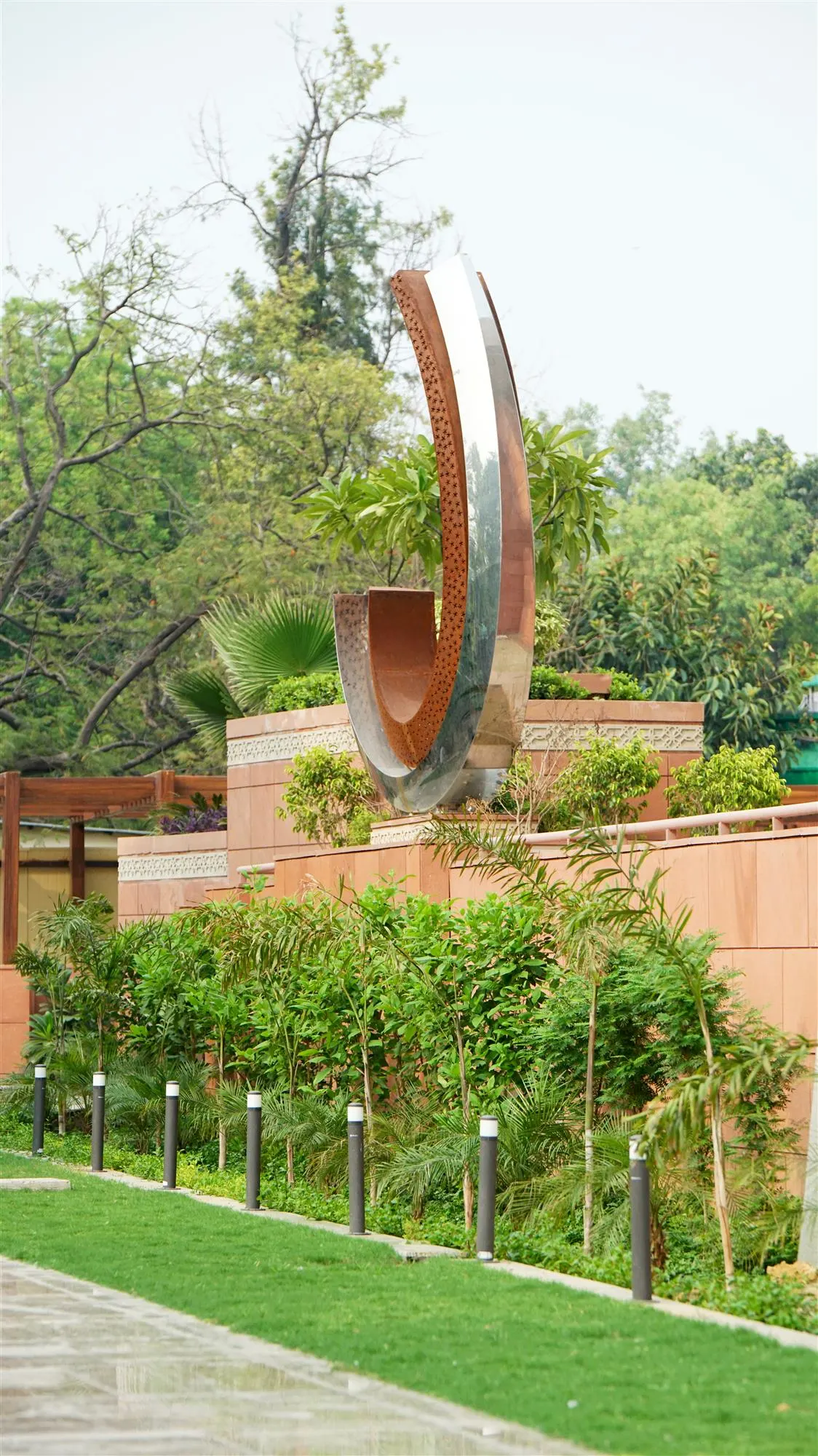
The entrance is where a garden makes its first impression. A monumental sculpture — 8 to 20 feet tall — placed at a driveway entrance, gate, or pathway entry announces that this is not an ordinary property.
Entrance sculptures need to work from a distance (seen from the road or driveway) and up close (as visitors walk past). This dual-scale challenge is what separates commissioned sculpture from off-the-shelf garden decor.
7. Landscape-Integrated Sculptures
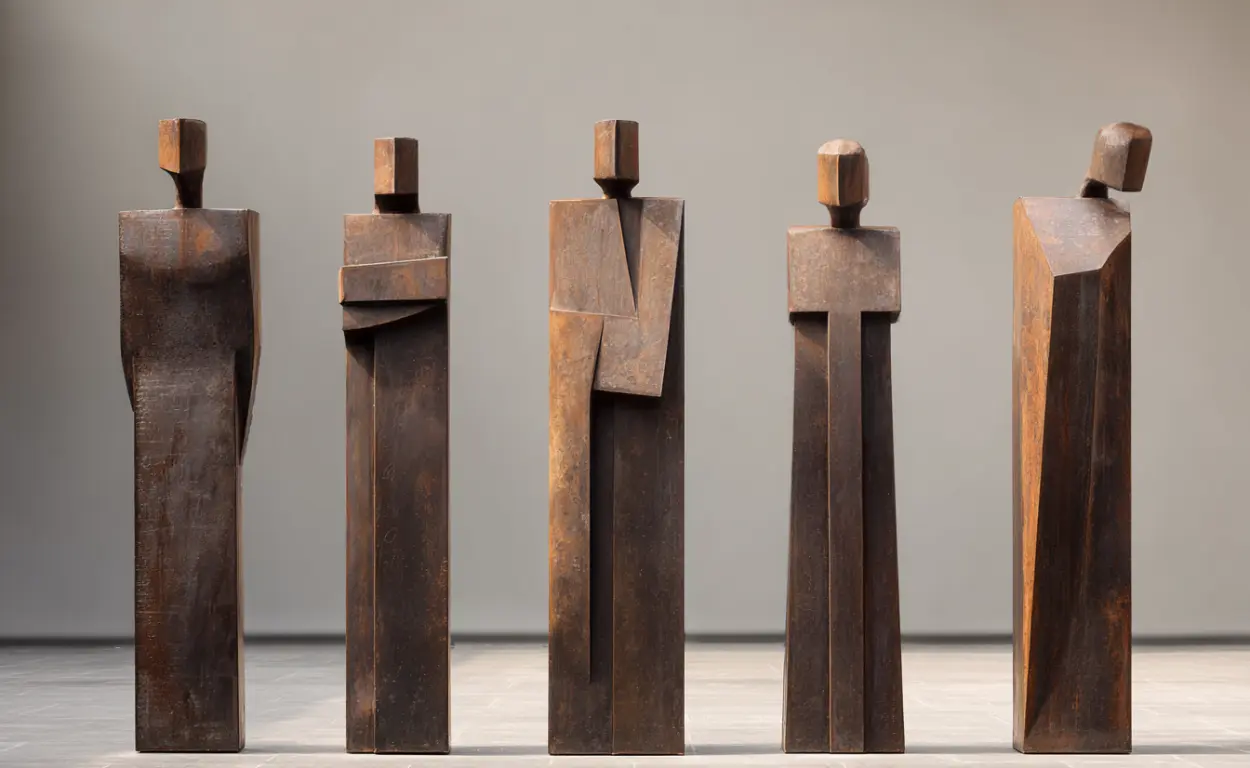
Some of the most effective garden sculptures don't sit on the ground — they grow out of it. Landscape-integrated sculptures are designed in collaboration with the landscape architect, embedded into retaining walls, emerging from water features, or woven through planting beds.
These pieces blur the boundary between art and landscape. A corten steel ribbon rising from a stone wall. A stainless steel form breaking through a bed of river pebbles. The sculpture becomes inseparable from its setting.
8. Water Feature Sculptures
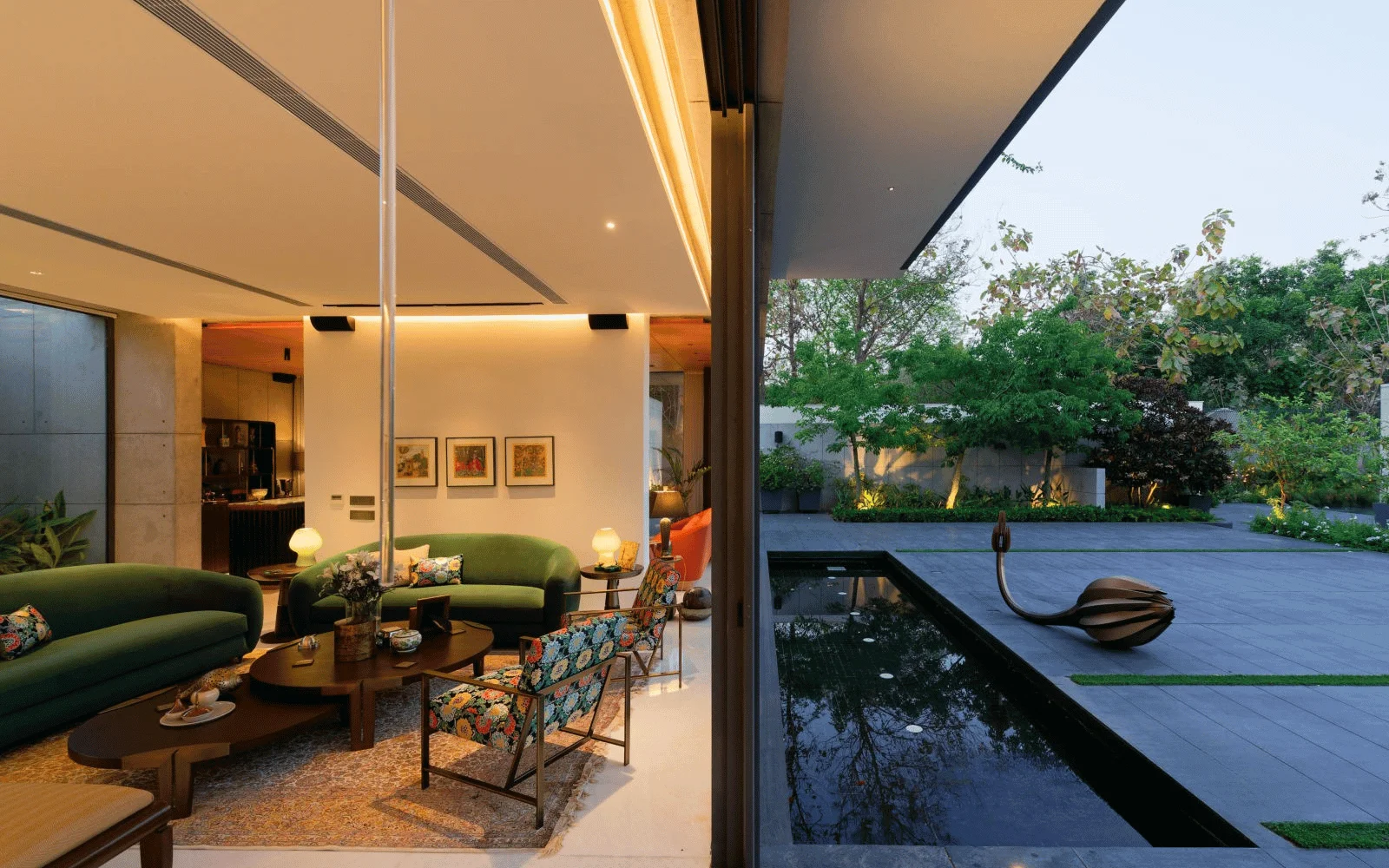
Combining sculpture with water creates a multisensory experience — visual form plus the sound and movement of water. A stainless steel form with water cascading down its surface. A corten steel bowl overflowing into a surrounding pool. A kinetic sculpture that channels rainwater.
Water feature sculptures work as garden centrepieces, courtyard focal points, and meditation garden anchors. The reflections on wet metal surfaces add another layer of visual complexity.
9. Parametric and Computational Sculptures
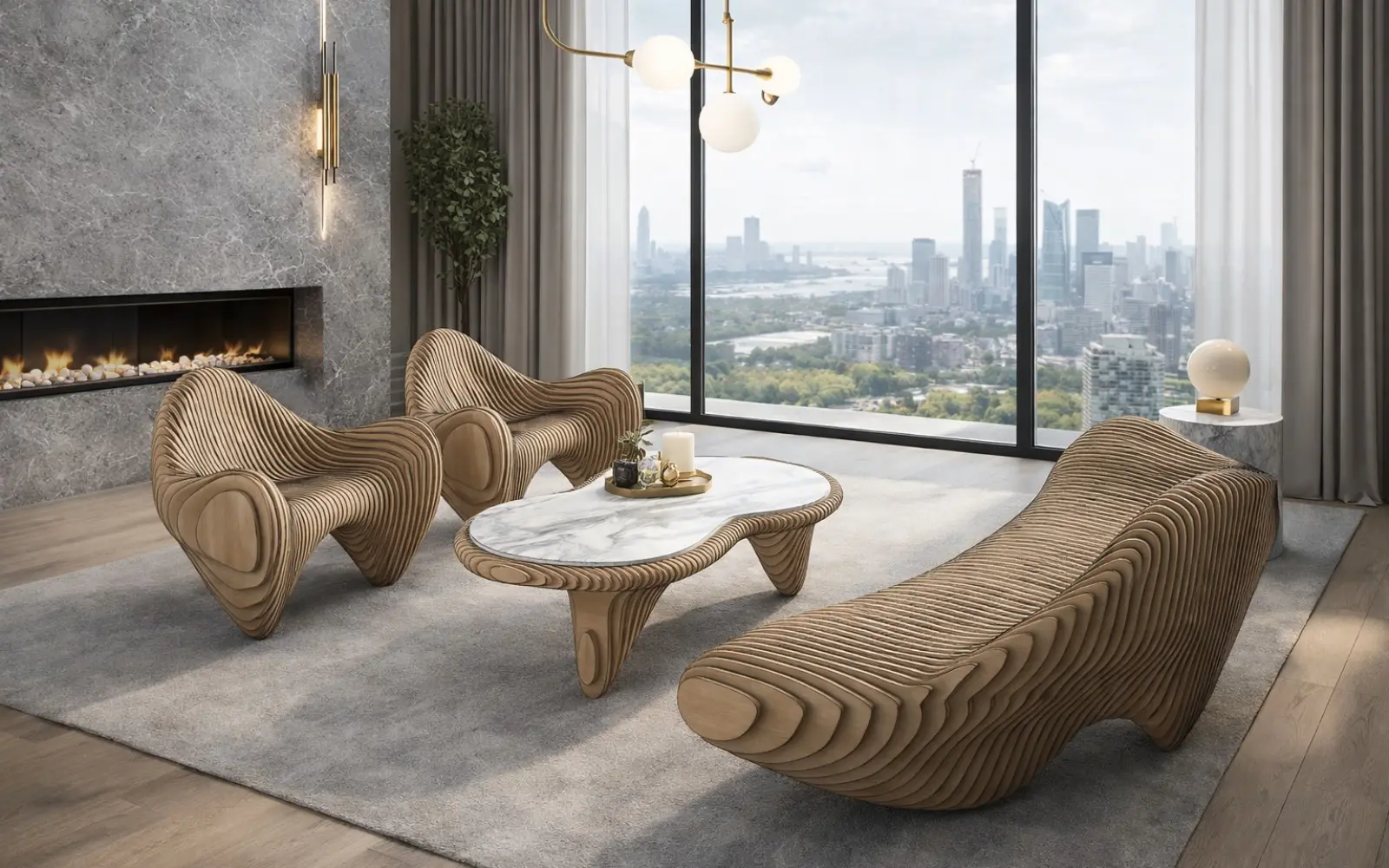
Parametric sculpture uses computational design tools to generate forms that would be impossible to conceive or draft by hand. These pieces feature flowing surfaces, complex curvatures, and mathematically derived patterns that create an unmistakable contemporary aesthetic.
In a garden setting, parametric sculptures serve as conversation starters. They invite closer inspection — viewers walk around them, touch the surfaces, photograph the shadows. The complexity of the form contrasts beautifully with the simplicity of natural surroundings.
10. Garden Wall Sculptures and Metal Panels
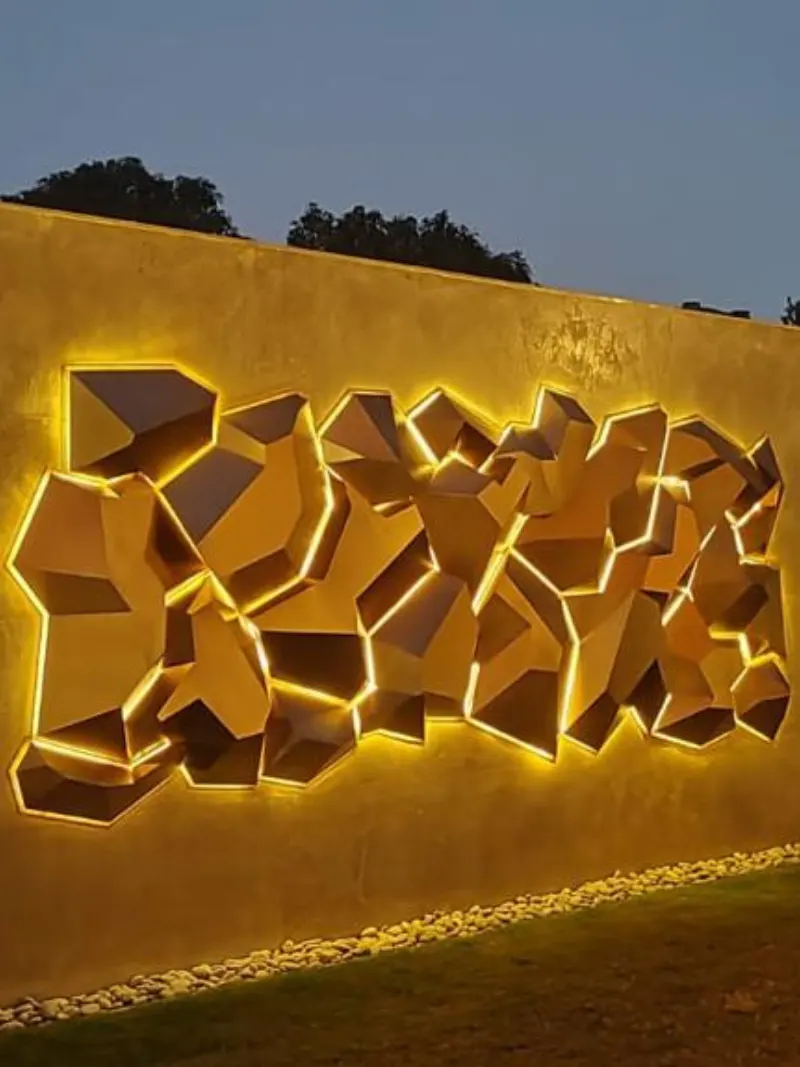
Not every garden has space for a freestanding sculpture. Wall-mounted metal artwork — laser-cut panels, relief sculptures, and dimensional wall pieces — transforms boundary walls, garden fences, and building facades into art surfaces.
A large corten steel panel with a nature-inspired cutout pattern. A stainless steel relief mounted on a courtyard wall. Metal screens that cast patterned shadows across the garden as the sun moves. Wall sculptures are particularly effective in small gardens where floor space is limited but vertical surfaces are available.
11. Figurative and Human Form Sculptures
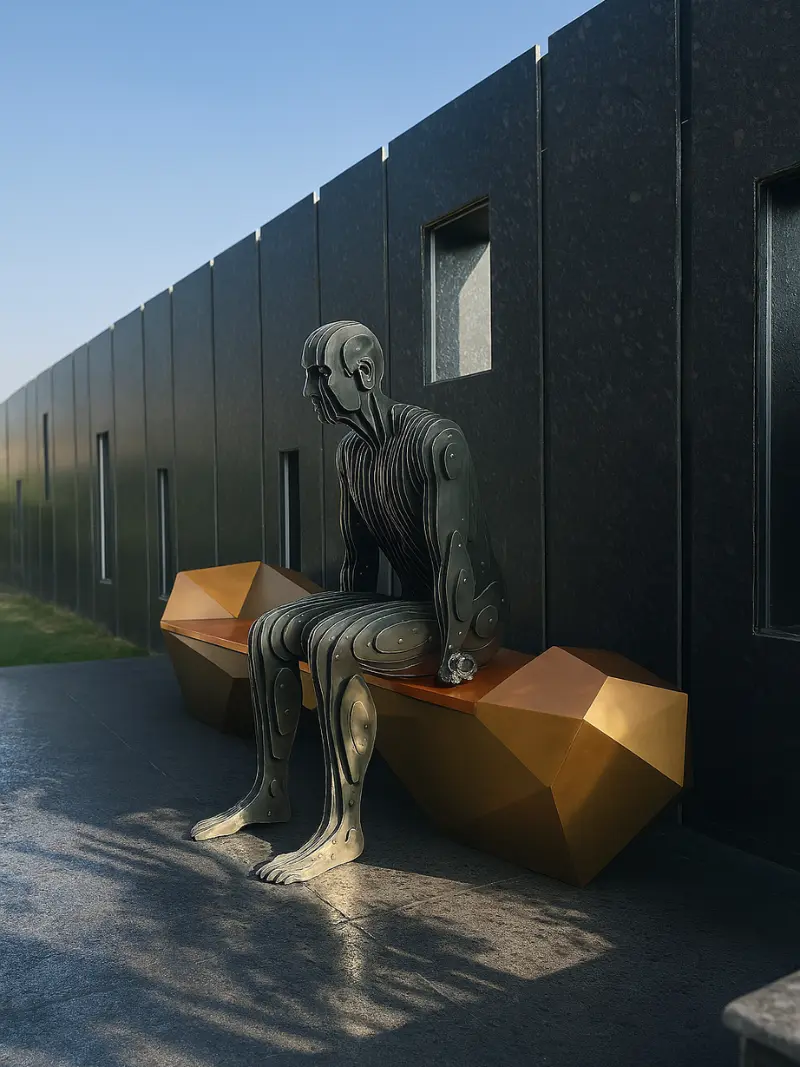
While abstract sculpture dominates contemporary garden design, figurative work — sculptures depicting human forms, faces, or body fragments — brings an emotional dimension that abstraction doesn't. A seated figure at the end of a garden path. A pair of hands emerging from the earth. A face gazing upward through the tree canopy.
Figurative garden sculptures create an immediate emotional connection. They make the garden feel inhabited, even when no one is there.
12. Animal and Nature-Inspired Sculptures
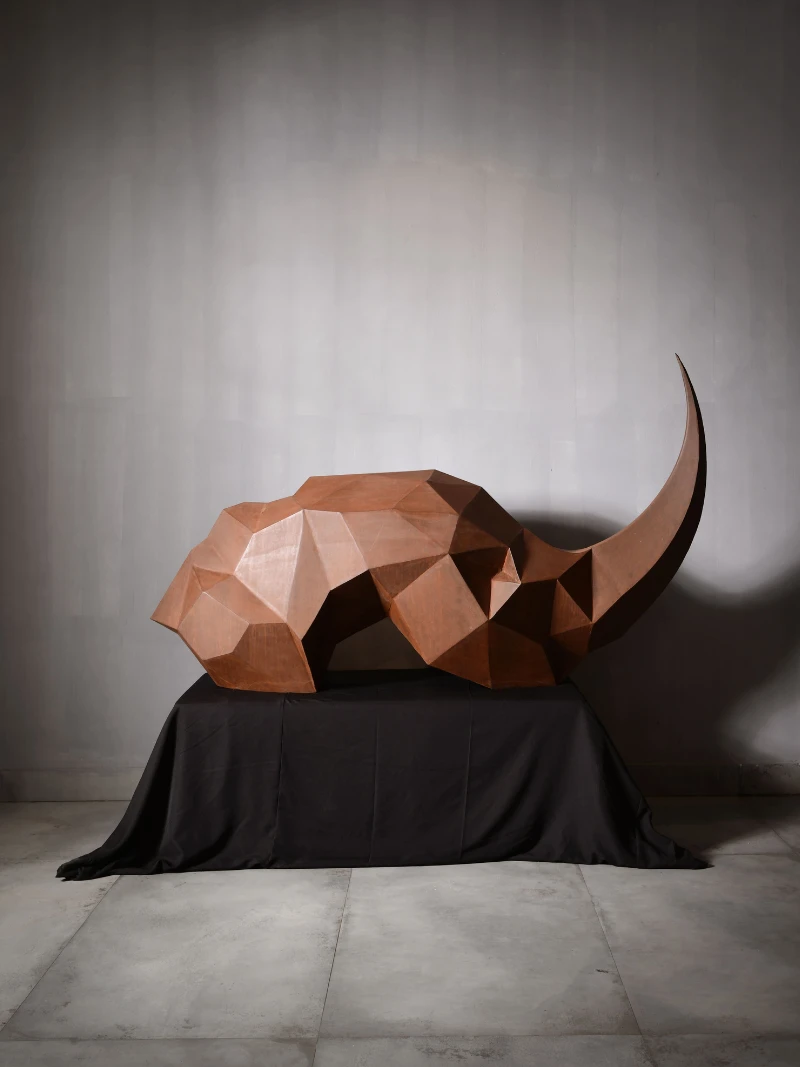
Stylised animal sculptures — birds in flight, fish leaping, deer grazing, horses rearing — have a long tradition in garden design. Contemporary versions move beyond literal representation toward abstracted, material-driven interpretations. A corten steel horse reduced to angular planes. A stainless steel bird form catching the wind.
The key is avoiding decorative kitsch. A well-designed animal sculpture is art first, representation second.
13. Sculptural Seating and Functional Art
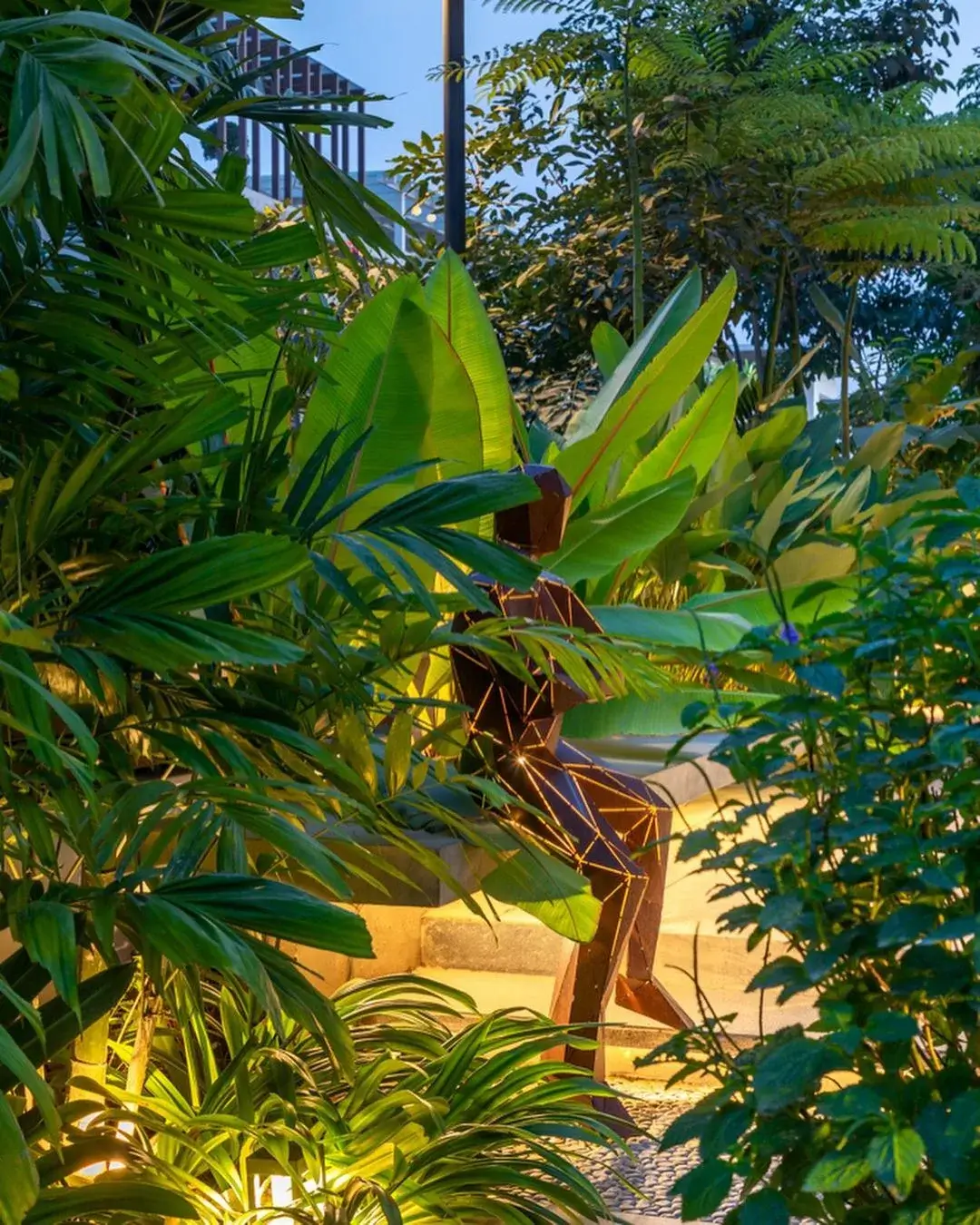
Some garden sculptures serve dual purpose — they're art you can sit on. Sculptural benches, parametric seating forms, and artistic garden furniture blur the line between sculpture and function. A curved corten steel bench that's as much a landscape element as a place to rest.
Functional sculptures justify their presence in gardens where "pure art" might feel indulgent. They earn their space by being useful while remaining beautiful.
14. Light-Integrated Sculptures
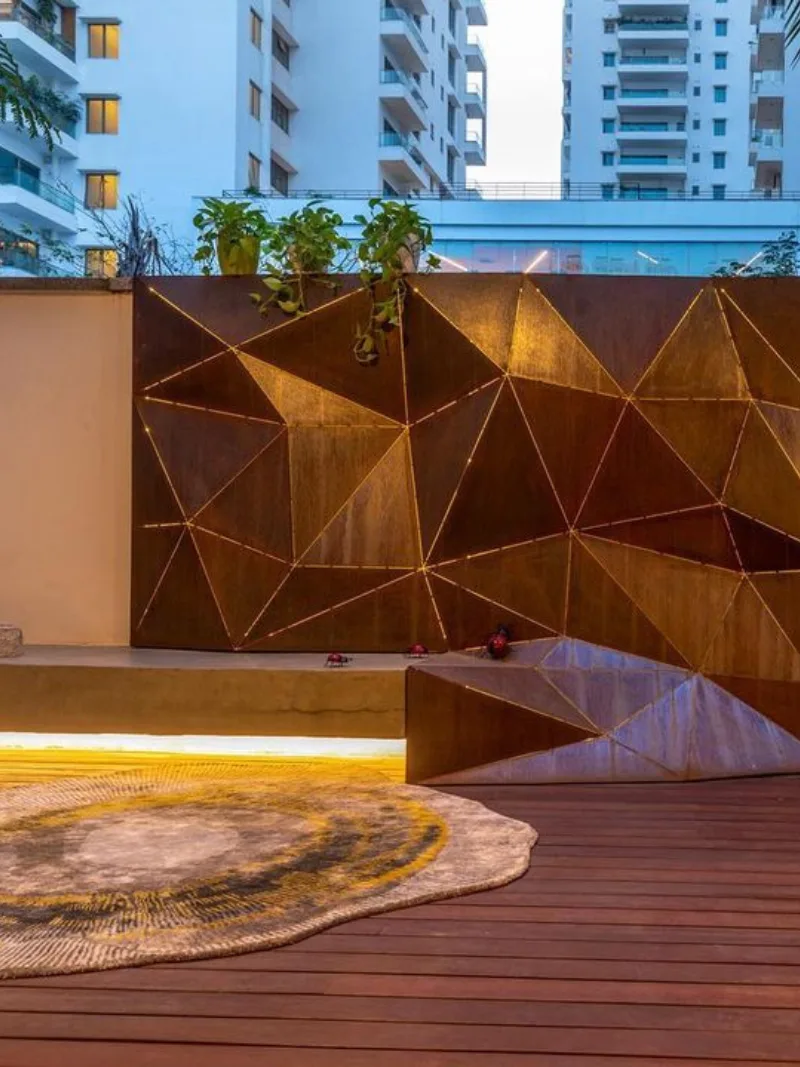
Sculptures designed with integrated lighting create two entirely different experiences — one during the day and another after dark. Uplighting from within or below reveals textures and forms that daylight hides. Perforated metal sculptures project patterns of light across surrounding surfaces.
Light integration transforms a garden sculpture from a daytime focal point into a nighttime atmosphere creator. For entertaining gardens and hospitality landscapes, this dual-mode quality is invaluable.
15. Site-Specific Commissioned Sculptures
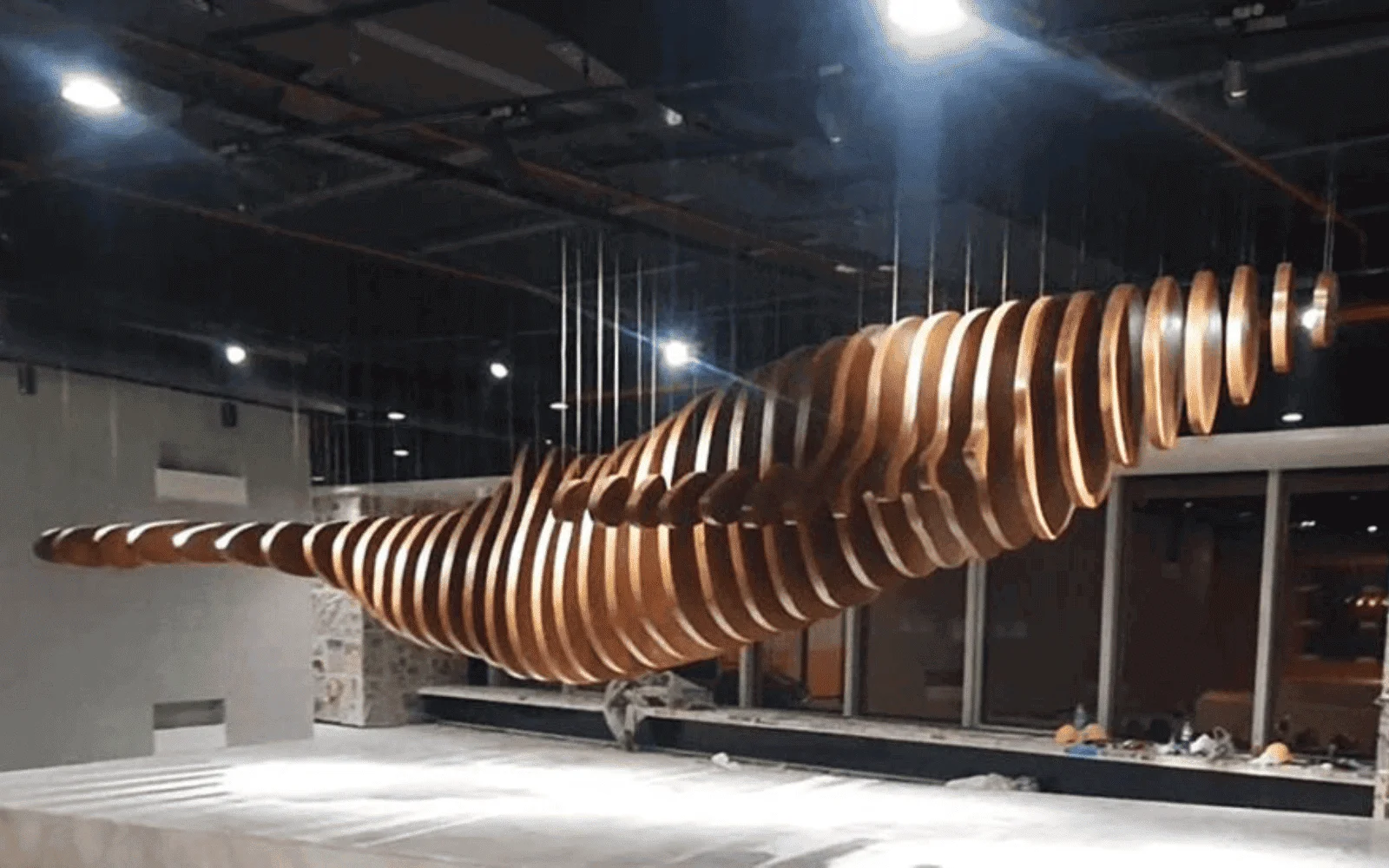
The most impactful garden sculptures are the ones designed specifically for their site. A commissioned sculpture responds to the exact dimensions, sightlines, light conditions, planting, and architectural context of your garden. It's the difference between hanging a poster and commissioning a mural.
Site-specific sculptures consider the view from inside the home, the approach path, the background planting, the neighbouring architecture, and the way light moves across the space through the day and seasons. No off-the-shelf piece can do this.
How to Choose the Right Garden Sculpture: A Decision Framework
Choosing a garden sculpture isn't just about picking something that looks good in a photo. Consider these factors:
Scale and Proportion
The most common mistake in garden sculpture is going too small. A 2-foot sculpture in a large garden disappears. As a general rule, your sculpture should be visible from the main viewing point — whether that's a living room window, a dining terrace, or an entrance gate.
Small gardens (under 500 sq ft): 2–4 feet is appropriate.
Medium gardens (500–2,000 sq ft): 4–8 feet creates presence.
Large landscapes (2,000+ sq ft): 8–15+ feet is needed for impact.
Material Selection for Outdoors
Not all metals perform equally outdoors. Here's a comparison:
| Material | Outdoors Performance | Maintenance | Best Aesthetic |
|---|---|---|---|
| Corten Steel | 50+ years, self-protecting patina | None | Earthy, naturalistic |
| Stainless Steel (316) | Fully corrosion-resistant, ideal for coastal | Occasional wipe-down | Contemporary, mirror/brushed/matte |
| Bronze | Extremely durable, verdigris patina | Optional wax coating | Traditional, warm tones |
| Painted Mild Steel | Good, requires periodic maintenance | Repaint every 3–5 years | Any colour, budget-friendly |
Placement Principles
How Much Do Garden Sculptures Cost?
Garden sculpture pricing depends on material, size, complexity, and whether the piece is custom-commissioned or selected from existing work.
Ready-made / available sculptures: ₹50,000 – ₹5,00,000 depending on size and material.
Custom-commissioned garden sculptures:
• Small (2–4 ft): ₹1.5L – ₹5L
• Medium (5–8 ft): ₹5L – ₹15L
• Large (8–15 ft): ₹15L – ₹50L
• Monumental (15+ ft): ₹50L – ₹2Cr+
Installation costs (foundation, craning, anchoring) typically add 10–20% to the sculpture cost. For international clients (USA, UAE): pricing is competitive with local fabrication, with the advantage of Indian craftsmanship. Shipping and installation coordination included.
Garden Sculpture Maintenance: What to Expect
One of the advantages of metal sculpture over stone, wood, or ceramic is minimal maintenance:
Corten Steel
No maintenance required. The patina develops naturally over 6–18 months and then stabilises. Do not seal, paint, or oil corten — let it weather naturally. If installed over light-coloured paving, expect some rust runoff during the first monsoon season. This washes away and stops once the patina stabilises.
Stainless Steel
Wipe down with a damp cloth every few months to remove dust and water spots. For mirror-polished finishes, use a dedicated stainless steel cleaner annually. No structural maintenance needed.
Bronze
Develops natural verdigris (green patina) over years. If you prefer the original golden tone, apply a clear wax coating annually. Most owners prefer the aged patina — it's part of bronze's character.
Painted Steel
Inspect annually for paint chips or surface rust. Touch up with matching paint as needed. Full repaint every 3–5 years depending on climate exposure.
Why Architects and Landscape Designers Choose FormForge
FormForge is a design-led sculpture studio founded by Abhinav Goyal, based in Noida, Delhi NCR. Over 600 sculptures installed across India and the UAE — for private gardens, corporate landscapes, public parks, and hospitality grounds.
What makes our garden sculptures different:
We don't sell from a catalogue. Every garden sculpture we create is designed for its specific site — responding to the architecture, landscape plan, planting palette, and client's vision. We work directly with architects and landscape designers, providing 3D renders, material samples, and structural drawings that integrate with project documentation.
Our materials: corten steel, stainless steel (mirror, brushed, matte), brass, and bronze. Our process: concept → 3D visualisation → engineering → fabrication → delivery and installation. End-to-end, typically 8–12 weeks.
Featured in: Architectural Digest India, GoodHomes, CEO Insights, India Design ID.
Frequently Asked Questions
What is the best material for an outdoor garden sculpture?
Corten steel and stainless steel (316 grade) are the two most durable materials for outdoor sculpture. Corten develops a natural rust patina that protects the metal without any maintenance. Stainless steel resists corrosion entirely and offers mirror, brushed, or matte finishes. Both materials are designed to last 25–50+ years outdoors.
How big should a garden sculpture be?
Scale depends on the garden size and viewing distance. For small courtyard gardens, 2–4 feet is proportional. For medium residential gardens, 4–8 feet creates visual presence. For large estate landscapes or commercial grounds, 8–15+ feet is needed for impact. The sculpture should be visible from the primary viewing point — typically a window, terrace, or entrance path.
Can metal sculptures be left outside year-round?
Yes. Corten steel, stainless steel, and bronze are all designed for permanent outdoor installation in all weather conditions — rain, sun, frost, and coastal salt air. Painted mild steel requires periodic maintenance but can also remain outdoors permanently.
How do I commission a custom garden sculpture?
The process typically involves an initial consultation (discussing site, scale, intent, and budget), concept development (sketches and 3D renders), design approval, fabrication (4–8 weeks), and installation. At FormForge, we handle the entire process end-to-end, including site assessment, structural engineering, and installation.
Do garden sculptures need a foundation?
Most sculptures over 4 feet tall require a concrete foundation or anchor system for stability and safety. The foundation design depends on the sculpture's weight, height, wind load, and soil conditions. At FormForge, we provide foundation specifications as part of every project.
What are good sculpture ideas for small gardens?
For small gardens, consider wall-mounted metal art panels, compact abstract forms (2–3 feet), sculptural planters, or a single statement piece placed at the end of a sightline. Vertical sculptures take up less floor space than horizontal ones. Mirror-polished stainless steel works well in small spaces because reflections make the garden feel larger.
Ready to Add a Sculpture to Your Garden?
Whether you're an architect specifying landscape art, a homeowner investing in a garden centrepiece, or a developer adding value to a residential project — we'd like to hear about your space.
600+ Installations · 10+ Years · India & UAE Delivery
Every project begins with a conversation. Share your garden photos, site plans, or simply describe what you're imagining. No obligation.
FormForge is a design-led metal sculpture studio based in Noida, Delhi NCR, India. Founded by artist Abhinav Goyal, the studio creates site-specific garden sculptures, outdoor art installations, and architectural metal artwork for architects, landscape designers, developers, and private clients. Materials include corten steel, stainless steel, brass, and bronze. Over 600 installations delivered across India and the UAE.
Explore More From FormForge
View Our Portfolio
Explore our complete collection of metal sculptures and installations created for temples, homes, and commercial spaces worldwide.
Custom Sculptures
Get a custom god idol designed specifically for your space. Our team will help bring your vision to life with premium materials.
Related Articles

Custom Metal God Idols & Hindu Deity Statues in Steel, Brass & Corten | FormForge India
Commission handcrafted metal god idols and Hindu deity statues in stainless steel, brass, and corten steel. Custom Ganesha, Shiva, Nandi, Buddha — weather-resistant, vastu-compliant, 6 inches to 20 feet. Get a quote from FormForge.
Outdoor Sculptures in Metal: The Complete Guide to Architectural & Site-Specific Installations
Explore the definitive guide to high-end outdoor sculptures in metal. Learn how corten steel, stainless steel, and bronze installations are designed, commissioned, and built for luxury residences, commercial developments, and public spaces — with Formforge's site-specific approach.