Metal Sculptors in India: How Abhinav Goyal & FormForge Are Redefining Architectural Metal Sculpture

Introduction: What Separates a Metal Sculptor from a Metal Fabricator
India has a sculptural legacy stretching back millennia — from the bronze Nataraja of the Chola period to the monumental public works of the modern era. But a new generation of metal sculptors is writing a very different chapter: one defined not by religious iconography or mass production, but by site-specificity, structural innovation, and material honesty.
At the forefront of this shift is FormForge, a contemporary sculpture practice led by Abhinav Goyal that treats metal not as a raw commodity to be cast and shipped, but as a living medium shaped by architecture, light, and landscape.
This article explores what separates serious metal sculptors from fabricators, what commissioning a custom metal sculpture actually involves, and why the work coming out of FormForge represents the leading edge of architectural sculpture in India today.
What Defines a Contemporary Metal Sculptor — And Why It Matters
The term metal sculptor covers an enormous range of practice — from craftsmen producing decorative figurines in bulk to artists designing site-specific public monuments that anchor entire urban plazas. Understanding where a practitioner sits on that spectrum is the first step in any commissioning decision.
A contemporary metal sculptor working at the architectural scale does several things that a fabricator or decorative manufacturer does not. First, they begin with a concept rooted in the site — its geometry, its light conditions, its social or spatial context. Second, they work with structural logic, understanding how a 4-metre corten steel form will behave under wind load, thermal expansion, and its own weight over decades. Third, they bring an artistic sensibility to surface, texture, and finish that goes beyond coating and polish — patina, oxidation, brushed grain, and weld expression are all compositional choices, not afterthoughts.
Abhinav Goyal, the founder and lead sculptor at FormForge, trained with an acute understanding of both the engineering and the expressive dimensions of metal. His practice is built on the conviction that the best metal sculpture for a building or public space should feel inevitable — as though the site itself called it into being.
For architects, developers, interior designers, and private collectors considering a commission, the distinction is not merely aesthetic — it is functional. A sculpture that has been designed for its exact location, fabricated with structural precision, and installed with professional rigour will perform differently — visually, physically, and over time — than a generic piece selected from a catalogue.
The FormForge Approach: Parametric Design Meets Handcrafted Fabrication
FormForge occupies a distinctive position among metal sculptors in India because of how it integrates computational design tools with traditional metalworking craft. The studio's design process typically begins with parametric modelling — using software like Grasshopper and Rhino to generate and iterate formal geometries that respond to specific site parameters: sight lines, shadow patterns, proportional relationships with surrounding architecture, and the movement paths of people through a space.
This computational phase is not about producing algorithmic novelty for its own sake. It is a rigorous way of testing formal ideas before a single gram of metal is cut. A parametric model allows Abhinav Goyal to evaluate how a surface curvature will read from 50 metres away versus 2 metres away, how a perforated screen will cast shadows at different times of day, or how a structural cantilever will distribute load through a given profile.
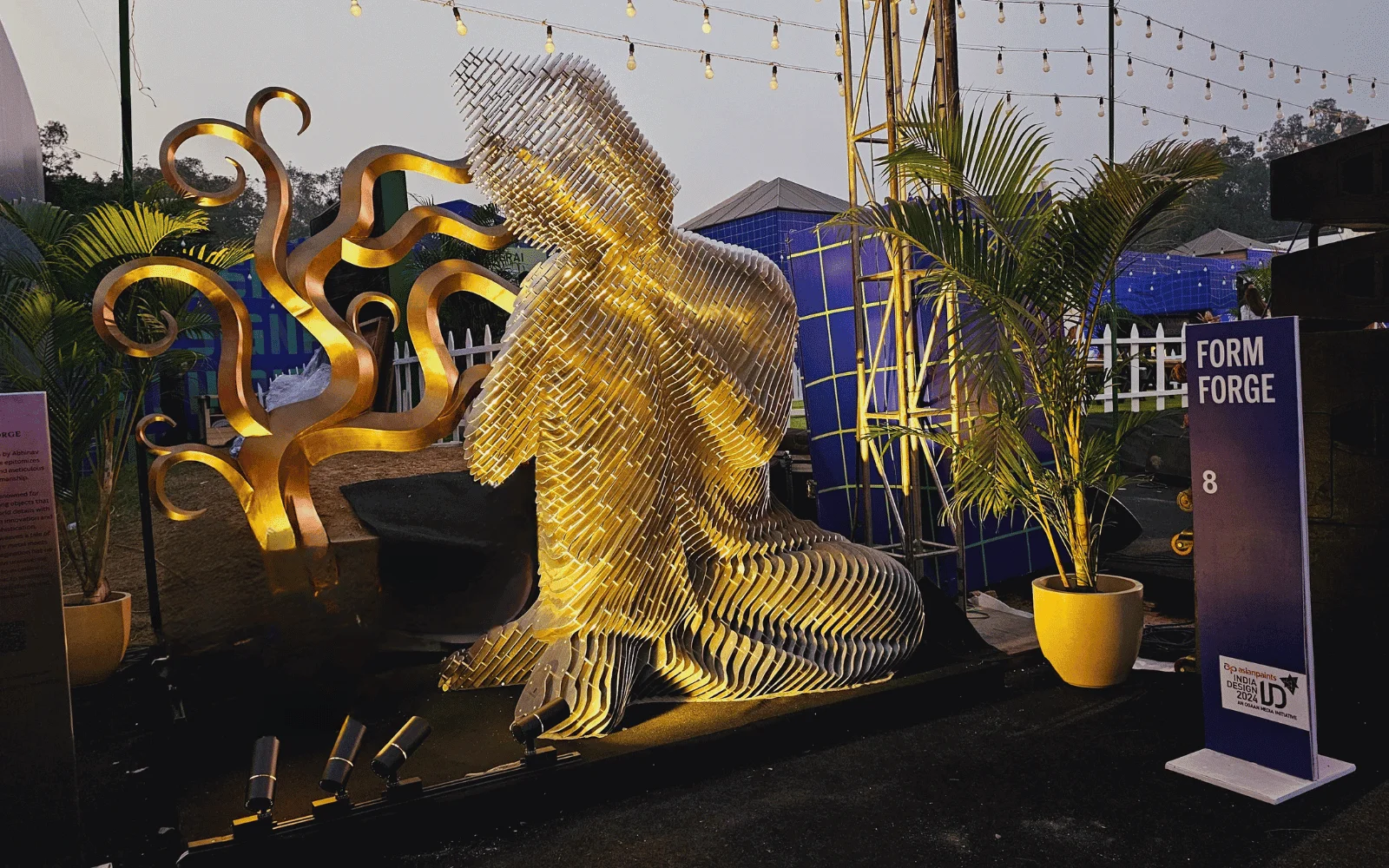
The fabrication phase, however, is emphatically handcrafted. FormForge works in corten steel (weathering steel), stainless steel, and mixed-metal combinations. Each material demands a different set of skills and imposes a different formal logic. Corten steel is allowed to develop its characteristic rust-orange patina in a controlled process — the oxidation layer that forms on the surface is itself a protective coating, giving the work a warm, geological presence that changes subtly with the seasons and with rain.
Stainless steel demands precision grinding and polishing to achieve mirror, brushed, or matte surfaces that interact dramatically with reflected light and landscape. Mixed-metal work — combining blackened mild steel with polished brass inlays, for example — allows for compositional complexity within a single form.
The weld is never hidden at FormForge. In much industrial fabrication, welds are ground down and painted over. At FormForge, the weld line is treated as a mark of making — evidence of the human hand in the material. This approach aligns FormForge with the broader international movement toward material honesty in architecture and design, and gives FormForge sculptures a quality of presence and authenticity that mass-produced decorative metalwork simply cannot replicate. Clients exploring our custom sculpture commissions consistently report this quality as the defining difference.
Materials in Depth: Corten Steel, Stainless Steel, and Mixed Metals
Material selection is one of the most consequential decisions in any metal sculpture commission. The choice of metal determines the visual character of the work, its maintenance requirements, its longevity, and the range of forms it can credibly take. FormForge works primarily in three material families.
Corten Steel (Weathering Steel)
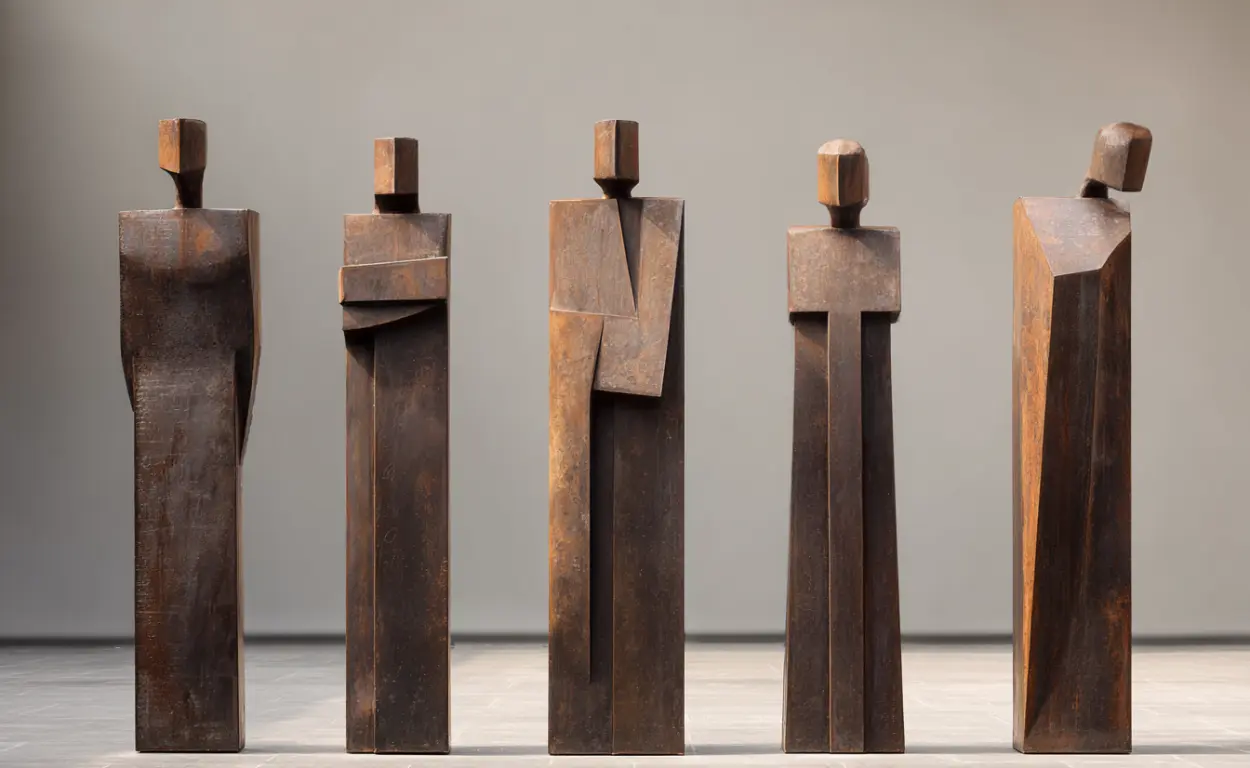
Corten develops a stable oxide patina when exposed to the atmosphere. This patina seals the steel against further oxidation — it is not corrosion in the destructive sense but a controlled surface transformation. The visual result is a warm, layered surface ranging from deep ochre to rich reddish-brown, with subtle tonal variation that gives the material an almost geological quality.
Corten is ideal for outdoor public sculpture and landscape installations. It requires minimal maintenance once the patina has stabilised — typically after 18 to 36 months of outdoor exposure. FormForge has used corten for large-scale architectural screens, freestanding sculptural forms in hotel gardens, and site-specific works integrated into building facades.
Best for: Landscape installations, resort grounds, civic plazas, private gardens, green building projects, memorial parks.
Stainless Steel
Stainless steel's defining quality is its reflectivity and its resistance to corrosion in all weather conditions, including coastal and high-humidity environments. Depending on the finish — mirror polished, brushed (No. 4 or hairline), or bead blasted — stainless steel interacts with its environment in radically different ways.
Mirror-polished stainless fragments and reflects the surrounding landscape, creating a dynamic visual relationship between sculpture and site that changes with the time of day and the movement of the viewer. Stainless steel is the material of choice for landmark public sculptures in urban plazas, hotel lobbies, and high-specification interior commissions. It demands the highest fabrication precision of any metal FormForge works with.
Best for: Corporate lobbies, luxury residential podiums, hotel entrances, facade installations, coastal developments, large-scale minimalist architectural commissions.
Mixed Metals
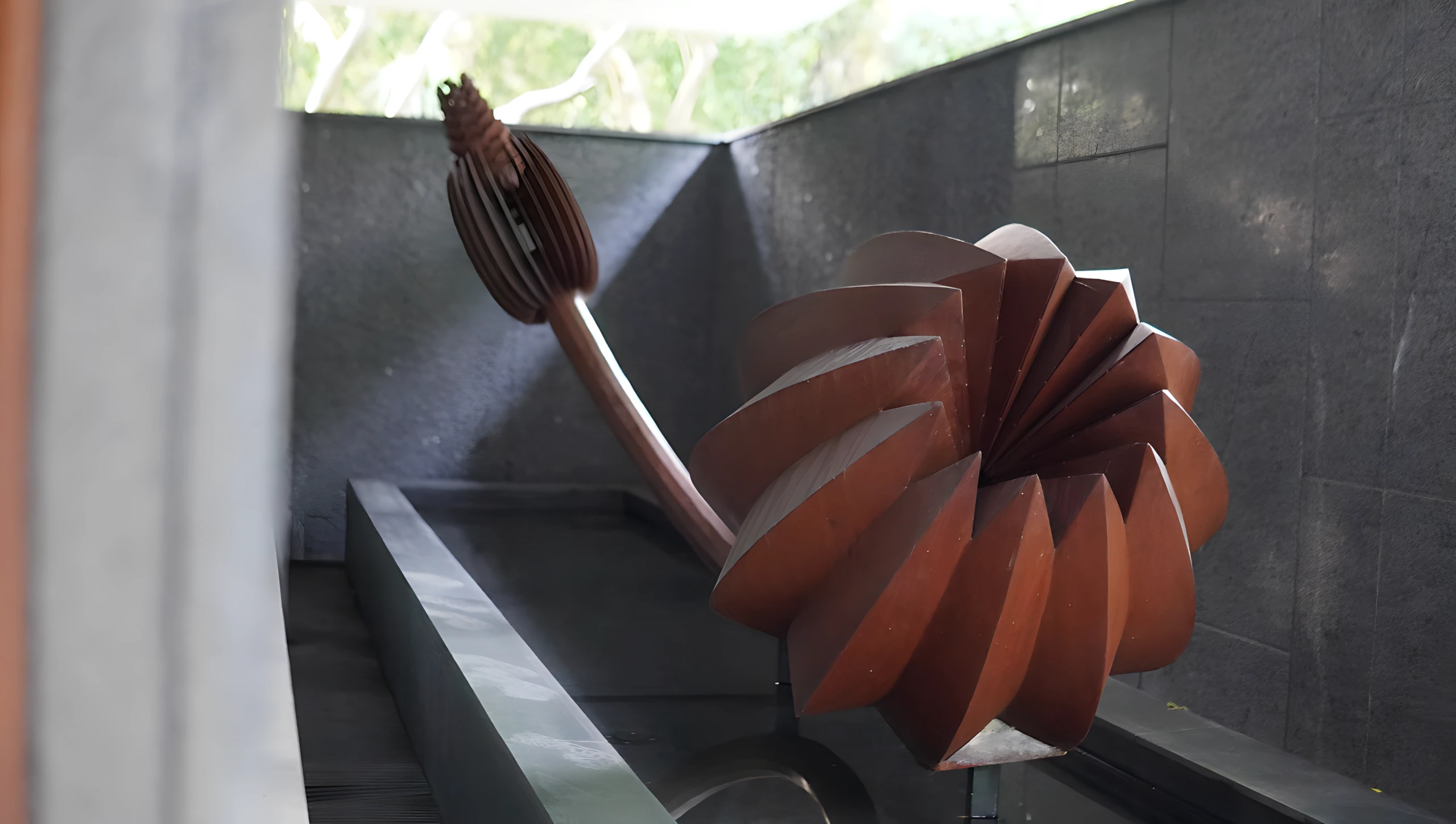
Some of FormForge's most distinctive work combines multiple metals within a single composition. Blackened mild steel with brass detailing, corten with stainless steel inlays, or bronze-cast elements integrated into welded steel armatures — mixed-metal sculpture allows for tonal and textural contrast within a form, adding compositional richness that a single-material piece cannot achieve.
It is particularly well-suited to interior sculpture commissions in luxury residences and commercial spaces where the work needs to engage closely with the material palette of the surrounding architecture. For all materials, FormForge provides clients with detailed technical specifications including weight, fixing requirements, surface treatment protocols, and long-term maintenance guidance. Explore our residential sculpture projects to see mixed-metal work in context.
Site-Specific Sculpture: What It Means and Why It Matters for Architecture
The phrase site-specific is used loosely in the art and design world, but at FormForge it has a precise meaning: a sculpture is site-specific when it could not exist, or could not work as well, anywhere else. This is not simply a matter of scale or material — it is a matter of design intent.
When Abhinav Goyal begins a site-specific commission, the first phase is always a thorough analysis of the location: its dimensions and proportional relationships, the quality and direction of natural light throughout the day, the existing material palette of the architecture, the sight lines from key viewpoints, the way people move through and around the space, and the programmatic identity of the building or landscape.
This analysis informs every formal decision. The height and silhouette of a freestanding exterior sculpture is calibrated to read correctly from the approach. The perforations in a corten steel screen are sized and distributed to cast a specific shadow pattern at specific times of day. The surface of a lobby sculpture is oriented to reflect or engage the light source most present in that interior. None of these decisions are arbitrary.
The implications for architects and developers are significant. A site-specific FormForge sculpture adds value to a project in ways that catalogue pieces cannot. It becomes a legible expression of the project's identity — something that can be communicated in marketing materials, experienced by occupants and visitors, and discussed as a meaningful component of the architecture.
FormForge works closely with architects and interior designers throughout the design development phase of projects, making the sculpture process transparent and integrated with the broader design workflow. Clients reviewing our large-scale sculpture commissions will find this site-specific process documented across each project.
The Commissioning Process: From Brief to Installation
Commissioning a custom metal sculpture from FormForge follows a clear, structured process that removes ambiguity and allows clients to make informed decisions at each stage.
- Brief and Site Analysis: Every commission begins with a detailed briefing conversation. Abhinav Goyal meets with the client — and, where relevant, the architect or interior designer — to understand the site, the project context, the budget envelope, and any relevant constraints. This is followed by a site visit for architectural-scale commissions and a thorough review of drawings and specifications for interior works.
- Concept Development: FormForge develops two to three initial design concepts, presented as rendered 3D models and photomontages showing the proposed work in its actual site context. Clients are invited to engage substantively with the concept options, and a preferred direction is selected and refined through a focused iteration process.
- Design Development and Structural Engineering: Once a concept is approved, it is developed in full technical detail. This includes structural calculations, fabrication drawings, material and finish specifications, and installation methodology. For public art commissions, this stage also includes documentation required for planning or building consent processes.
- Fabrication: Fabrication is carried out at FormForge's studio, with Abhinav Goyal directly supervising all stages. For large commissions, the work is fabricated in sections and trial-assembled in the studio before delivery. Clients are invited to visit the studio during fabrication.
- Installation and Handover: FormForge manages the full installation process, working with structural engineers and site teams to ensure the sculpture is fixed safely and with the precision the work demands. Post-installation, the studio provides a full handover document including care and maintenance instructions, structural information, and material specifications.
Typical timeline: 10–20 weeks from design approval to installation for pieces up to 15 feet; 20–32 weeks for monumental commissions above 20 feet. We recommend engaging FormForge at the design development stage so the sculpture timeline aligns with your overall project programme. Clients can review our full commission process for further detail.
FormForge for Architects and Interior Designers: A Collaborative Practice
The relationship between sculpture and architecture in India has historically been one of decoration applied to a completed building — art as afterthought rather than as integral to the spatial experience. FormForge works to change this by engaging with architects and interior designers as genuine collaborators at the design development stage.
Architects working with FormForge find that Abhinav Goyal brings a deep understanding of architectural proportion, structure, and materials. He speaks the language of architecture — he understands what a 1:50 drawing communicates versus a 1:5 detail, he knows what questions structural engineers will ask about a cantilever, and he understands the procurement timelines of construction projects.
Interior designers working with FormForge similarly find a practice that understands scale, material palette, and the client experience of high-specification interiors. A sculpture for a luxury hotel lobby, a private villa living space, or a corporate headquarters needs to work within an existing material and colour palette — at a scale that commands attention without overwhelming the space, and with a finish quality that matches or exceeds the specification of the surrounding architecture.
For architects specifying sculpture as part of a public art planning requirement, FormForge provides the full documentation and process support needed to satisfy planning conditions — from concept reports through to installation certificates and maintenance schedules. FormForge carries full professional indemnity and public liability insurance, and is structured to work within the procurement frameworks of large development projects. See our commercial sculpture portfolio for completed project examples.
Public Art and Architectural Installations: The Scale of FormForge's Ambition
Some of the most consequential work in FormForge's practice is at the scale of public art — sculptures designed for plazas, parks, institutional campuses, transit environments, and the public realm of commercial developments. Public art at this scale is among the most demanding of all commissioning categories: the work must be structurally sound enough to withstand decades of outdoor exposure and public interaction, visually compelling enough to hold its own in a complex urban environment, and meaningful enough to justify its presence in shared civic space.
FormForge brings to public art commissions the same design rigour applied to smaller interior works, scaled up in every dimension. Large-scale corten steel forms for outdoor plazas, monumental stainless steel works for landmark civic spaces, and architecturally integrated metal screens and canopies that function simultaneously as structure, sculpture, and environmental control — these works require not just artistic vision but engineering confidence and project management capability.
For developers and institutions commissioning public art as part of a major project, FormForge's ability to manage the full process — from initial design concept through structural engineering coordination, fabrication, and installation — within a single professional relationship is a significant practical and creative advantage.
Clients exploring public space sculpture installations will find project-specific installation documentation in our case study library.
Metal Sculpture for Luxury Residences: Privacy, Permanence, and Prestige
Some of FormForge's most intimate and carefully considered work is for private residential clients — luxury villas, penthouse apartments, and heritage property restorations where a sculpture commission is one of the most personal and permanent investments a client will make in their home environment.
Private residential commissions present a different set of challenges and opportunities from public or commercial work. The scale is often more domestic — a courtyard sculpture, an entrance threshold piece, a living room focal point, a garden landmark — but the level of personal engagement is higher. The work will be lived with daily, by a small number of people who care deeply about their environment and whose aesthetic preferences are precise.
Abhinav Goyal approaches residential commissions with a particular attentiveness to the client's own visual world — the architecture of their home, their collection of objects, their relationship with material and craft. A FormForge residential sculpture is never a generic art object dropped into a space; it is a work made in full awareness of its context and of the person it is made for.
The materials and finishes available for residential work span the full range of FormForge's practice — from the robust outdoor presence of a corten steel garden sculpture to the precision and luxury of a polished stainless steel interior piece, or the warmth of a mixed-metal work combining blackened steel with hand-forged brass or bronze elements. Explore our residential sculpture projects to see this range in context.
Understanding Pricing: What Drives the Cost of a Custom Metal Sculpture
Custom metal sculpture at an architectural scale is a significant investment. Understanding what drives that investment allows clients to evaluate proposals more accurately and make better commissioning decisions.
- Material Cost: Corten steel is the most cost-effective of the primary metals. Stainless steel is moderately higher. Mixed-metal compositions vary depending on the secondary metal used. For large-scale works, material cost can constitute 30 to 50 percent of total project value.
- Fabrication Complexity: A form that can be cut and welded from flat plate is fundamentally less expensive than one involving compound curves, formed sections, or complex three-dimensional joinery. FormForge produces detailed fabrication methodology notes as part of every design development proposal.
- Engineering and Approvals: Structural engineering fees and any planning approvals can add 10 to 20 percent to project cost for major installations. These are included as line items in all FormForge project budgets from the outset.
- Installation Logistics: Crane hire, specialist rigging, and site protection all carry real costs. For remote or access-constrained sites, installation logistics can approach the cost of fabrication itself.
As a general guide for architects briefing clients:
- Mid-size interior or courtyard pieces (4–8 ft): ₹8–15 lakhs
- Large outdoor commissions (10–20 ft): ₹20–60 lakhs
- Monumental sculptures (20 ft+): ₹60 lakhs – 2+ crores
All figures reflect full-service delivery — design, engineering, fabrication, and installation. Always build a 15–20% contingency into the project budget. FormForge works transparently within your project budget from the first conversation.
How to Commission a Metal Sculpture: Questions Every Client Should Ask
Whether you are an architect specifying public art, a developer commissioning a landmark piece, or a private collector looking for a bespoke work for your home, the following questions will help you evaluate any metal sculptor in India before signing a contract.
- What is the sculptor's design process, and how involved will I be? A professional practice like FormForge will have a clear, documented design process with defined stages for client review and approval.
- Who actually makes the work? At FormForge, Abhinav Goyal is directly involved in the design and fabrication of every commission. The difference in quality between a designed-and-supervised work and an industrially executed one is significant.
- How is structural integrity handled for large-scale works? Any metal sculpture above a modest domestic scale should be engineered. FormForge engages structural engineers for public and architectural-scale commissions and provides full structural documentation.
- What is the maintenance requirement? Different metals age very differently. FormForge provides detailed maintenance guidance for all materials and finishes.
- What warranties and professional insurances are in place? FormForge carries professional indemnity and public liability insurance and is structured to meet the requirements of large development projects.
- Can I see examples of comparable work? FormForge's portfolio includes public art installations, architectural integrations, commercial lobby sculptures, and private residential works.
Clients reviewing our approach can explore the full FormForge project portfolio for completed work across all commission categories.
City-by-City: Where FormForge Delivers Architectural Metal Sculpture in India
Metal Sculpture Delhi NCR
Our home base. FormForge has delivered architectural metal sculptures across Delhi, Gurgaon, Noida, and Faridabad — from corporate campuses on Golf Course Road to luxury residences in South Delhi. Site visits, design development, and project management are all handled locally.
Metal Sculpture Mumbai
Mumbai's premium real estate and hospitality market is one of our strongest outside Delhi. We specify Grade 316 stainless steel as standard for Mumbai projects given the coastal environment. FormForge has installed pieces in Bandra, BKC, Worli, and South Mumbai.
Metal Sculpture Bangalore
Bangalore's tech campuses and luxury residential market have driven strong demand for contemporary metal sculpture. FormForge works with architects and landscape consultants across Whitefield, Hebbal, and Electronic City corridors.
Metal Sculpture Hyderabad
HITEC City developments, Jubilee Hills residences, and large institutional campuses are active commission environments. Large-scale metal sculpture for commercial real estate in Hyderabad is a growing part of our practice.
Pan-India Delivery
FormForge fabricates in Noida and installs pan-India. Recent projects span Pune, Jaipur, Ahmedabad, Chennai, Kochi, and Chandigarh. All structural engineering and installation supervision is provided regardless of location. Visit our full project portfolio to see completed metal sculpture installations across India.
Frequently Asked Questions
Who are the best contemporary metal sculptors in India?
Contemporary metal sculpture in India spans a wide range of practices. Abhinav Goyal of FormForge is among the leading practitioners working at the intersection of architectural design and fine art sculpture — specialising in bespoke, site-specific work in corten steel, stainless steel, and mixed metals for public, commercial, and luxury residential contexts. Unlike decorative metalwork manufacturers or classical statue foundries, FormForge operates as a design-led studio in which every commission is conceived for its specific site and client.
What is the difference between a metal sculptor and a metal fabricator?
A metal fabricator produces forms to a supplied specification — they are executors of a design, not authors of it. A metal sculptor conceives, designs, and makes work in which the formal, material, and conceptual decisions are all artistic choices. At FormForge, Abhinav Goyal is involved in every stage of a commission — from initial concept and site analysis through material selection, fabrication, and installation — making the studio a sculpture practice rather than a fabrication service.
How much does a custom metal sculpture cost in India?
The cost of a custom metal sculpture varies enormously depending on scale, material, complexity, and scope of services required. As a guide: mid-size pieces (4–8 ft) range from ₹8–15 lakhs; large outdoor commissions (10–20 ft) from ₹20–60 lakhs; monumental sculptures (20 ft+) from ₹60 lakhs to ₹2 crores and above. All figures reflect full-service delivery including design, engineering, fabrication, and installation. The best approach is to share a brief — including site, scale, and budget — with the studio directly for an informed preliminary fee indication.
What is corten steel and why is it used for outdoor sculpture?
Corten steel (weathering steel) is a family of high-strength, low-alloy steels that develop a stable, protective oxide patina when exposed to the atmosphere. This patina — which gives the material its characteristic warm rust-orange appearance — seals the surface against further corrosion, making corten highly durable in outdoor environments with minimal maintenance. It is widely used by contemporary sculptors and landscape architects for outdoor works because its warm, earth-toned surface integrates well with landscape and architecture, and because it develops a living, slowly evolving presence over time as the patina matures.
Can FormForge create sculpture for public art commissions and planning requirements?
Yes. FormForge has experience delivering public art commissions for commercial developments, institutional campuses, and public realm projects. The studio provides the full range of documentation required for planning and building consent processes — including concept reports, structural engineering coordination, material and installation specifications, and post-installation maintenance schedules. FormForge is structured to work within the procurement frameworks of large development projects, including professional indemnity and public liability insurance.
How long does it take to commission a custom metal sculpture from FormForge?
Timeline depends on scale and complexity. A domestic-scale residential commission typically takes between 10 and 20 weeks from initial brief to installed work. Large-scale public art or architectural commissions requiring structural engineering input typically involve timelines of 6 to 18 months. FormForge discusses timeline requirements as part of the initial briefing process and structures the design and fabrication schedule to meet project milestones wherever possible.
Does FormForge work with architects and interior designers on commercial and residential projects?
Yes — working with architects and interior designers is a core part of FormForge's practice. Abhinav Goyal brings architectural literacy to every collaboration, understanding procurement timelines, drawing conventions, structural requirements, and the material logic of high-specification design projects. FormForge can be engaged at concept stage, during design development, or as a specialist sub-consultant for the sculpture element of a larger project.
What materials does FormForge use for custom metal sculpture?
FormForge works primarily in corten steel (weathering steel), stainless steel (mirror, brushed, and bead-blasted finishes), and mixed-metal compositions combining steel with brass, bronze, or other metals. Material selection is always driven by the specific requirements of the commission — the environment, the desired visual character, the structural demands of the scale, and the maintenance requirements appropriate to the context. The studio provides detailed material specifications and long-term maintenance guidance for all commissioned works.
What is site-specific sculpture and how does it differ from decorative art?
Site-specific sculpture is designed for a particular location — its form, scale, material, and orientation are all determined by the conditions of the site and the intent of the commission. It is the opposite of a decorative object selected from a catalogue and placed in a space. A site-specific FormForge sculpture could not, in principle, be moved to another location without losing something fundamental to its meaning and visual effectiveness. This is the standard to which all FormForge commissions are held.
How do I start a commission with FormForge?
The first step is to contact FormForge through the studio's website at formforge.com with a brief description of your project — the site, the intended scale and context, any relevant images of the space or architecture, and if possible a budget envelope. Abhinav Goyal will review the brief and arrange an initial consultation to discuss the project in more detail before any design fees are committed. There is no obligation attached to the initial consultation.
Explore More From FormForge
View Our Portfolio
Explore our complete collection of metal sculptures and installations created for temples, homes, and commercial spaces worldwide.
Custom Sculptures
Get a custom god idol designed specifically for your space. Our team will help bring your vision to life with premium materials.
Related Articles

Luxury God Idols & Deity Statues | Stainless Steel, Brass & Corten Steel Collection
Explore Luxury God Idols & Hindu Deity Statues in Stainless Steel, Brass & Corten Steel. Discover custom-crafted Ganesha, Krishna, and Buddha sculptures available in antique, mirror-polished, and natural rust finishes. Designed to be weather-resistant and enduring, our religious idols are ideal for home temples, gardens, and monumental installations.
Outdoor Sculptures in Metal: The Complete Guide to Architectural & Site-Specific Installations
Explore the definitive guide to high-end outdoor sculptures in metal. Learn how corten steel, stainless steel, and bronze installations are designed, commissioned, and built for luxury residences, commercial developments, and public spaces — with Formforge's site-specific approach.