Parametric Furniture Design: Complete Guide to Computational Furniture | FormForge

Parametric Furniture Design: The Complete Guide to Computational Furniture and Seating
By Abhinav Goyal, Founder — FormForge Studio | Updated April 2026
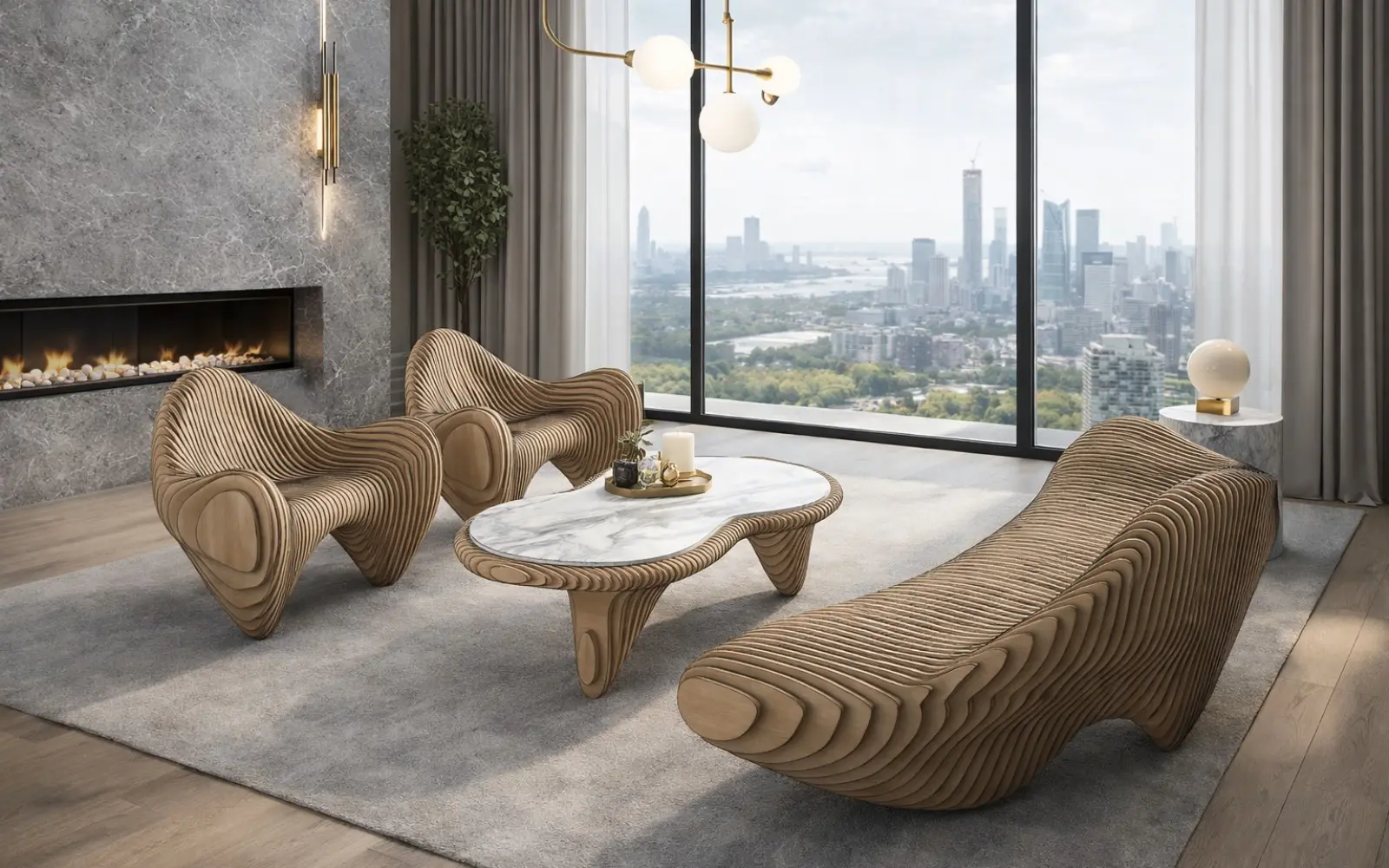
Interested in parametric furniture? Whether you're an architect specifying custom seating for a public space, a designer looking for a statement piece for a luxury interior, or simply fascinated by the intersection of algorithms and physical form — this guide covers everything: what parametric furniture is, how it's designed and made, the materials involved, and how to commission your own.
What Is Parametric Furniture?
Parametric furniture is furniture designed using computational algorithms rather than traditional drafting methods. Instead of sketching a chair and then building it, parametric designers define a set of rules, relationships, and variables — parameters — and let the computer generate the form.
Change a single parameter (the angle of a curve, the spacing between ribs, the overall height) and the entire design updates automatically, producing a new variation of the same underlying logic. This is what makes parametric design fundamentally different from conventional furniture design: the form is not fixed, it's generated.
The result is furniture that looks unlike anything drawn by hand — flowing surfaces, complex curvatures, interlocking ribbed structures, and organic geometries that appear both natural and precise simultaneously. Parametric furniture sits at the intersection of design, mathematics, engineering, and digital fabrication.
How Parametric Furniture Is Designed
The Software
Parametric furniture design relies on specialised computational design software:
The industry standard for parametric design. A visual programming environment where designers connect nodes to create algorithmic relationships. A single definition can generate hundreds of unique furniture variations by adjusting input sliders.
Autodesk's all-in-one CAD/CAM platform — combines design, simulation, and CNC toolpath generation in a single environment, popular for parametric furniture with complex fabrication requirements.
Originally a visual effects tool, now used by advanced computational designers for complex generative forms that push beyond standard parametric platforms.
The Design Process
Types of Parametric Furniture
Parametric Benches
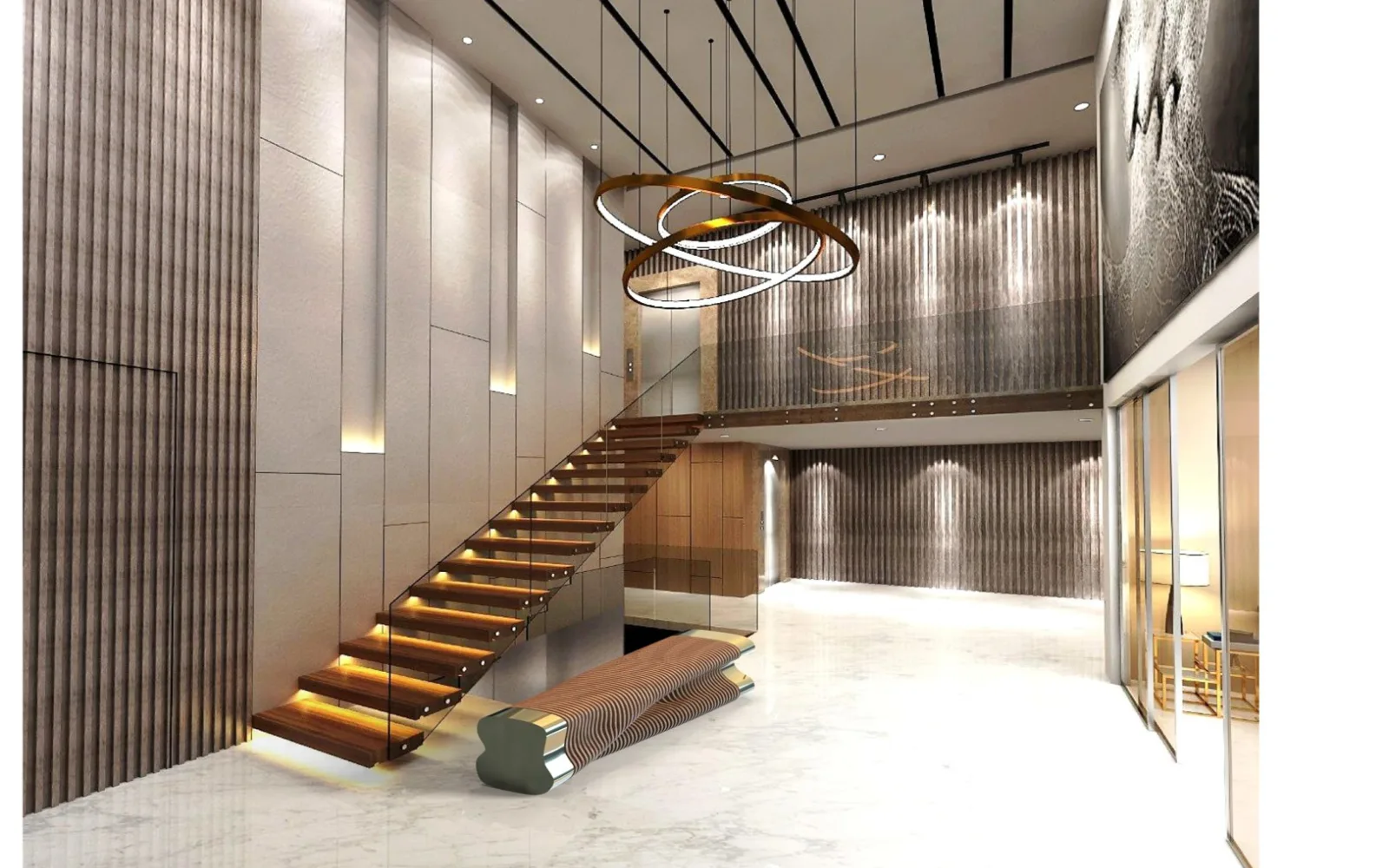
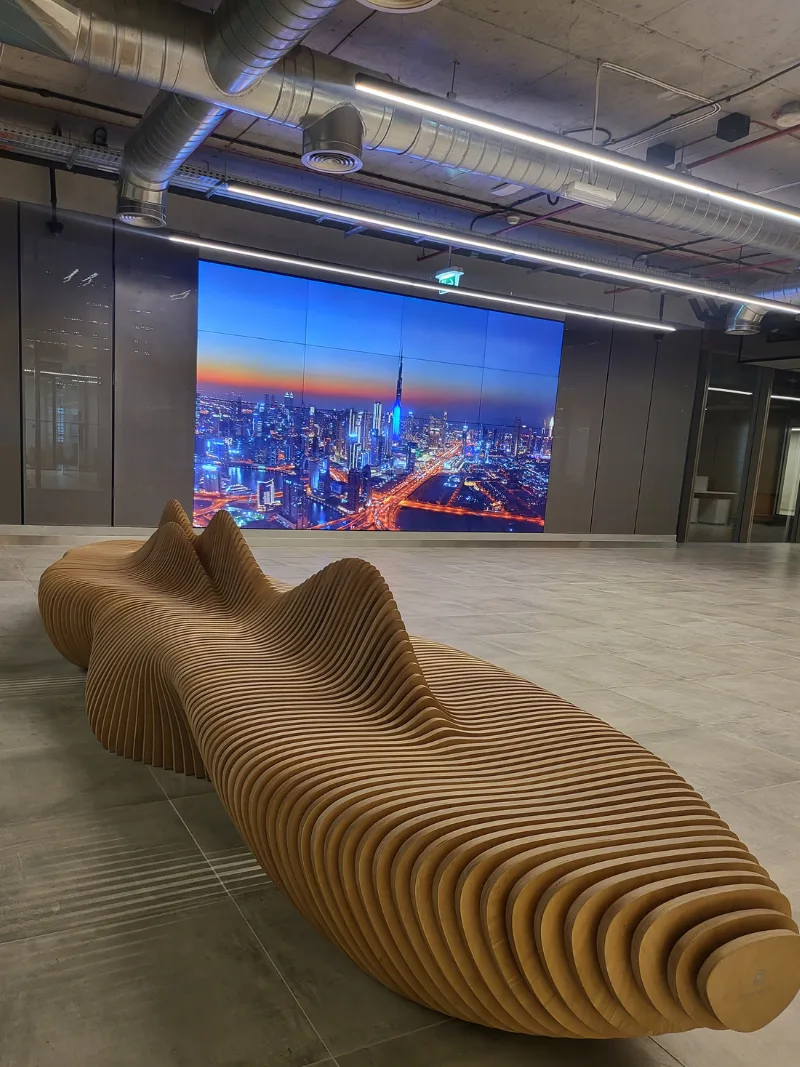
Parametric benches are the most common application of computational furniture design — particularly for public spaces, parks, corporate campuses, and hotel gardens. The ribbed bench (dozens of individually profiled ribs assembled side by side to form a flowing seating surface) is the most recognisable parametric furniture typology.
Each rib is a slightly different shape, creating a smooth transition from seat to backrest to armrest. The gaps between ribs allow water drainage (critical for outdoor use) and create a distinctive visual rhythm of light and shadow.
Best for: Public parks, corporate campuses, hotel gardens, museum courtyards, university grounds.
Materials: Corten steel, stainless steel, plywood, hardwood, aluminium.
Scale: 1.5–3 metres length. | Budget range: ₹3L–₹15L.
Parametric Chairs

Parametric chairs push the boundaries of what a single-person seating object can be. From waffle-structured plywood chairs to flowing metal shell forms, these pieces are designed to be both functional and sculptural.
The design challenge with parametric chairs is balancing visual drama with ergonomic comfort. Computational tools allow designers to simulate body contact points and weight distribution — optimising seat curves and backrest angles so the result is as comfortable as it is striking.
Best for: Executive offices, luxury residential interiors, design showrooms, boutique hotels.
Materials: CNC-routed plywood, formed metal, 3D-printed composites.
Budget range: ₹1.5L–₹8L per chair.
Parametric Tables
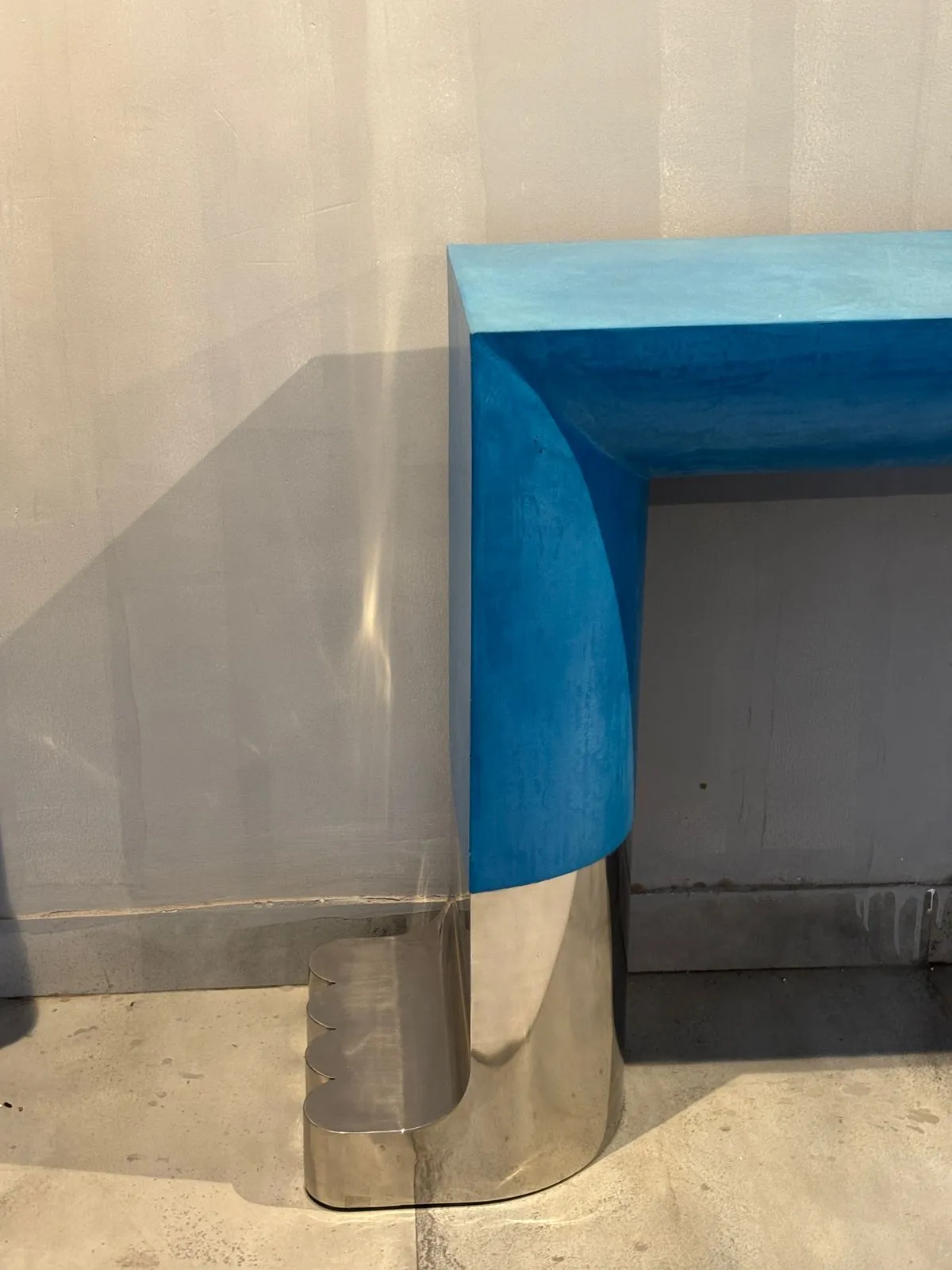
Parametric tables range from small side tables to large conference tables. The most common approach is a parametrically designed base (complex, flowing, structural) supporting a simple top surface (glass, stone, or solid wood). The contrast between the intricate base and the clean top creates visual tension that makes these tables compelling.
Another approach is the fully parametric table — where the entire structure, including the surface, is computationally generated. These pieces are sculptural objects that happen to be functional.
Best for: Boardrooms, luxury dining rooms, hotel lobbies, designer residences.
Materials: Metal base with glass/stone top, CNC-routed wood, formed stainless steel.
Budget range: ₹2L–₹12L.
Parametric Wall Panels and Screens

CNC-cut parametric panels with algorithmically generated patterns — flowing curves, gradient density, Voronoi tessellations, wave patterns — transform flat walls into three-dimensional surfaces. These can serve as room dividers, privacy screens, acoustic panels, or purely decorative feature walls.
The parametric approach allows each panel to be slightly different while maintaining visual coherence across a large installation — creating living, gradient surfaces that feel designed rather than tiled.
Best for: Office interiors, hotel lobbies, restaurant interiors, residential feature walls.
Materials: CNC-cut MDF, plywood, corten steel, stainless steel, corian.
Budget range: ₹1L–₹8L per panel depending on size and material.
Parametric Seating Installations
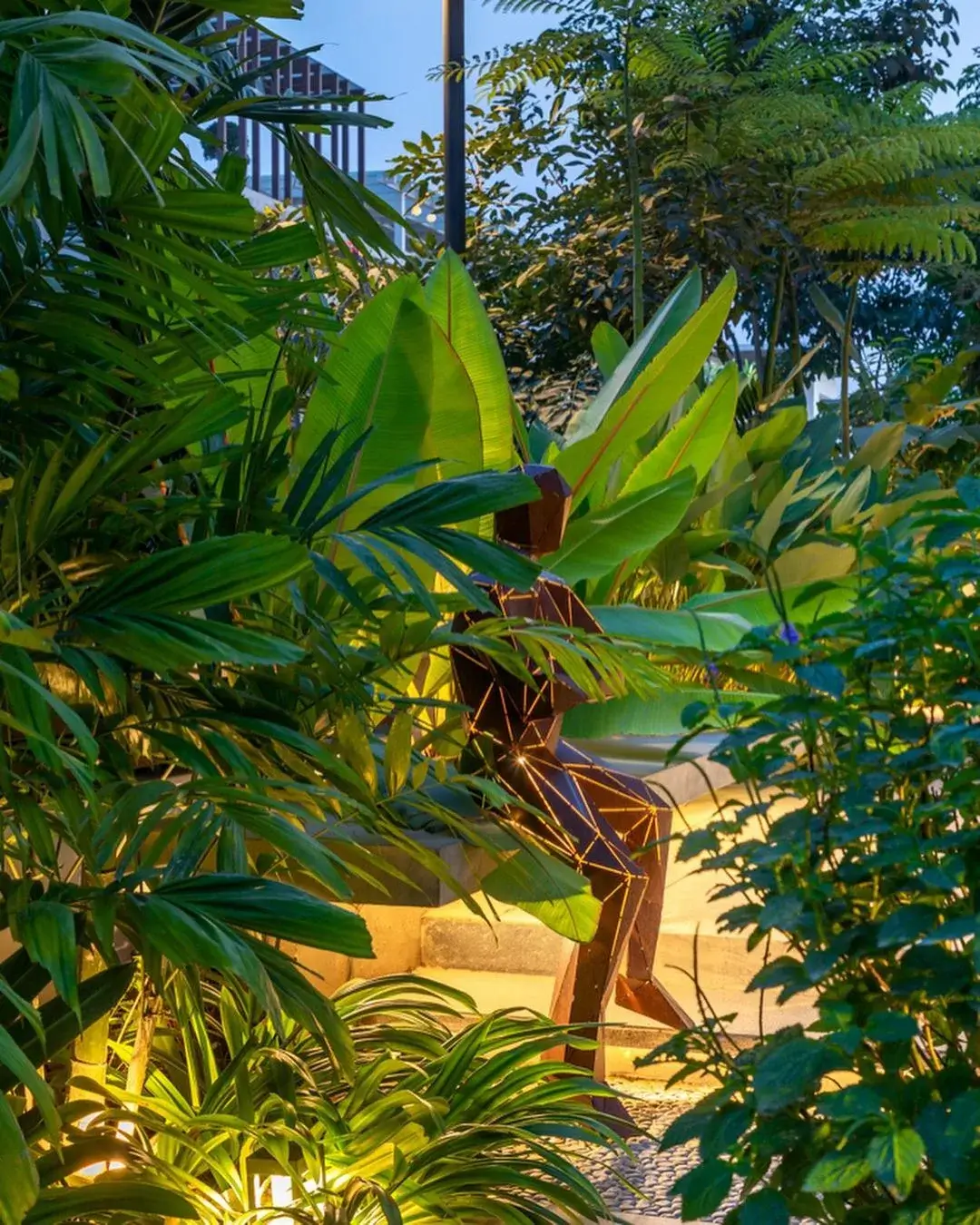
For large public spaces — airports, transit stations, corporate atriums, museum halls — parametric seating installations combine multiple seating positions into a single flowing form. These installations are designed as landscape elements rather than individual chairs — people sit, lean, perch, and interact with the form in multiple ways.
These are among the most complex parametric furniture projects, requiring extensive structural engineering, wind-load analysis (if outdoors), and coordination with architects and landscape designers.
Best for: Airports, corporate atriums, public plazas, museums, university commons.
Materials: Corten steel, stainless steel, concrete + metal hybrid.
Scale: 3–10+ metres. | Budget range: ₹10L–₹50L.
Materials for Parametric Furniture
Metal — CNC-Cut Steel and Aluminium
Metal is the material of choice for parametric furniture that needs to withstand outdoor conditions, high-traffic public use, or demands the visual weight and precision that only metal provides. CNC plasma and laser cutting allow steel and aluminium sheets to be cut into complex rib profiles with millimetre precision. Corten steel is ideal for outdoor applications — the natural rust patina eliminates maintenance. Stainless steel is preferred for indoor or polished-finish applications. Aluminium is used when weight is a constraint.
Wood — CNC-Routed Plywood and Hardwood
Plywood is the most accessible material for parametric furniture — affordable, easy to CNC-route, and structurally capable when properly engineered. Birch plywood is the standard choice for its consistent quality and attractive edge grain. Hardwood (oak, walnut, teak) is used for premium applications where natural grain and warmth are integral to the design intent.
Hybrid — Metal + Wood, Metal + Stone, Metal + Glass
Many parametric furniture pieces combine materials — a metal structural frame with a wooden seating surface, a corten steel base with a glass tabletop, or stainless steel ribs with stone inlay. Material combination adds visual complexity and allows each material to be used where it performs best.
How Parametric Furniture Is Fabricated
CNC Cutting
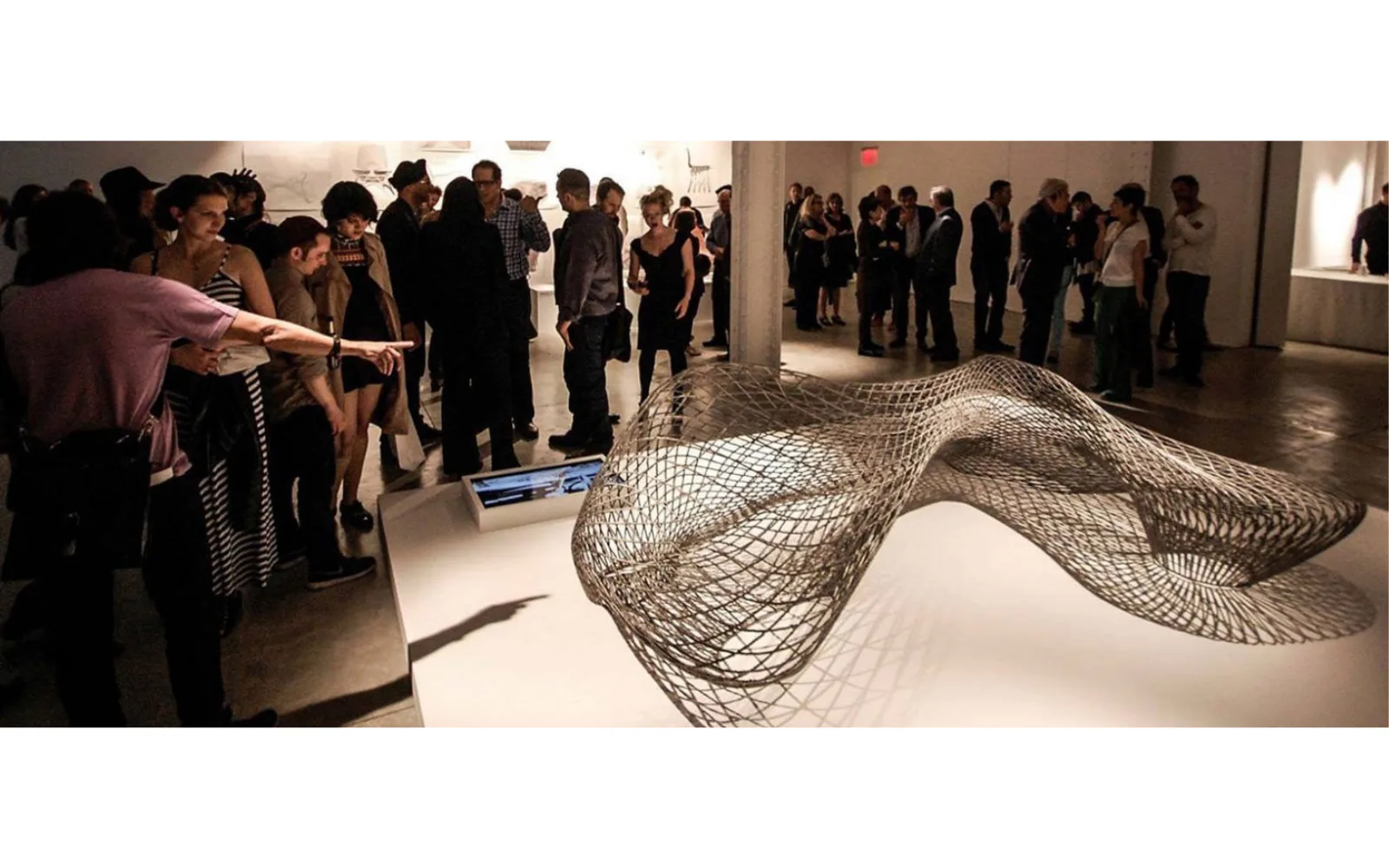
The majority of parametric furniture is fabricated using CNC machines. The computational design file is exported directly to the CNC machine, which cuts each component with precision tolerances of ±0.1mm. For metal: CNC plasma cutting (steel above 3mm), CNC laser cutting (precise, clean edges), and CNC waterjet cutting (thick metal without heat distortion). For wood: CNC routing allows 3D surface sculpting — ergonomic seat curves, tapered edges, and sculpted details.
Assembly
Parametric furniture is typically assembled from dozens to hundreds of individually cut components. Each piece is numbered according to the computational model and assembled in sequence — ensuring alignment, spacing, and structural integrity as components come together. Metal components are welded; wood components use interlocking joints, bolts, or adhesive.
Finishing
Metal parametric furniture is finished with the same processes used for sculpture — natural patina (corten), brushed or polished (stainless steel), or powder-coated colour (mild steel). Wood pieces are sanded, sealed, and finished with oil, lacquer, or paint depending on the intended use environment.
Parametric Furniture vs. Traditional Furniture
| Factor | Parametric | Traditional |
|---|---|---|
| Design uniqueness | Every piece can be unique — adjust parameters to generate new variations | Designed once, reproduced identically |
| Site-specificity | Customised precisely for its location — follows curves, contours, site constraints | Fixed form must adapt to the space |
| Structural optimisation | FEA simulation optimises material — lighter and stronger | Based on experience and convention |
| Fabrication precision | CNC: ±0.1mm tolerances | Hand-fabrication: ±1–3mm |
| Visual impact | Visually arresting — immediately distinctive | Familiar, comfortable, expected |
How Much Does Parametric Furniture Cost?
Parametric furniture is custom work — priced according to complexity, material, and scale. The design phase (algorithm development, variation generation, structural simulation) typically accounts for 20–30% of the total cost.
| Type | INR Range | USD Approx. |
|---|---|---|
| Parametric chairs | ₹1.5L – ₹8L per piece | $1,800 – $9,600 |
| Parametric benches (1.5–3m) | ₹3L – ₹15L | $3,600 – $18,000 |
| Parametric tables | ₹2L – ₹12L | $2,400 – $14,400 |
| Parametric wall panels | ₹1L – ₹8L per panel | $1,200 – $9,600 |
| Large seating installations | ₹10L – ₹50L | $12,000 – $60,000+ |
Where Is Parametric Furniture Used?
Public Spaces & Urban Furniture
Cities and municipalities commission parametric street furniture — benches, seating installations, shelters — to differentiate public spaces and signal investment in design quality.
Corporate Campuses & Offices
Technology companies and design-forward organisations use parametric furniture in common areas and outdoor spaces to reinforce their brand identity as innovative and design-conscious.
Hotels & Hospitality
Luxury hotels commission parametric furniture as feature pieces — lobby seating, garden benches, restaurant tables. These become Instagram moments that guests photograph and share.
Residential Interiors
Architects specify parametric furniture for high-end residential projects where clients want truly unique pieces — a parametric dining table or console becomes the centrepiece of a room.
Museums & Cultural Institutions
Museums use parametric seating in galleries, lobbies, and sculpture gardens — the furniture itself becomes part of the exhibition, demonstrating the intersection of art, technology, and design.
How to Commission Parametric Furniture
Why Architects Choose FormForge for Parametric Furniture
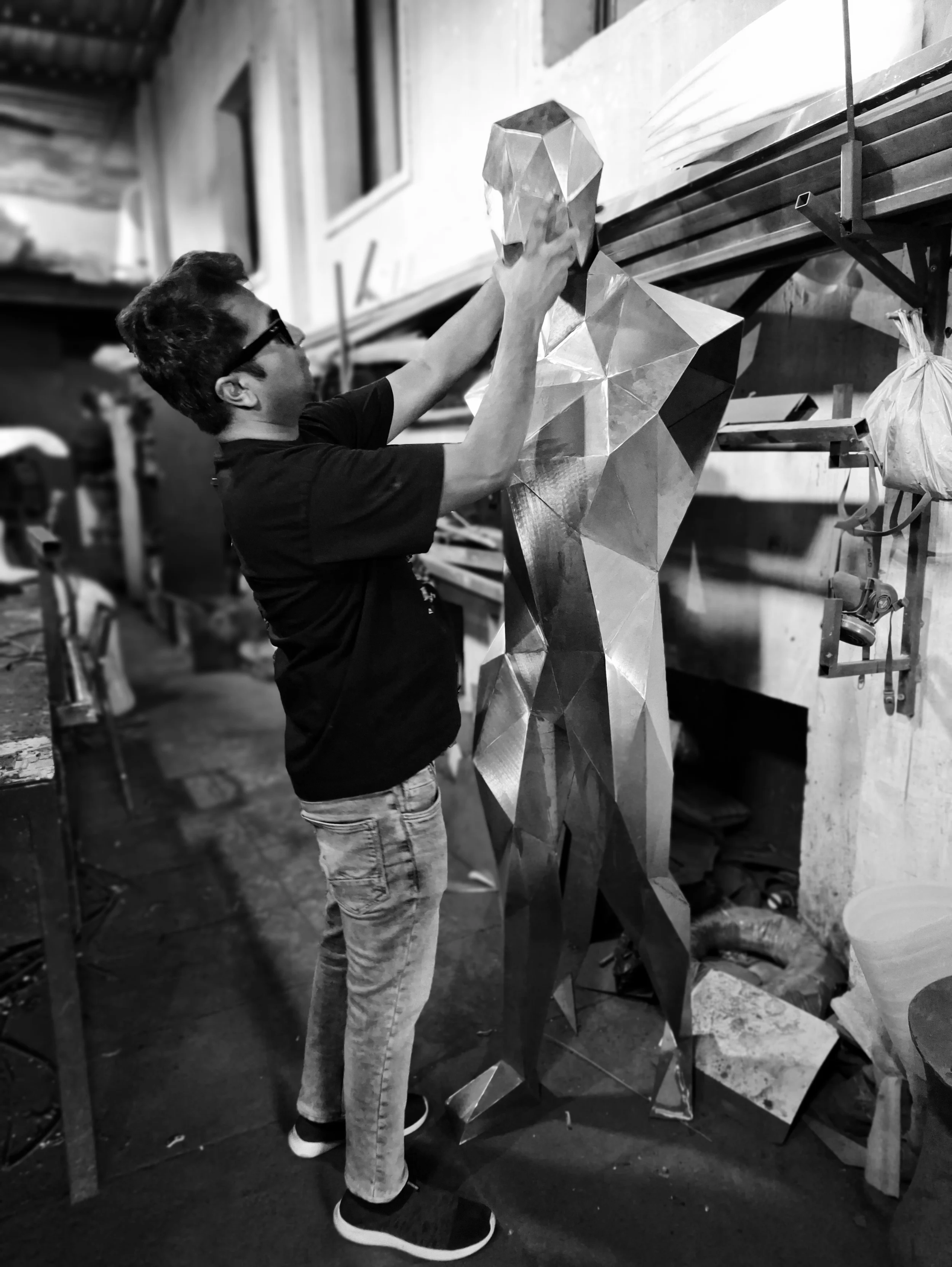
FormForge is a design-led studio founded by Abhinav Goyal, based in Noida, Delhi NCR. Our work lives at the intersection of computational design, material expertise, and precision fabrication.
Frequently Asked Questions
What is parametric furniture design?
Parametric furniture is designed using computational algorithms — mathematical rules and relationships — rather than traditional hand drafting. Parameters (variables like height, curvature, rib spacing) are defined, and the computer generates the form. Adjusting any parameter automatically updates the entire design, allowing rapid exploration of hundreds of variations.
What software is used for parametric furniture design?
The most common tools are Grasshopper (a visual programming plugin for Rhinoceros 3D), Fusion 360 (for integrated CAD/CAM workflows), and Houdini for advanced generative forms. The choice depends on the designer's workflow and the project's fabrication requirements.
How much does a parametric bench cost?
Custom parametric benches typically cost ₹3,00,000–₹15,00,000 ($3,600–$18,000) depending on material (corten steel, stainless steel, or wood), length (1.5–3 metres), and design complexity. Large-scale public seating installations can exceed ₹50,00,000.
Can parametric furniture be used outdoors?
Yes — when made from appropriate materials. Corten steel and marine-grade stainless steel (316) are designed for permanent outdoor installation. They withstand rain, sun, frost, and coastal conditions without maintenance. Wood parametric furniture for outdoor use requires weather-resistant species (teak, iroko) and protective finishes.
How long does it take to make parametric furniture?
From initial brief to installed piece: 6–12 weeks. This includes 2–4 weeks for design and engineering, 3–6 weeks for fabrication, and 1–2 weeks for finishing and installation. Large public installations may take 12–16 weeks.
Is parametric furniture comfortable?
Well-designed parametric furniture is both visually striking and ergonomically sound. Computational tools allow designers to simulate body contact points and weight distribution, optimising seat curves and backrest angles for comfort. The flowing surfaces of parametric seating often contour to the body more naturally than flat-planed traditional furniture.
Ready to Commission Parametric Furniture?
Whether you're an architect specifying custom seating for a public project, a designer looking for a statement piece, or a developer adding landmark furniture to a campus — we'd like to hear about your project.
600+ Installations · 10+ Years · India & UAE Delivery
FormForge is a design-led studio based in Noida, Delhi NCR, India, specialising in parametric furniture, computational design, and metal sculpture. Founded by Abhinav Goyal. Materials include corten steel, stainless steel, wood, and hybrid combinations. Over 600 installations across India and the UAE.
Explore More From FormForge
View Our Portfolio
Explore our complete collection of metal sculptures and installations created for temples, homes, and commercial spaces worldwide.
Custom Sculptures
Get a custom god idol designed specifically for your space. Our team will help bring your vision to life with premium materials.
Related Articles

Custom Metal God Idols & Hindu Deity Statues in Steel, Brass & Corten | FormForge India
Commission handcrafted metal god idols and Hindu deity statues in stainless steel, brass, and corten steel. Custom Ganesha, Shiva, Nandi, Buddha — weather-resistant, vastu-compliant, 6 inches to 20 feet. Get a quote from FormForge.
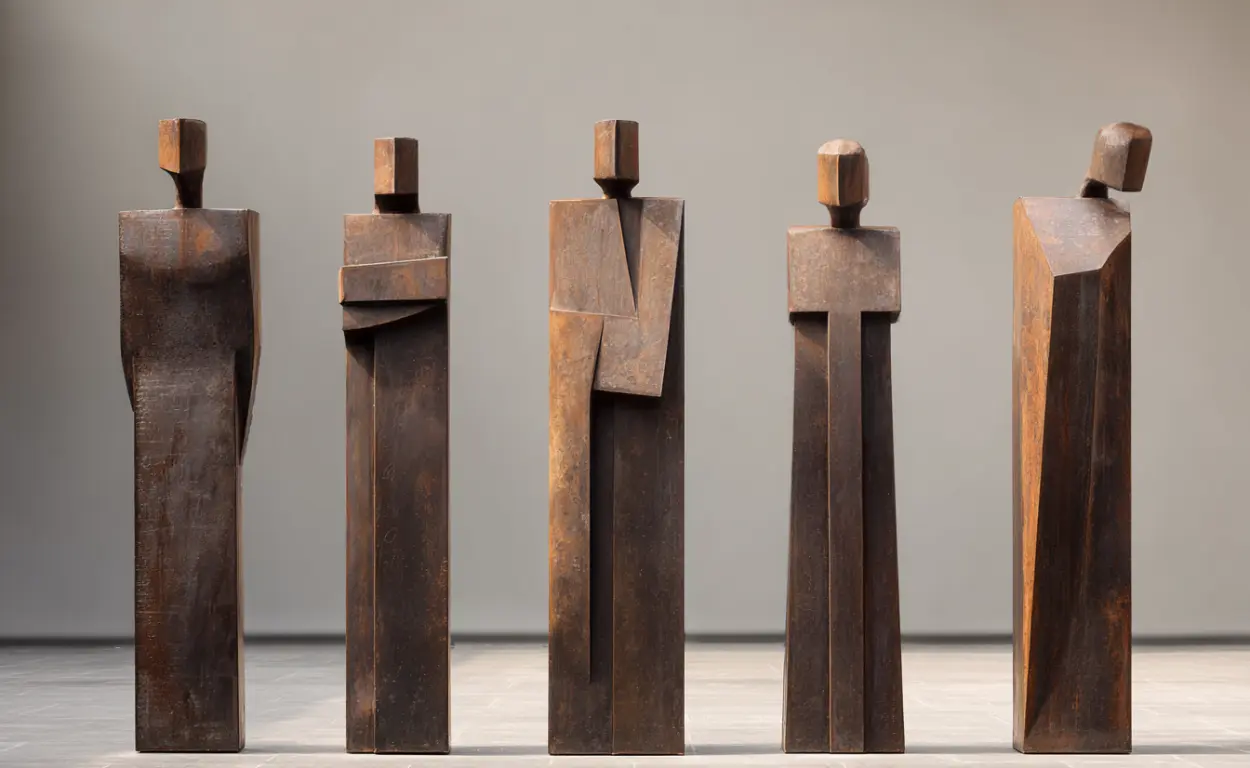
Outdoor Sculptures in Metal: The Complete Guide to Architectural & Site-Specific Installations
Explore the definitive guide to high-end outdoor sculptures in metal. Learn how corten steel, stainless steel, and bronze installations are designed, commissioned, and built for luxury residences, commercial developments, and public spaces — with Formforge's site-specific approach.