Who Made the Sculpture of David? Unveiling the Genius Behind the Masterpiece

Who Made the Sculpture of David? Unveiling the Genius Behind the Masterpiece
Michelangelo Buonarroti, a famous artist from Italy, created the sculpture of David.
This amazing work of Renaissance art was made between 1501 and 1504. It shows David right before he faces the giant Goliath.
The sculpture is known for its perfect shape, lively pose, and detailed work. It shows Michelangelo's incredible talent.
The sculpture of David is a big influence on artists and art fans all over the world.
Key Takeaways
- The sculpture of David was created by Michelangelo Buonarroti.
- It is a crowning achievement of Renaissance art.
- The figure represents the biblical hero David in the moment before battle.
- Michelangelo worked on the marble block from 1501 to 1504.
- The work is renowned for its flawless anatomy and lifelike detail.
Michelangelo: The Artist Behind David
Michelangelo di Lodovico Buonarroti Simoni was born in 1475 in Caprese, Italy. His extraordinary talent emerged early, leading to his apprenticeship under Domenico Ghirlandaio and later training in the Medici sculpture garden under Bertoldo di Giovanni.
By the time he received the commission for David at age 26, Michelangelo had already completed his remarkable Pietà in St. Peter's Basilica. However, the David sculpture would cement his reputation as the preeminent sculptor of his era.
Michelangelo's approach to sculpture was distinctive. He believed each block of marble contained a figure waiting to be revealed, famously stating: I saw the angel in the marble and carved until I set him free. This philosophy guided his meticulous work on David, transforming a discarded marble block into an enduring symbol of human potential.
The Definitive Answer to Who Created David
The sculpture of David is unequivocally credited to Michelangelo Buonarroti. Commissioned by Florence’s wool merchants’ guild, the Arte della Lana, Michelangelo received the project in 1501, taking over a block originally assigned to Agostino di Duccio.
The story of David begins with a challenging commission. In 1501, the Opera del Duomo and the Arte della Lana (Wool Guild) of Florence sought an artist to work with a massive but flawed block of Carrara marble. This block had been abandoned by at least two previous sculptors, including Agostino di Duccio, who had roughed out some initial forms before determining the marble too difficult to work with.
After a competitive selection process, Michelangelo was awarded the project. Despite the marble's imperfections, he saw potential where others had seen only limitations. For nearly three years, he worked meticulously, often in solitude, to bring his vision to life.
Using traditional Renaissance sculpting tools like chisels, hammers, drills, and rasps. Michelangelo gradually revealed the figure within the stone. Documentary evidence from the period indicates Michelangelo regularly provided progress reports to guild overseers, who were increasingly impressed by the emerging masterpiece.
Artistic and Technical Innovations
What distinguishes Michelangelo's David from previous depictions of the biblical hero is his interpretation of the narrative moment. Rather than portraying David after his victory over Goliath (as was traditional), Michelangelo captured him in the tense moment before battle.
Several artistic innovations make this sculpture revolutionary:
Contrapposto Stance
David stands in perfect contrapposto, with his weight shifted onto one leg, creating a natural S-curve through the body. This classical Greek pose was revived during the Renaissance but taken to new heights by Michelangelo.
Anatomical Precision
The sculpture displays extraordinary anatomical accuracy, reflecting Michelangelo's extensive study of human anatomy. Each muscle, tendon, and vein is rendered with lifelike precision, from the tensed neck to the detailed hands.
Psychological Dimension
David's expression captures a complex psychological state determination mingled with concern. His furrowed brow and intense gaze convey the gravity of the moment and the weight of his responsibility.
Scale and Proportion
The figure's massive scale (over 17 feet tall) created unique challenges for Michelangelo. He skillfully adjusted certain proportions, including slightly enlarging the head and hands, to maintain visual harmony when viewed from below.
David as Political Statement
The sculpture was installed outside the Palazzo Vecchio in the Piazza della Signoria—The heart of Florentine government rather than on the cathedral as originally planned. In this location, David became a symbol of the Republic of Florence's determination to remain independent against more powerful neighboring states. Just as the biblical David defeated the giant Goliath against overwhelming odds, Florence saw itself as a small republic standing against powerful threats, particularly from Rome and Milan.
Renaissance Ideals Embodied
David perfectly embodies Renaissance humanist ideals:
- Human potential and capability
- The perfection of the human form
- Protective rubber gloves
- Classical inspiration reimagined
- Rational thought combined with spiritual meaning
- The individual's capacity to overcome challenges
The sculpture represents the Renaissance belief in humanity's potential for greatness both physically and intellectually.
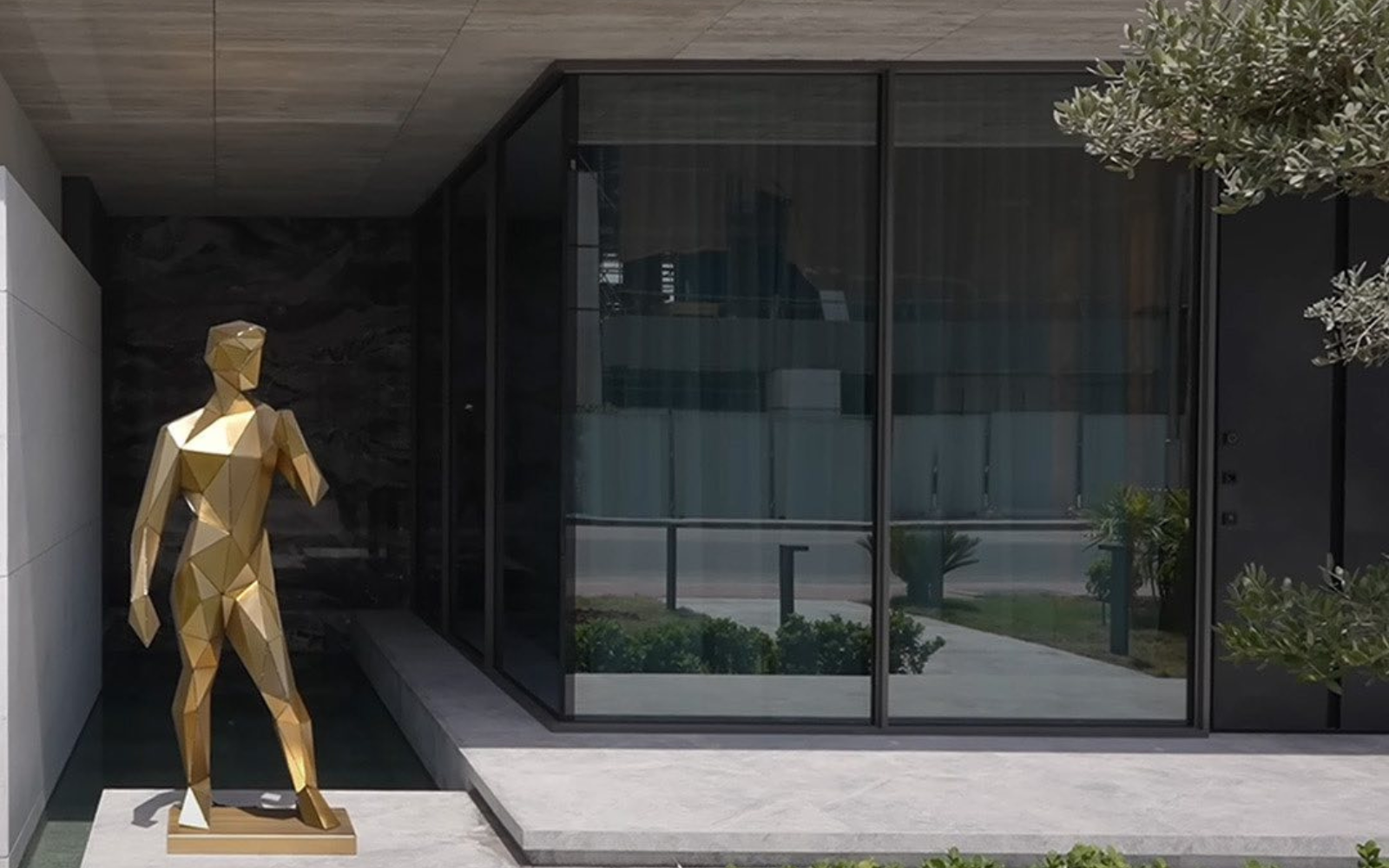
Our Artistic Vision: Reimagining David for the Modern Era
Our contemporary David sculpture, crafted for Dubai Mega Mansion, reflects a bold fusion of Renaissance heritage and modern innovation. Tasked with creating a signature piece for this iconic location, our team set out to pay homage to Michelangelo’s timeless masterpiece while reinterpreting it through a 21st-century lens.
Sculptor Abhinav Goyal, renowned for his ability to blend classical forms with cutting-edge techniques, drew inspiration from the original David’s graceful proportions and dynamic contrapposto stance. However, Goyal’s vision diverged by deconstructing the figure into a series of asymmetrical steel plates. This fragmented yet harmonious design captures the essence of Michelangelo’s work while embracing a modern aesthetic that resonates with today’s art collectors and design enthusiasts.
The sculpture’s construction process mirrors the philosophical underpinnings of our approach: honoring tradition while pushing boundaries. Each steel plate was meticulously shaped and layered to evoke the human form, creating a dialogue between the solid permanence of Michelangelo’s marble and the fluid, reflective quality of contemporary materials. The result is a piece that feels both familiar and strikingly new, inviting viewers to reconsider David’s enduring relevance.
Designed to withstand Dubai’s harsh climate, the sculpture features a weatherproof finish that ensures its longevity in both indoor and outdoor settings. A custom backlighting system further elevates the piece, casting dramatic shadows and highlighting its three-dimensionality after sunset. This interplay of light and form transforms the sculpture into a dynamic experience, shifting in character as day turns to night.
Installed at a luxurious Palm Jumeirah mansion, this reimagined David serves as a testament to the motif’s adaptability and universal appeal. It bridges the gap between Renaissance Florence and modern Dubai, proving that great art can transcend time and place to inspire new generations.
Conclusion: The Enduring Legacy of Michelangelo’s David
Michelangelo’s David, carved over 500 years ago, remains a pinnacle of human creativity, blending technical precision, emotional intensity, and profound symbolism. Its ability to captivate audiences at Florence’s Galleria dell’Accademia is matched only by its influence on artists worldwide, including our own reinterpretation for Palm Jumeirah.
The question “Who made the sculpture of David?” may be answered simply "Michelangelo Buonarroti" but the masterpiece’s significance runs far deeper. It embodies the Renaissance spirit of human potential, a vision that continues to resonate in our modern creation. From the chisel marks of 16th-century Florence to the sleek steel of 21st-century Dubai, David stands as a powerful reminder of art’s ability to transform raw materials into enduring symbols of excellence.
Our contemporary David is more than a tribute; it’s a conversation across centuries, a celebration of how artistic genius can evolve while remaining rooted in the universal truths of beauty, resilience, and creativity. As Michelangelo once saw an angel in a block of marble, we see in David a spark of inspiration that continues to shape the future of art.
Exploring Michelangelo’s David: Your Questions Answered
Who sculpted the iconic David statue?
Michelangelo Buonarroti, a master of the Italian Renaissance, crafted the sculpture of David between 1501 and 1504, showcasing his unparalleled skill in marble carving.
Why is Michelangelo’s David considered significant?
David stands as a testament to artistic excellence, with its lifelike anatomy, emotional intensity, and embodiment of Florence’s republican ideals. It remains a cornerstone of Renaissance art.
What material was used for the David sculpture?
The statue was carved from a single block of premium Carrara marble, prized for its fine texture and durability.
How tall is Michelangelo’s David?
The sculpture towers at approximately 17 feet, making it an imposing yet harmonious figure designed to inspire awe.
Where can I see the original David sculpture?
The original masterpiece resides in the Galleria dell’Accademia in Florence, Italy, where it draws countless visitors each year.
How was David received when first unveiled?
In 1504, the sculpture was hailed as a triumph, celebrated for its technical brilliance and as a powerful symbol of Florentine pride.
Did Michelangelo’s David inspire Indian sculptors?
Yes, artists like Ramkinkar Baij were influenced by David’s classical proportions, blending Renaissance techniques with Indian artistic traditions to create innovative modern sculptures.
What obstacles did Michelangelo overcome while sculpting David?
Michelangelo tackled a flawed marble block, previously abandoned by other sculptors, using his expertise to transform its imperfections into a flawless work of art.
How has the David sculpture been preserved?
Careful conservation efforts, including indoor relocation, gentle cleaning, and environmental controls, have protected David’s marble surface and structural integrity for centuries.
Are there copies of Michelangelo’s David worldwide?
Numerous replicas, both faithful and creative, can be found in museums, public squares, and galleries globally, amplifying David’s enduring cultural impact.
Explore More From FormForge
View Our Portfolio
Explore our complete collection of metal sculptures and installations created for temples, homes, and commercial spaces worldwide.
Custom Sculptures
Get a custom god idol designed specifically for your space. Our team will help bring your vision to life with premium materials.
Related Articles

Luxury God Idols & Deity Statues | Stainless Steel, Brass & Corten Steel Collection
Explore Luxury God Idols & Hindu Deity Statues in Stainless Steel, Brass & Corten Steel. Discover custom-crafted Ganesha, Krishna, and Buddha sculptures available in antique, mirror-polished, and natural rust finishes. Designed to be weather-resistant and enduring, our religious idols are ideal for home temples, gardens, and monumental installations.
Outdoor Sculptures in Metal: The Complete Guide to Architectural & Site-Specific Installations
Explore the definitive guide to high-end outdoor sculptures in metal. Learn how corten steel, stainless steel, and bronze installations are designed, commissioned, and built for luxury residences, commercial developments, and public spaces — with Formforge's site-specific approach.