Outdoor Metal Sculpture Guide for Architects and Developers

Introduction: Why Outdoor Sculptures Fail — and How to Get It Right
Most outdoor sculptures are chosen the way furniture is — browsed online, selected by appearance, delivered, and placed. That approach produces forgettable results. A sculpture that does not belong to its site does not elevate it. It sits on it.
This guide is built for a different kind of client: architects designing landmark buildings, developers defining the identity of a precinct, landscape architects composing exterior environments, and private collectors who want a work that is genuinely inseparable from its setting.
It covers every decision that shapes a successful outdoor sculpture commission — material selection, structural engineering, site analysis, scale, weathering behaviour, fabrication methods, and installation logistics. It also explains how FormForge approaches each of these variables when designing custom metal outdoor sculptures for permanent installation across India and internationally.
What Makes an Outdoor Sculpture Architectural Rather Than Decorative
There is a meaningful distinction between a sculpture placed outdoors and an outdoor sculpture that functions architecturally. The first is a movable object that happens to be weather-resistant. The second is a spatial event — something that alters how a site is experienced, how sight lines are organised, how a building or landscape is perceived from a distance and from within.
Architectural outdoor sculptures are designed in response to specific site conditions: the mass and rhythm of surrounding structures, prevailing light direction and seasonal angle, pedestrian flow and viewing distances, ground material and planting composition, and the programmatic identity of the space itself.
This is what separates a sculpture designed in direct response to a site from a decorative piece sourced from a gallery catalogue. At FormForge, every commission begins with a site analysis phase before any design work begins. We assess orientation, shadow behaviour at different times of day, structural loading constraints, drainage, subgrade conditions for foundation design, and the visual weight of the surrounding built environment.
Only after this analysis do we begin developing sculptural form. The result is a work that feels inevitable — as though it could not exist anywhere else. That quality cannot be retrofitted. It must be designed in from the beginning. Clients exploring our custom outdoor sculpture commissions consistently report that this phase is what distinguishes a FormForge installation from anything they had previously sourced through conventional gallery or studio channels.
Metal Materials for Outdoor Sculpture: Corten Steel, Stainless Steel, and Bronze Compared
Material selection is not an aesthetic preference alone. For outdoor sculptures intended to perform over decades, material choice determines structural behaviour, surface evolution, maintenance demands, and total lifecycle cost. The three materials FormForge works with — corten steel, stainless steel, and bronze — each have distinct material characters that suit different site conditions and design intentions.
Corten Steel (Weathering Steel)
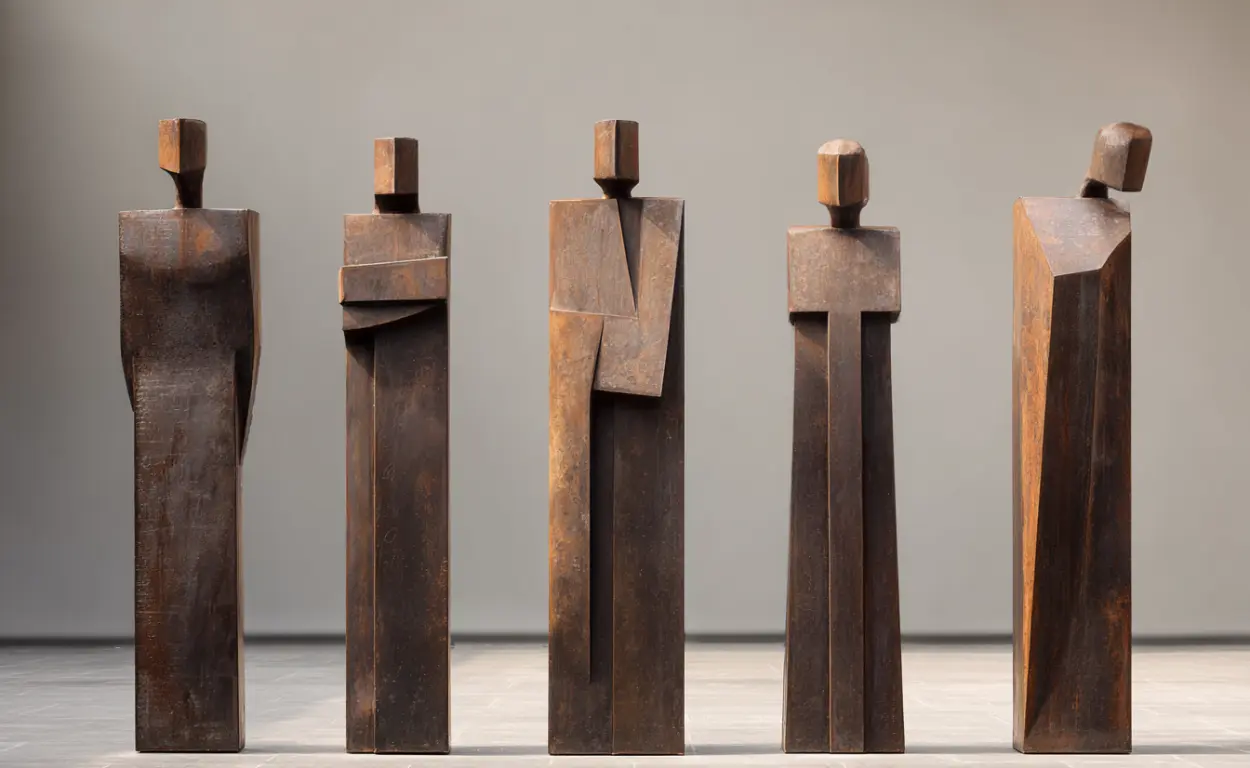
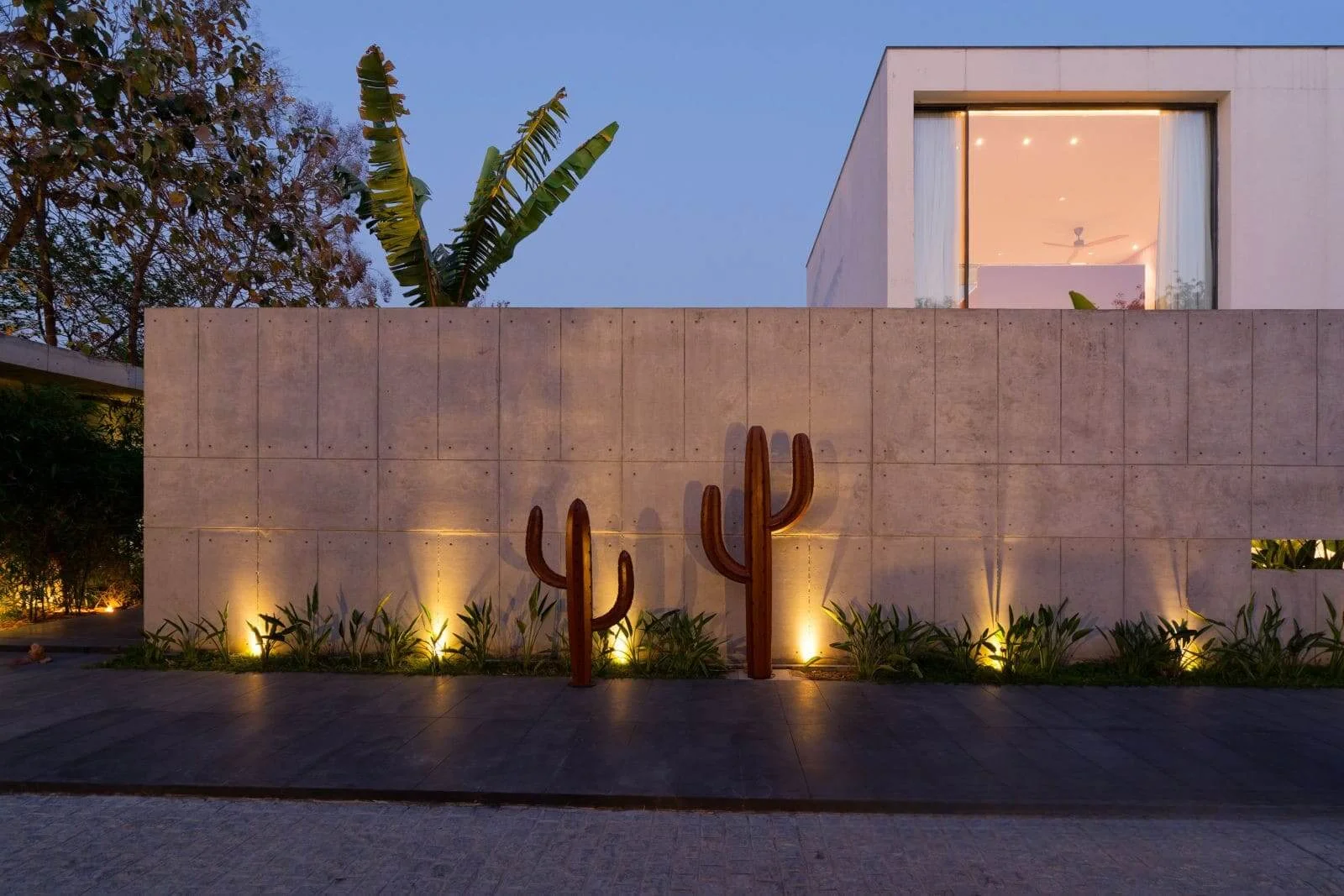
Corten steel outdoor sculptures develop a stable iron oxide patina when exposed to moisture and dry cycles. This patina acts as a self-protecting barrier that slows further corrosion, giving corten its characteristic deep rust-orange surface. The material is ideally suited to landscapes, garden settings, and architectural contexts where the warmth of oxidised iron complements natural materials — stone, timber, clay brick, rammed earth.
Corten achieves full patination over 18 to 36 months depending on climate conditions and level of exposure. During this period, the surface actively weathers and some surface rust runoff is expected — this must be accounted for in site design, particularly around light-coloured paving or water features. In coastal environments with high salt content, standard corten is not appropriate without surface treatment modification.
FormForge specifies modified alloy grades and applies initial sealing protocols for marine-adjacent installations. Once fully patinated, corten outdoor sculptures require minimal maintenance — occasional inspection of welds and drainage points every two to three years is sufficient.
Best for: Landscape installations, resort grounds, golf clubs, smart city plazas, memorial parks, private gardens, green building projects.
Stainless Steel (Grade 304 and 316)
The dominant material for contemporary architectural outdoor sculpture. Grades 304 and 316 are the standard choices; 316 is specified wherever chloride exposure is a risk — coastal sites, urban environments with road salt, or swimming pool adjacency. Stainless steel does not rust under normal conditions but is susceptible to surface contamination and staining in urban environments with industrial fallout or airborne pollutants.
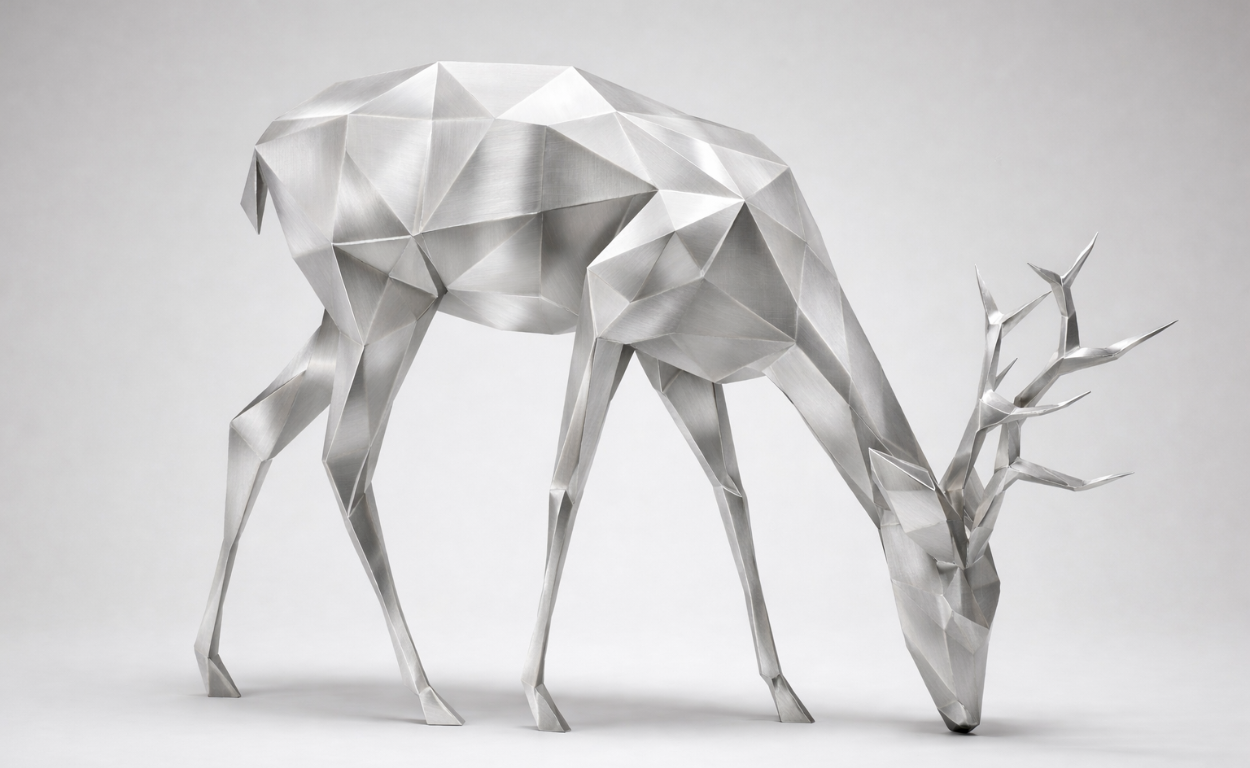
Stainless steel allows for far greater geometric precision and complexity than corten or bronze — compound curves, tensioned forms, and highly refined surface treatments are all achievable. It is the material of choice for minimalist architectural contexts, high-contrast commercial environments, and installations where the sculpture must read cleanly across large viewing distances. Mirror, brushed, or sandblasted finishes give architects tremendous tonal control — from a reflective surface that changes with light to a matte form that absorbs it.
Electropolishing is used at FormForge for critical architectural installations where long-term surface consistency is a priority. From a structural standpoint, stainless steel's higher yield strength relative to mild steel allows for thinner section sizes and more refined proportions in large-scale works.
Best for: Corporate lobbies, luxury residential podiums, hotel entrances, facade installations, coastal developments, large-scale minimalist architectural commissions.
Bronze
Bronze carries the longest track record of any metal used in outdoor sculpture — thousands of years of proven material performance. A silicon bronze alloy (typically 95% copper, 4% silicon, 1% manganese) is the current standard for cast outdoor sculpture, offering superior weldability and corrosion resistance compared to traditional tin bronze.
Bronze naturally develops a patina — either green verdigris in humid and coastal environments, or a dark brown-black in drier inland conditions. This patina evolution can be accelerated and controlled chemically during fabrication. Bronze is the most appropriate material for highly detailed figurative or organic sculptural forms, owing to the casting process's ability to capture fine surface texture and complex undercuts.
In India — where bronze holds millennia of sculptural heritage — commissioning a large bronze sculpture for a heritage hotel, cultural institution, or civic space creates an immediate visual conversation between past and present. Its cost is substantially higher than steel, which positions it as the premium choice within an already premium category.
Best for: Heritage properties, cultural institutions, five-star hotel entrances, figurative public art commissions, collectors seeking works in the classical sculptural tradition.
Mild Steel with Protective Coating
For large-scale covered outdoor installations or sheltered architectural contexts, mild steel fabricated with high-quality industrial coatings offers maximum scale flexibility. Custom powder coating and patination finishes can closely mimic more expensive metals at a more accessible price point. Used when a sculpture must integrate tightly with a building's specific material palette.
Best for: Large covered atriums, sheltered walkways, temporary architectural installations, projects where budget parameters require cost-effective fabrication at significant scale.
Site-Specific Outdoor Sculpture: What It Actually Means and Why It Matters
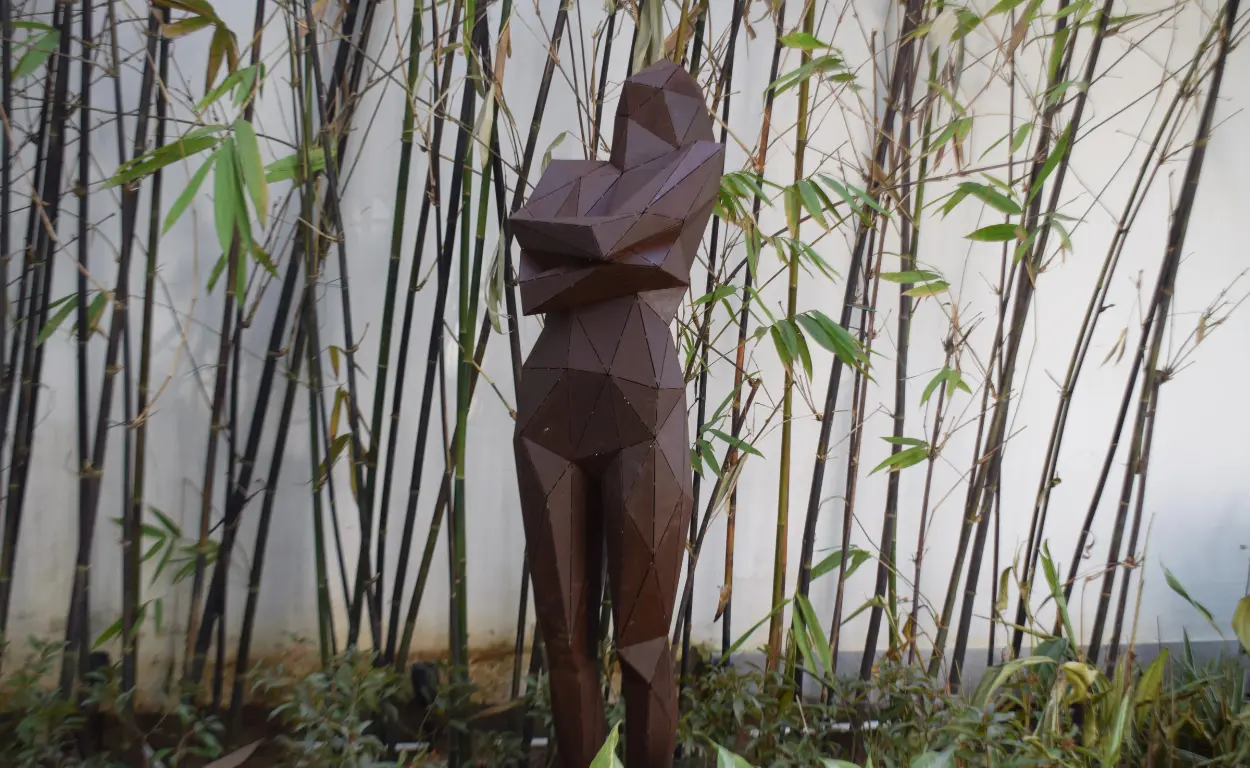
Site-specificity has become a widely used term in the art world, but its application is uneven. In many cases, it is applied retrospectively to work that was designed in a studio and then placed in a site. Genuine site-specific outdoor sculpture is different in kind, not just degree.
A truly site-specific work is one for which the site itself — its geometry, its light conditions, its programmatic context, its existing material palette, its cultural or civic identity — is the primary design input. The sculpture could not function in another location because it was never conceived in the abstract. It was conceived as a response to a particular set of conditions at a particular place.
This distinction has real consequences for outcomes. Site-specific outdoor sculptures consistently achieve higher levels of spatial integration. They anchor environments rather than inhabiting them. They are more likely to generate the kind of sustained attention and emotional engagement that defines successful public and private art commissions. They also hold — and often appreciate — their value more reliably, because they cannot be replicated or relocated without losing their essential character.
A site-specific large metal sculpture for a corporate campus in Cyber City, Gurugram will be fundamentally different from one designed for a beachfront resort in Alibaug or a smart city plaza in Amaravati. Proportion, orientation, surface treatment, interaction with wind and light, structural load on the ground or wall — all of these are resolved before fabrication begins.
FormForge's site-specific process involves multiple site visits, detailed photographic and shadow-study analysis, scale modelling (physical and digital), and ongoing dialogue between the sculptor, the structural engineer, and the site architect or landscape architect throughout the design development phase. Clients who have previously commissioned work through gallery channels often describe this process as a significant shift in experience — more demanding, more collaborative, and producing results that are materially different in quality. For anyone researching our approach to large-scale outdoor sculpture commissions, our project documentation explores this process in greater detail.
Scale, Proportion, and Visual Mass: How to Get It Right Outdoors
Scale is the single most consequential decision in outdoor sculpture, and the most consistently underestimated. The rules that govern scale in interior environments — where ceiling heights, furniture, and wall dimensions provide calibration references — do not translate to exterior spaces. Outdoors, the calibration environment is fundamentally different and typically much larger.
A sculpture that reads powerfully at three metres in a gallery will frequently disappear at the same size in an open landscape or against a large building facade. Conversely, a work correctly scaled for a large exterior setting can appear overwhelming when design decisions are made from studio models without sufficient site reference.
Several factors determine correct outdoor scale. Viewing distance is primary — what is the closest point from which the work will typically be seen, and what is the farthest? A sculpture sited at the end of a long approach requires sufficient height and visual mass to read clearly at 80 or 100 metres. The surrounding built scale is the second factor — a work installed against a four-storey facade needs substantially more vertical presence than one set into a low garden wall. Landform also matters: flat open ground reduces apparent scale; slight elevation increases it.
Large outdoor metal sculptures in India typically range from 8 feet to 60+ feet in height. As a guide: for double-height lobbies (6–9m), a sculpture of 8–14 feet reads powerfully without overwhelming the space. For open landscape settings, pieces below 10 feet frequently disappear against the broader visual field.
FormForge produces scale studies for every outdoor sculpture commission — including 1:50 and 1:20 physical models placed in site photographs at correct viewing angles, as well as digital renders with accurate sun angle simulation at multiple times of day. Decisions about height, horizontal extent, visual density, and negative space within the sculpture are all refined through this process before a single piece of metal is cut. Clients who engage with our residential outdoor sculpture projects will see this scale methodology reflected in every installation we document.
Structural Engineering in Outdoor Sculpture: What No One Explains
The structural requirements for outdoor sculptures are substantially more complex than for interior works, and they are rarely discussed in any depth in the design literature. This is where expensive problems originate.
- Wind Loading: The primary structural design concern for tall or cantilevered outdoor sculptures. Wind pressure increases with height and is amplified dramatically by exposed sites. A five-metre vertical corten panel sculpture in an exposed coastal site may need to resist wind loads equivalent to several tonnes of lateral force. All outdoor sculptures above 8 feet require engineering calculations compliant with IS 875 (Part 3) standards in India.
- Foundation Design: Most outdoor sculptures of significant scale require a reinforced concrete foundation engineered to resist both the vertical load of the sculpture and the overturning moment generated by wind loading. The depth and plan dimensions of this foundation depend on subgrade soil conditions — which must be tested, not assumed. In seismic zones, which covers most of urban India, anchoring and base connection design must account for the project site's seismic zone classification. FormForge commissions geotechnical reports for all major outdoor sculpture installations.
- Thermal Movement: Metal expands and contracts with temperature change. A ten-metre corten steel sculpture may expand and contract by 10 to 15 millimetres seasonally. If this movement is not accommodated in the base connection detail, it can introduce structural stress at welds over time. FormForge designs all large-scale outdoor metal sculptures with appropriate movement joints and base connection details that allow for thermal expansion without generating locked-in stress.
- Corrosion at Connections: The junction between the sculpture and its foundation is the most vulnerable point in any outdoor metal sculpture installation. FormForge specifies hot-dip galvanising or high-build epoxy coating for all embedded or concealed connection components, regardless of the surface treatment applied to the visible sculpture body.
- Access for Maintenance: Consider how the sculpture will be cleaned and inspected annually. Large pieces may require provisions for access platforms, and this must be factored into the design rather than addressed after installation.
- Crane and Vehicle Access: For pieces above 500kg, the installation route and crane positioning must be confirmed before fabrication is complete.
FormForge manages structural engineering, foundation design, and installation logistics as part of every large sculpture commission. Architects receive a complete installation package including structural drawings suitable for submission to local authorities.
Key Sectors Driving Demand for Metal Outdoor Sculpture
Luxury Real Estate
Premium developers are actively specifying statement outdoor sculptures for luxury residential and mixed-use developments. The sculpture has become a sales and marketing asset — photographed for launch campaigns, featured in project branding, and used to differentiate one development from another in an increasingly crowded market. Luxury real estate buyers and corporate tenants now expect art to be integrated into architecture, not placed as an afterthought.
Hospitality
Five-star hotels and destination resorts — particularly those seeking a distinct regional identity — are among the strongest commissioners of large bronze and corten outdoor sculpture. A well-placed monumental piece at the entrance or within the landscaped grounds becomes one of the most photographed elements of the entire property, carrying both spatial and brand value.
Corporate Campuses
Tech parks, financial headquarters, and pharma campuses use monumental metal outdoor sculpture to reinforce brand values of innovation, permanence, and scale. Metal sculpture for corporate outdoor environments is one of our most consistent commission categories — from landmark pieces at campus entrances to sculptural interventions within landscaped grounds.
Smart City and Public Infrastructure
New metro stations, civic plazas, and state government urban projects are active markets for public art sculpture fabrication. Percent-for-art frameworks — where a portion of a construction budget goes to commissioned artwork — are gaining traction, and large-scale metal sculpture almost always leads the shortlist. These commissions require the full package — structural engineering, foundation design, government approval documentation, and phased installation management.
Religious and Cultural Institutions
Some of the world's largest figurative metal sculptures are commissioned for religious sites, spiritual campuses, and cultural parks — monumental forms in stainless steel and bronze that demand foundry-level expertise and long-term structural thinking. These projects are among the most technically demanding commissions FormForge undertakes.
Surface Finishes for Outdoor Metal Sculpture: What Architects Specify Most
Mirror Polish
High-reflectivity finish that captures and distorts surrounding architecture, sky, and landscape. Iconic in contemporary public art and stainless steel outdoor sculpture. Requires periodic cleaning but is exceptionally durable. Maximises visual impact across large viewing distances.
Brushed / Satin
Directional linear texture that reduces glare while retaining metallic character. The most versatile finish — works across modern, industrial, and refined architectural contexts. Lowest maintenance of all stainless finishes and the most forgiving for high-touch public installations.
Natural Corten Patina
The self-forming rust patina of weathering steel — one of the most architecturally compelling finishes available for outdoor sculptures. Changes tone through the monsoon, shifts warmth through winter light, and deepens over years. The finish evolves with the environment rather than resisting it, making it particularly valued by landscape architects.
Custom Patination and Powder Coating
Chemical patination on bronze or mild steel can produce finishes from pale gold to deep black. Industrial powder coating opens up any RAL colour specification. Used when a sculpture must integrate tightly with a building's specific material palette or when budget parameters require mild steel fabrication with a premium visual result.
Electropolished Finish
Used at FormForge for critical architectural installations in coastal or high-pollution urban environments. The electrochemical process removes surface micro-roughness, reducing sites available for chloride deposition and contaminant accumulation — resulting in superior long-term surface consistency compared to mechanically polished finishes.
Commissioning an Outdoor Sculpture: The Full Process Explained
Most clients approaching their first major outdoor sculpture commission have a reasonable understanding of what they want in general terms but lack a clear picture of how the process runs from initial brief to finished installation. The following is a direct account of how FormForge manages a commission.
- Initial Brief (Free): Share your architectural drawings, site photographs, project brief, and budget. We discuss intent, scale, material, and feasibility. This is how most of our architectural commissions begin.
- Site Analysis: For commissions above ₹10 lakhs, we visit the site to assess spatial relationships, light conditions, structural substrate, and installation logistics. We produce a formal site analysis report. Shadow studies, sight line analysis, and subgrade assessment are completed during this phase. Typically two to four weeks.
- Concept Design: Our team produces 3D renderings showing the sculpture in context with your architecture — typically two to three distinct concept directions, not variations on a single idea. Each concept is presented with scale reference renders, material samples, and a preliminary structural rationale. Three to six weeks depending on project complexity.
- Structural Engineering: Structural load calculations, wind load engineering (compliant with IS 875 Part 3), foundation design, and seismic anchoring specifications are completed and documented. All drawings are signed by a licensed structural engineer and are suitable for submission to local authorities.
- Design Refinement: We iterate on the design in consultation with the architect, interior designer, and client until the brief is fully resolved. Surface treatment specifications are confirmed. A detailed project programme and fixed-price fabrication proposal are produced.
- Fabrication: Expert craftsmen at our Noida facility bring the sculpture to life using CNC cutting, TIG welding, grinding, and specialist finishing. For large-scale works, the sculpture is fabricated in sections designed for site assembly, with all connection points engineered and tested before delivery. Eight weeks to six months depending on scale.
- Quality Assurance: Structural integrity, finish quality, and dimensional accuracy are verified before the piece leaves the workshop. Major structural welds are inspected and surface treatments applied in workshop conditions, where quality control is substantially easier to maintain than on site.
- Installation: Our team manages site preparation, crane logistics, foundation work, mounting, and final levelling. For large works, FormForge coordinates with a licensed rigger and crane operator. All connection points are inspected after installation and the surface cleaned and treated to remove handling marks.
- Handover: We provide as-built structural drawings, material certification, and a full maintenance guide. A formal post-installation inspection at 12 months and 36 months checks all connection points, drainage performance, and structural integrity. This is included in the project delivery package.
Typical timeline: 10–20 weeks from design approval to installation for pieces up to 15 feet; 20–32 weeks for monumental commissions above 20 feet. We recommend engaging FormForge at the design development stage so the sculpture timeline aligns with your overall project programme. Clients reviewing our approach to public space sculpture installations will find project-specific installation documentation in our case study library.
Outdoor Sculpture for Luxury Residences: What Private Clients Should Know
Private residential outdoor sculpture commissions differ from commercial or public commissions in several important ways. The residential outdoor sculpture sits within a highly personal environment — seen primarily by its owner and their guests, in conditions of close familiarity over many years. Surface texture, material quality at close range, and the way the work behaves in the specific light conditions of that garden or terrace matter more in a residential context than they do for a civic installation viewed from distance. The work needs to sustain repeated, close attention, which demands a higher level of craft and material refinement.
Scale in residential outdoor settings is more nuanced than in commercial contexts. Very large sculptural works in residential gardens risk overwhelming the domestic scale of the setting. The most successful residential outdoor sculptures tend to occupy a scale range that commands presence without dominating — typically between 1.5 and 4 metres in height, though this varies considerably with the size and character of the property. Pool surrounds, entry courts, and garden rooms all have different optimal scales. FormForge routinely provides scale models and on-site mocking with temporary structures before design is finalised for residential commissions.
Privacy is a further consideration. Residential clients often want the sculptural work to be significant within the property but not to create a landmark visible from outside it. This affects siting, height, and material finish choices — polished stainless steel that creates dramatic internal reflections may also create unwanted visual signals from public streets or neighbouring properties.
Maintenance expectations also differ. Corten steel in appropriate climates delivers graceful ageing almost automatically once fully patinated. Stainless steel requires occasional cleaning — typically annually — to remove surface contamination. Bronze may require periodic wax treatment to stabilise patina development in the early years. FormForge provides tailored maintenance specifications for every residential installation, including material-specific care instructions and recommended inspection intervals.
Outdoor Sculpture for Commercial Developments and Public Spaces
Commercial and public outdoor sculpture commissions operate under a different set of constraints. For commercial developments — mixed-use precincts, hotel entrances, corporate campuses, luxury retail environments — outdoor sculpture serves a branding and identity function alongside its spatial role. The work must communicate something specific about the development's positioning, legible to a diverse audience at varying distances.
It must also be robust. A commercial outdoor sculpture will be touched, photographed extensively, and potentially subjected to vandalism or impact. FormForge specifies impact-resistant structural sections, tamper-resistant fixings, and surface treatments that can be cleaned or restored without specialist intervention for all commercial public-facing installations.
Public art commissions — funded through percent-for-art programmes, municipal commissions, or private philanthropy — involve additional process layers: artist selection, community engagement, approvals from heritage or public art advisory bodies, and in many cases, formal tender processes. FormForge has experience navigating all of these. We produce the documentation packages required for public art submissions — design statements, structural engineering certification, material specifications, and maintenance plans — and manage the consultation and approvals process as part of our project delivery.
FormForge carries full public liability and professional indemnity insurance. Insurance certificates are available on request and can be named in favour of the developer or main contractor. Clients exploring our commercial outdoor sculpture portfolio will see this process rigour reflected across the projects we have delivered.
Understanding Outdoor Sculpture Pricing: What Drives Cost
Outdoor sculpture at an architectural scale is a significant investment. Understanding what drives that investment allows clients to evaluate proposals more accurately and make better commissioning decisions.
- Material Cost: Corten steel is the most cost-effective of the three primary metals. Stainless steel is moderately higher. Bronze is the most expensive by a substantial margin, owing both to raw metal cost and to the highly specialised casting and finishing processes involved. For large-scale works, material cost can constitute 30 to 50 percent of total project value.
- Fabrication Complexity: A form that can be cut and welded from flat plate is fundamentally less expensive than one involving compound curves, formed sections, or complex three-dimensional joinery. FormForge produces detailed fabrication methodology notes as part of every design development proposal, so clients understand exactly what they are paying for.
- Engineering and Approvals: Structural engineering fees, geotechnical investigation, and any planning or heritage approvals can add 10 to 20 percent to project cost for major installations. FormForge includes these as line items in all project budgets from the outset.
- Installation Logistics: Crane hire, specialist rigging, traffic management for oversized loads, and site protection all carry real costs. For remote or access-constrained sites, installation logistics can approach the cost of fabrication itself.
As a guide for architects briefing clients:
- Mid-size courtyard or lobby pieces (4–8 ft): ₹8–15 lakhs
- Large outdoor commissions (10–20 ft): ₹20–60 lakhs
- Monumental sculptures (20 ft+): ₹60 lakhs – 2+ crores
All figures include design, engineering, fabrication, and installation. Always build a 15–20% contingency into the project cost. We work transparently within your project budget from the first conversation. Quoting material supply or fabrication alone produces figures that are not comparable to full-service architectural commissions and typically lead to additional costs later in the project.
Durability, Maintenance, and the Long View
One of the defining arguments for metal outdoor sculptures over alternatives — stone, timber, resin composites, ceramic — is material durability. But durability is not unconditional. It is a product of correct material specification, sound structural engineering, quality fabrication, and appropriate ongoing maintenance. Each of these must be present.
Corten steel outdoor sculptures, correctly specified and installed, can perform for 50 years or more with minimal maintenance. In permanently wet or shaded conditions, however, corten will continue to corrode beyond the stable patina layer. These conditions must be eliminated in design. FormForge designs drainage into all corten installations as a structural and material requirement.
Stainless steel outdoor sculptures in grade 316 with appropriate surface finish have an effectively indefinite service life in most environments. An annual cleaning regime using appropriate stainless steel cleaners will maintain surface appearance and prevent surface corrosion in extreme cases. FormForge provides written cleaning protocols for all stainless steel installations.
Bronze outdoor sculptures in silicon bronze alloy are extremely durable. The patina layer that forms is protective, and the material is genuinely resistant to the atmospheric conditions that affect steel-based metals. Periodic wax application — typically every two to three years — is the primary maintenance requirement for above-ground installations.
In all cases, the weakest points of outdoor metal sculptures are connections and concealed interfaces. FormForge conducts formal site inspections at 12 months and 36 months post-installation for all major commissions, examining connection points, drainage performance, surface condition, and structural integrity. This is included in the project delivery package. Clients seeking detail on our long-term care approach can review our outdoor sculpture maintenance specifications.
City-by-City: Where FormForge Delivers Architectural Outdoor Sculpture in India
Outdoor Sculpture Delhi NCR
Our home base. We've delivered architectural metal outdoor sculptures across Delhi, Gurgaon, Noida, and Faridabad — from corporate campuses on Golf Course Road to luxury residences in South Delhi. Site visits, design development, and project management are all handled locally.
Outdoor Sculpture Mumbai
Mumbai's premium real estate and hospitality market is one of our strongest outside Delhi. We specify Grade 316 stainless steel as standard for Mumbai projects given the coastal environment. We've installed pieces in Bandra, BKC, Worli, and South Mumbai.
Architectural Outdoor Sculpture Bangalore
Bangalore's tech campuses and luxury residential market have driven strong demand for contemporary metal outdoor sculpture. We work with architects and landscape consultants across Whitefield, Hebbal, and Electronic City corridors.
Outdoor Sculpture Hyderabad
HITEC City developments, Jubilee Hills residences, and large pharma campuses are active commission environments. Large outdoor sculpture for commercial real estate in Hyderabad is a growing segment of our work.
Pan-India Delivery
We fabricate in Noida and install pan-India. Recent projects span Pune, Jaipur, Ahmedabad, Chennai, Kochi, and Chandigarh. All structural engineering and installation supervision is provided regardless of location. Visit our full project portfolio to see completed outdoor sculpture installations across India.
Questions to Ask Any Outdoor Sculpture Studio Before You Commission
- Can you provide structural engineering calculations and foundation drawings as part of the commission?
- What is your in-house fabrication capability versus outsourced? Where is the work actually made?
- Do you have direct experience with the specific metal finish required — mirror polish, brushed, natural corten patina, chemical patination?
- Can you provide three references from comparable-scale outdoor sculpture commissions with direct architect contact?
- How do you handle surface protection for coastal or high-pollution urban environments?
- What is your installation methodology and what access equipment is required on site?
- Do you carry professional indemnity and public liability insurance for on-site installation work?
- Have you completed outdoor sculpture projects within active construction sites alongside other contractors?
- Do you conduct post-installation inspections, and are these included in the commission fee?
Frequently Asked Questions
What is the best metal for outdoor sculptures?
There is no universally best metal — the right choice depends on site conditions, design intent, and budget. Corten steel is ideal for landscape and garden settings where a self-patinating warm surface suits the context and minimal maintenance is a priority. Grade 316 stainless steel is preferred for contemporary architectural contexts, coastal environments, and installations where long-term surface consistency is critical. Bronze is the appropriate choice for highly detailed figurative work, public art commissions, and collectors for whom material heritage and longevity are primary considerations. FormForge specifies material based on a formal site analysis and brief review rather than default preference.
How long does a metal outdoor sculpture last?
Correctly specified and installed metal outdoor sculptures are genuinely long-lived. Corten steel sculptures, properly designed with adequate drainage and installed in appropriate climates, routinely perform for 50 years or more without significant structural deterioration. Grade 316 stainless steel has an effectively indefinite service life in most outdoor environments. Bronze has a proven track record measured in centuries. In all cases, the limiting factor is not the material body of the sculpture but the connection and foundation details — these require engineering rigour during design and periodic inspection during service.
How much does a custom outdoor sculpture cost in India?
Custom outdoor sculpture at an architectural scale varies significantly by size, material, and complexity. As a general indication: mid-size pieces (4–8 ft) range from ₹8–15 lakhs; large outdoor commissions (10–20 ft) range from ₹20–60 lakhs; monumental sculptures (20 ft+) range from ₹60 lakhs to ₹2 crores and above. These figures reflect full-service delivery — site analysis, concept and design development, structural engineering, fabrication, and installation. Always build a 15–20% contingency into your project budget.
What does site-specific outdoor sculpture mean?
A site-specific outdoor sculpture is one designed as a direct response to a particular location — its geometry, light conditions, surrounding built environment, and programmatic identity. The design originates from the site rather than being produced independently and then placed. Site-specific works are architecturally integrated in a way that replicated or gallery-sourced works cannot achieve. They anchor environments, feel inevitable in their setting, and consistently generate stronger spatial and emotional impact than objects placed within a scene.
Does corten steel rust? Is it suitable for outdoor use?
Corten steel does rust — that is precisely how it works. The initial corrosion reaction produces a stable iron oxide layer on the surface. This patina then acts as a barrier that significantly slows further oxidation, making the material self-protecting. For corten to perform correctly, the design must allow the surface to cycle between wet and dry — permanently wet or shaded conditions prevent stable patina formation and allow corrosion to continue unchecked. Corten is not appropriate for coastal environments without modification. During the patination period of 18 to 36 months, surface rust runoff is expected and must be managed in the site design.
Can outdoor sculptures be installed in coastal environments in India?
Yes, but material specification requires specific adaptation. Standard corten steel is not appropriate for coastal sites — the chloride content accelerates corrosion beyond the stable patina threshold. Grade 316 stainless steel is the standard specification for directly coastal outdoor sculpture installations in Mumbai, Goa, Chennai, and Kochi. For sites within approximately 500 metres of the waterfront, FormForge specifies electropolished surfaces for superior long-term surface integrity. Bronze is also well-suited to marine environments, as its corrosion behaviour is not chloride-sensitive in the same way ferrous metals are.
How is a large outdoor sculpture installed?
Large outdoor sculpture installation involves several distinct stages. Foundation construction — typically a reinforced concrete pad or pier engineered to resist the sculpture's self-weight and wind-induced overturning loads — is completed first. The sculpture is delivered in sections if its scale requires it, with all connection points pre-engineered and tested in the fabrication workshop. A licensed rigger and appropriately rated crane are used to position the sections. Final assembly and surface cleaning take place on site. FormForge manages all stages of this process, including a formal post-installation inspection at 12 months.
What size outdoor sculpture is right for a commercial development?
Scale is determined by viewing distance, surrounding built mass, and the programmatic role of the sculpture. A piece at the entrance of a large commercial development visible from the road needs sufficient height to read at 80 to 100 metres — typically 15 feet or more. A courtyard or landscape installation seen from 15 to 20 metres operates by different rules and may read powerfully at 8 to 12 feet. FormForge produces scale studies for every commission — including physical models and digital renders with accurate sun angle simulation — before any fabrication decisions are made.
Do you provide structural engineering drawings for municipal approvals?
Yes. For large outdoor sculpture commissions, FormForge provides complete structural drawings, wind load calculations compliant with IS 875 (Part 3), seismic anchoring specifications, and foundation designs signed by a licensed structural engineer — suitable for submission to local authorities or building control bodies anywhere in India.
What maintenance does a large outdoor metal sculpture require?
Stainless steel requires an annual wash-down with mild soap and water and an inspection of mounting points. Corten steel requires almost no maintenance after the patina stabilises — typically after 18 to 36 months of outdoor exposure. Bronze requires periodic wax treatment every two to three years to stabilise patina development. In all cases, connection and foundation points should be inspected every two to three years. FormForge provides a material-specific maintenance schedule with every commission and conducts formal site inspections at 12 and 36 months post-installation.
How do I commission a custom outdoor sculpture from FormForge?
The process begins with a brief consultation — by phone, video call, or in person — to understand the site, the programmatic context, scale and material preferences, and the budget framework. Share your architectural drawings, site photographs, and project brief. FormForge conducts a formal site visit, produces a site analysis report, and develops a design brief in collaboration with the client and their architect or landscape architect. Concept design proposals follow, typically two to three distinct directions. Most commissions from initial brief to installation run between four and nine months depending on scale and complexity.
Explore More From FormForge
View Our Portfolio
Explore our complete collection of metal sculptures and installations created for temples, homes, and commercial spaces worldwide.
Custom Sculptures
Get a custom god idol designed specifically for your space. Our team will help bring your vision to life with premium materials.
Related Articles

Custom Metal God Idols & Hindu Deity Statues in Steel, Brass & Corten | FormForge India
Commission handcrafted metal god idols and Hindu deity statues in stainless steel, brass, and corten steel. Custom Ganesha, Shiva, Nandi, Buddha — weather-resistant, vastu-compliant, 6 inches to 20 feet. Get a quote from FormForge.
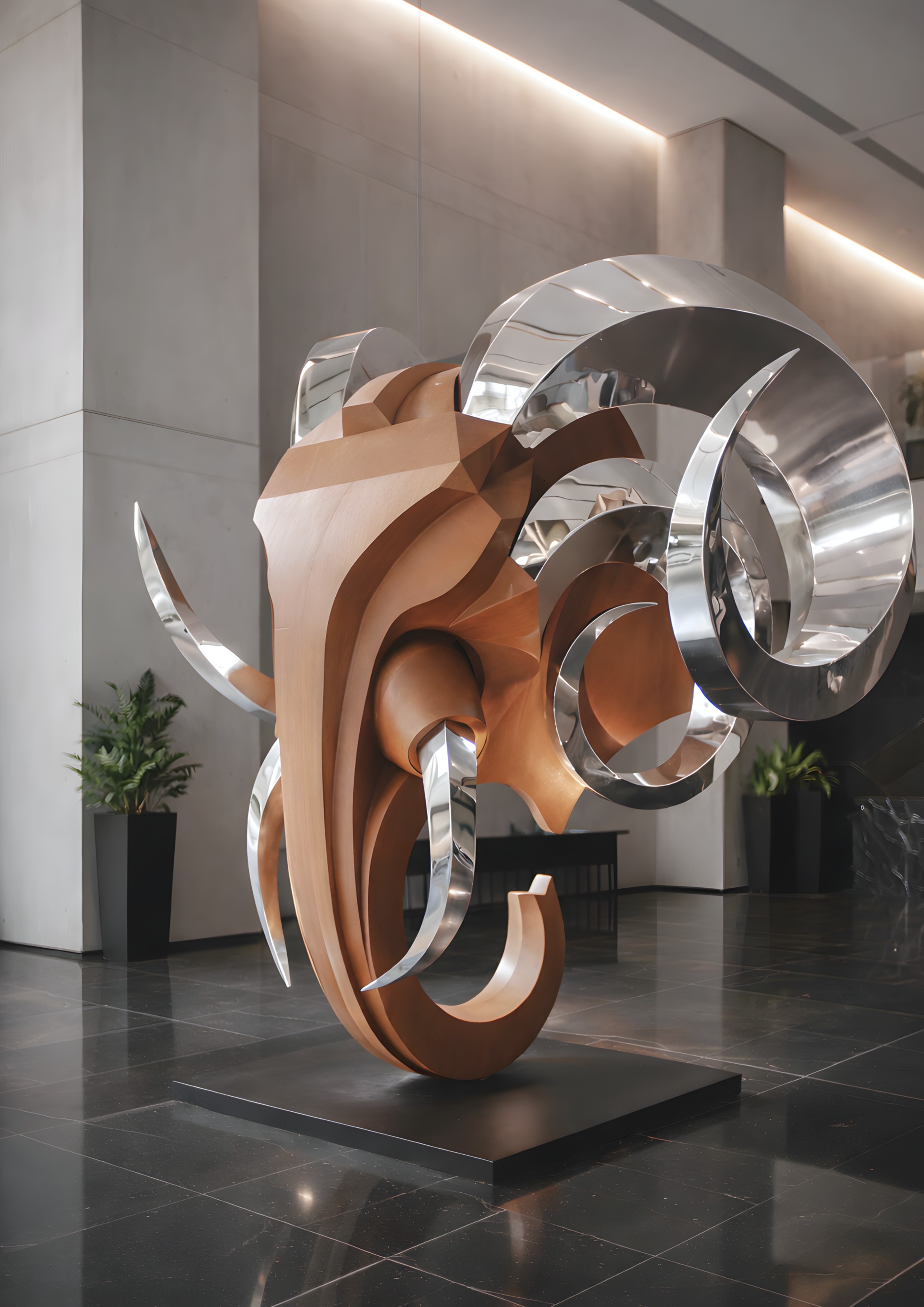
Metal Sculptors in India: How Abhinav Goyal & FormForge Are Redefining Architectural Metal Sculpture
Discover how FormForge, led by metal sculptor Abhinav Goyal, creates bespoke corten steel, stainless steel, and mixed-metal sculptures for luxury residences, commercial spaces, and public art installations across India.