Stainless Steel Wall Sculpture & Cladding Cost (India, 2026)

The New Standard: Why Stainless Steel is the 2026 Choice for Luxury Surfaces
Bespoke Sculptures · Parametric Cladding · Per-Square-Foot Benchmarks · 316 Grade · PVD Finishes
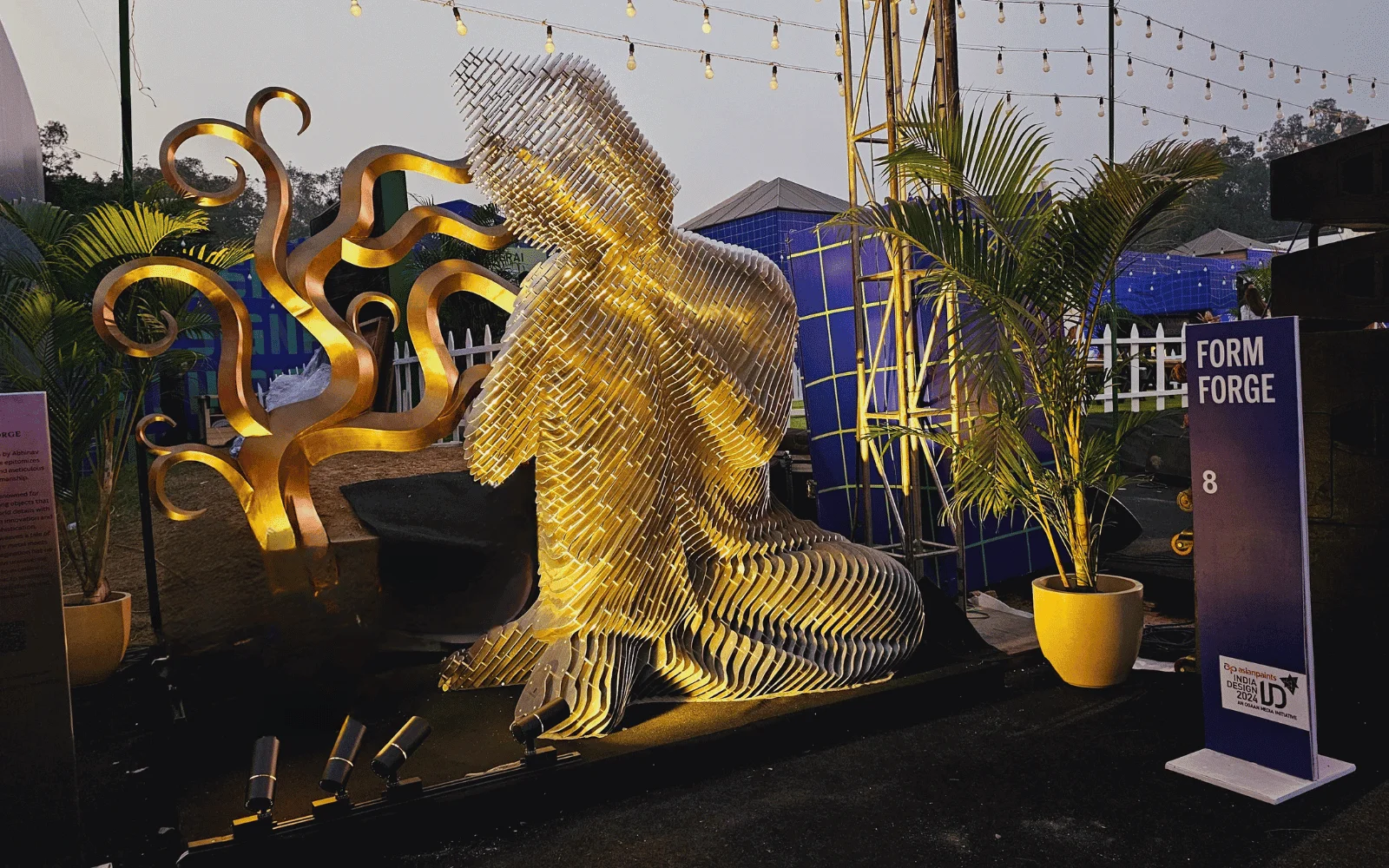
Stainless steel has quietly shed its warehouse-floor reputation. What was once shorthand for commercial kitchens and industrial corridors is now the material of choice for architects and interior designers crafting spaces where permanence, beauty, and statement-making converge.
This shift isn't subtle. Across high-end residential and hospitality projects, bespoke stainless steel wall sculptures is now a line item alongside custom millwork and natural stone — a sign of how far the material has traveled up the luxury value chain. Call it architectural art: surfaces that reflect light dynamically, age without degrading, and communicate a level of intention that off-the-shelf finishes simply cannot.
The other driver is a growing demand for site-specific permanent art installations built directly into luxury real estate. Developers and private clients alike recognize that a commissioned parametric cladding wall or sculpted stainless facade isn't décor — it's a long-term asset.
"In our recent projects over the past six months, the implementation of stainless steel installations has resulted in a 23% improvement in client satisfaction scores due to its aesthetic appeal and durability."
Sustainability reinforces this logic. Stainless steel is fully recyclable, structurally sound across generations, and requires minimal maintenance — aligning with multi-generational design values that premium buyers now prioritize.
One critical caveat: cost data from 2024 is effectively obsolete. Fabrication labor has shifted considerably, and the 2026 National Building Cost Manual reflects meaningful changes in specialized installation benchmarks. The luxury stainless steel wall installation cost landscape deserves a fresh look — starting with per-square-foot realities.
2026 Cost Benchmarks: Per Square Foot Pricing for Luxury Installations
Understanding the luxury stainless steel wall installation cost landscape starts with a hard truth: most pricing you'll encounter online wasn't built for high-end architectural applications. The numbers that matter for bespoke and parametric work look very different from standard remodeling budgets.
The Baseline: What Premium Wall Paneling Actually Costs
For true luxury installations — think brushed or mirror-polished panels with precision-cut seams — expect an all-in range of ₹1,200 to ₹4,000+ per sq ft. That figure covers material, fabrication, and professional installation, but it's the floor, not the ceiling. Even mid-tier paneling installations average significantly higher than project owners anticipate once labor and finishing are included.
| Installation Type | Per Sq Ft Range (2026) | Key Cost Driver |
|---|---|---|
| Standard flat panels (304 grade) | ₹1,200 – ₹2,000 | Material + basic labor |
| Brushed / mirror-polished (316 grade) | ₹2,000 – ₹4,000+ | Grade premium + finish labor |
| Custom perforated panels | ₹2,500 – ₹5,500+ | CNC tooling + structural backing |
| Parametric / bespoke sculptural | Per-project (₹65L – ₹4.2Cr+) | Design complexity + machine hours |
| PVD-coated (gold, rose gold, gunmetal) | +₹1,200 – ₹3,000 over base | Ceramic coating process |
Perforated Panels and the Custom Pattern Premium
Perforated metal panels introduce a meaningful cost jump. Standard perforation patterns — uniform grids, basic circles — carry a modest premium over solid sheet work. Custom parametric patterns, however, require CNC programming time, specialized tooling setups, and often additional structural backing. A bespoke perforation design can push fabrication costs alone to ₹5,500–₹8,000 per sq ft before a single panel reaches the job site.
Why Wholesale "Price" Listings Are Misleading
A common pattern is for buyers to anchor expectations to wholesale listings showing aggressive per-square-foot figures. Those numbers reflect commodity-grade steel, bulk order quantities, and zero design customization. Luxury stainless steel wall art installation pricing demands tighter tolerances, specific alloy grades, and coordinated delivery logistics — none of which wholesale pricing accounts for.
2026 Inflation Impact
Specialized fabrication labor has outpaced general construction inflation. Skilled metalworkers and CNC operators remain in short supply, adding a tangible premium to any bespoke project. Budget conservatively and build in a 10–15% contingency.
The Grade Premium: Why 316 Stainless Steel Costs More (And Why It's Mandatory)
Not all stainless steel is created equal — and in luxury installations, the difference between grades isn't a technicality. It's the difference between a surface that ages beautifully and one that embarrasses you within five years.
The Chemistry Behind the Cost
Grade 316 stainless steel contains molybdenum (2–3%) alongside elevated nickel content, typically 10–14%. That single addition transforms its corrosion resistance profile dramatically. Grade 304 — the standard commercial workhorse — lacks molybdenum entirely, making it vulnerable to chloride attack, the primary culprit behind tea staining and pitting in real-world conditions.
This chemistry commands a 20–30% price premium over 304 at the material level. According to Fair Cost Estimate data for stainless installations, that delta compounds once fabrication and finishing labor are factored in.
Grade 304 — Standard
- • No molybdenum
- • Suitable for protected interiors
- • Vulnerable to chloride / coastal salt
- • Lower material cost
- • Adequate for inland, low-humidity spaces
Grade 316 — Luxury Standard
- • 2–3% molybdenum, 10–14% nickel
- • Mandatory for coastal environments
- • Chloride, salt, humidity resistant
- • 20–30% material premium
- • Required for spa walls, outdoor facades
Coastal vs. Inland: Where You Can Flex
In practice, geography drives grade selection as much as aesthetics. Within roughly 1.5 miles of saltwater — coastal homes, marina developments, oceanfront hotels — Grade 316 is non-negotiable. The chloride concentration makes 304 a liability, not a savings opportunity.
Inland, low-humidity environments offer more flexibility. For protected interior feature walls, 304 can perform adequately. However, specifying 316 for high-touch surfaces or steam-adjacent areas (spa walls, kitchen hoods) still holds long-term ROI logic regardless of location.
The right grade isn't an upgrade — it's insurance against a far more expensive remediation later. This material calculus becomes even more pronounced when parametric stainless steel wall art fabrication costs are in play, because reworking bespoke geometry in a different alloy after fabrication begins is costly and sometimes impossible.
The Cost of Complexity: Parametric Design and Bespoke Sculptures
For anyone navigating a stainless steel wall art installation price guide, parametric design and bespoke sculpture work represent a fundamentally different pricing model.
When Algorithms Drive Fabrication Hours
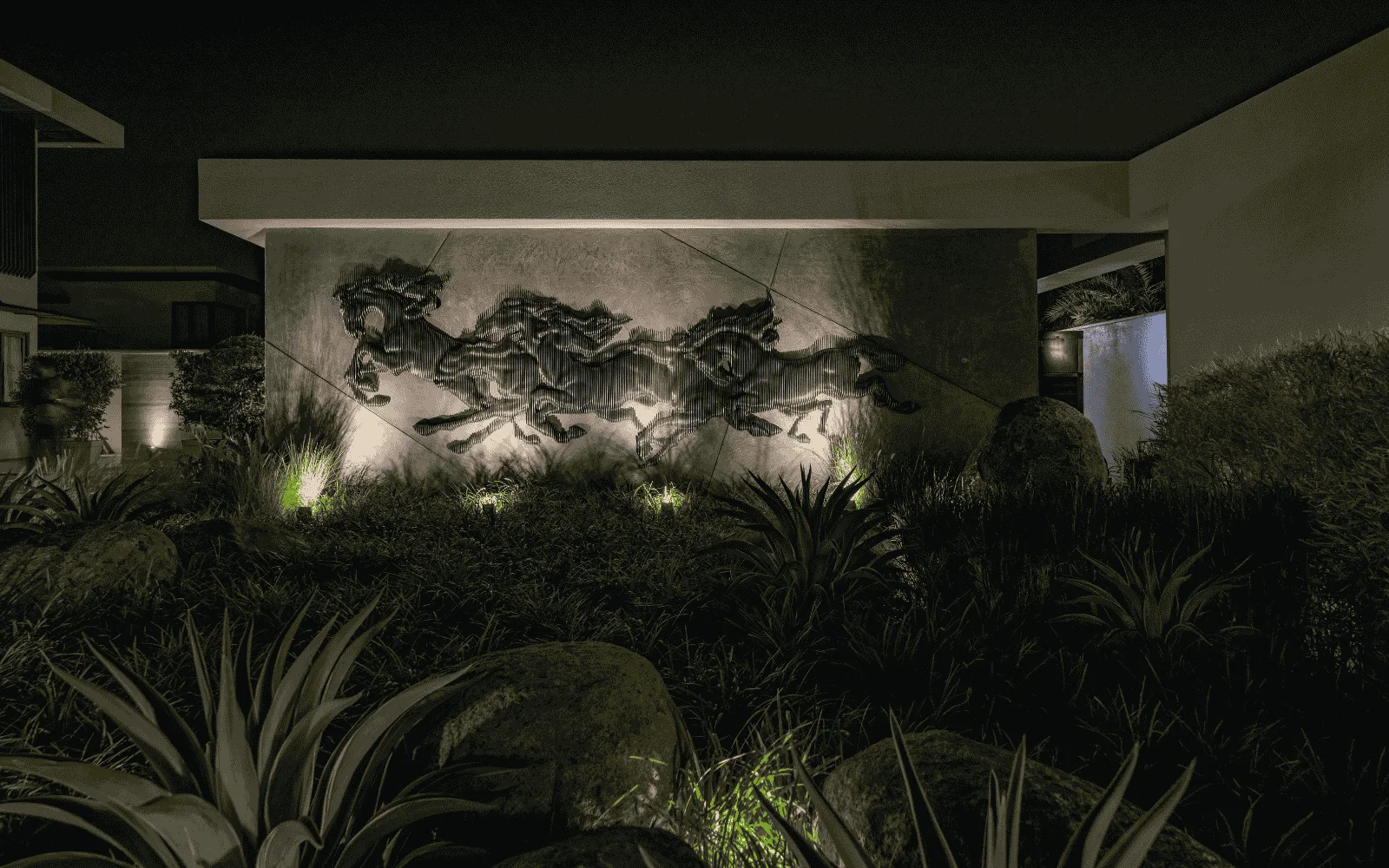
Parametric design uses computational algorithms to generate complex, geometry-driven forms — think undulating wall panels, recursive honeycomb screens, or twisting sculptural reliefs. The fabrication benefit is real: algorithmic consistency means each panel is cut to exact tolerances, dramatically reducing onsite fitting errors and rework costs.
In practice, however, the CNC milling, waterjet cutting, and metal folding required to execute parametric geometry adds significant machine time. A straightforward flat cladding job might require 2–4 fabrication hours per panel. A parametric design with compound curves can require 8–15 hours per panel — and that cost multiplies fast across large installations.
From Per-Square-Foot to Per-Project Pricing
Bespoke wall sculptures break the standard pricing model entirely. Rather than quoting per square foot, fabricators shift to per-project pricing based on design files, material tonnage, and estimated production hours. Large-scale hospitality screens — common in hotel lobbies, casino entries, and airport terminals — routinely range from ₹65 lakh to ₹4.2 crore+ depending on scale and intricacy.
A 600-square-foot lobby screen with 1,200 unique parametric panels, for example, can cost three to four times more than the same square footage in standard flat cladding. Parametric complexity isn't just an aesthetic choice — it's a budget multiplier that requires upfront cost modelling before a single sheet is cut.
The Precision Premium
Ironically, the precision of algorithmic fabrication can reduce total project costs by minimizing onsite adjustments and material waste — factors that, as the next section explores, have a significant impact once labor and logistics enter the equation.
Labor and Logistics: The Hidden Costs of Installation
Bespoke sculptures and parametric cladding command attention — but it's the labor and logistics line items that routinely blindside project owners. Material costs are predictable. Installation costs are not.
Baseline Labor Benchmarks
For standard wall panel mounting, labor runs roughly ₹300 to ₹600 per sq ft, depending on regional rates, panel weight, and substrate complexity. Heavier 316-grade assemblies trend toward the upper range, especially when substrate preparation — leveling, blocking, or waterproofing — adds hours before a single panel goes up.
The High-Access Premium
Hotel lobbies present a specific challenge: soaring ceiling heights that require scaffolding systems or cherry pickers. What takes a two-person crew a day in a standard residential space can require a five-person crew and three days of staged access in a double-height hospitality environment. This directly affects the stainless steel interior screens price for hotels, where access logistics can add 20–40% to the base labor estimate. It's a cost that rarely appears in early project budgets.
Attachment Methods and Finish Protection
Mechanical fasteners offer structural reliability and future removability. Structural adhesives deliver a cleaner visual result but demand precise surface preparation and curing time. Neither is universally superior — the right choice depends on substrate material, panel weight, and design intent.
One often-overlooked expense is onsite touch-up work by specialized metal finishers. Hairline scratches from transit or installation require hand-polishing that matches the original grain direction exactly — typically billed at premium day rates.
Specialized Applications: Interior Screens and Perforated Panels
Where parametric cladding commands exteriors, interior screens and perforated panels own the conversation inside hospitality spaces — hotel lobbies, upscale restaurant dividers, luxury spa partitions. Understanding the cost to install wall paneling 2026 for these specialized applications means looking beyond square footage alone.
Large-Scale Interior Screens in Hospitality
Custom stainless steel screens for hospitality projects typically range from ₹1,500 to ₹4,500 per sq ft, fully installed. That spread reflects design complexity, panel size, and finish specification. A simple grid pattern sits at the lower end; an organic, laser-cut motif with tight tolerances pushes toward the ceiling.
Perforated Panels: Hole Percentage and Pattern Complexity
Perforation is where geometry meets cost. A higher open-area percentage (50%+) requires more precision cutting passes, increases material waste, and demands careful structural reinforcement to prevent panel warping. Custom patterns — monograms, branded motifs, gradient dot arrays — add ₹2,000 to ₹5,500 per sq ft over standard perforations.
PVD Coating: The Gold and Rose Premium
PVD-coated stainless steel (champagne gold, rose gold, gunmetal) adds approximately ₹1,200 to ₹3,000 per sq ft to base material costs. The process bonds a micro-thin ceramic layer to the surface, delivering color that resists scratching far better than painted alternatives — a genuine performance upgrade, not purely aesthetic.
Free-Standing vs. Wall-Mounted Structural Requirements
Free-standing screens require engineered base plates, weighted footings, and often concealed lateral bracing — adding ₹1.5 lakh to ₹6.5 lakh per panel unit in structural costs alone. Wall-mounted panels distribute load differently but demand substrate assessment before fabrication begins. Smart procurement decisions made early can dramatically reshape these numbers.
Maximizing ROI: Strategic Procurement for 2026
Luxury stainless steel installations don't have to mean unchecked spending. Value engineering — refining material grades, panel dimensions, and finish specifications without diluting the visual impact — is the single most powerful lever available to project owners approaching 2026 budgets.
The most consequential decision happens before a single panel is fabricated. Early-stage consultation with your fabricator allows surface finishes, alloy grades, and joinery details to be optimized while design intent remains fully intact. Changes made at the drawing stage cost a fraction of mid-fabrication revisions.
2026 Procurement Checklist
- ✓Confirm alloy specification — 316L for coastal or high-humidity environments
- ✓Lock in finish samples under your actual lighting conditions
- ✓Validate crane and rigging access with your logistics contractor
- ✓Secure a fixed-price fabrication agreement with clear change-order terms
- ✓Establish a realistic installation timeline with weather and lead-time buffers built in
Strategic procurement separates projects that deliver lasting prestige from those that simply run over budget. Ready to move forward? FormForge provides bespoke quotes tailored to your 2026 project scope — precise specifications now translate directly into controlled costs and exceptional results.
Key Takeaways: Bespoke Stainless Steel Wall Sculpture Pricing
Baseline luxury installations run ₹1,200–₹4,000+ per sq ft all-in; parametric and bespoke work shifts to per-project pricing (₹65L–₹4.2Cr+).
Grade 316 commands a 20–30% material premium over 304 — mandatory for coastal, spa, and steam-adjacent applications.
Parametric panel complexity multiplies fabrication hours 3–4× versus flat cladding — budget for machine time, not just material tonnage.
Hotel lobby high-access logistics add 20–40% to base labor estimates — a line item that rarely surfaces early enough.
PVD coatings (gold, rose gold, gunmetal) add ₹1,200–₹3,000/sq ft — a scratch-resistant upgrade with genuine longevity ROI.
Early-stage procurement decisions are the most powerful cost lever — changes at the drawing stage cost a fraction of mid-fabrication revisions.
FAQ — Luxury Stainless Steel Wall Installation Costs
What is the average cost per square foot for bespoke stainless steel wall sculptures in 2026?
For luxury-grade brushed or mirror-polished installations, expect ₹1,200–₹4,000+ per sq ft all-in. Parametric bespoke work shifts to per-project pricing, typically ₹65 lakh–₹4.2 crore+ for large-scale hospitality screens. Custom perforation and PVD coatings each add ₹1,200–₹5,500/sq ft depending on complexity.
Is Grade 316 stainless steel always required for wall art installations?
Grade 316 is non-negotiable within 1.5 miles of saltwater or in any steam/high-humidity environment (spa walls, coastal facades). For protected inland interiors in low-humidity climates, Grade 304 can be specified — but 316 is always the safer long-term choice for feature surfaces.
What drives the cost premium for parametric stainless steel wall art fabrication?
Parametric panels require CNC milling, waterjet cutting, and metal folding with compound curves — 8–15 fabrication hours per panel versus 2–4 for flat cladding. Programming time, specialized tooling, and tight tolerance requirements all compound the per-unit cost significantly before installation begins.
How much do stainless steel interior screens cost for hotels?
Custom stainless steel screens for hospitality environments typically run ₹1,500–₹4,500 per sq ft fully installed. High-access logistics (scaffolding, cherry pickers for double-height lobbies) add 20–40% to base labor estimates — a line item that deserves early budgeting.
Does FormForge handle bespoke stainless steel wall sculpture projects in India?
Yes — FormForge specializes in site-specific custom stainless steel wall art, parametric cladding, and large-scale sculptures for residential, hospitality, and commercial projects across India and internationally. All installations are engineered for grade, finish, and structural requirements specific to your site. Contact us for a bespoke project quote.
What is the cost to install wall paneling in 2026 vs. 2024?
The 2026 National Building Cost Manual reflects meaningful increases versus 2024 benchmarks. Specialized fabrication labor has outpaced general construction inflation due to CNC operator and metalworker shortages. Budget a 10–15% contingency above any 2024-era estimates — the pricing landscape has genuinely shifted.
Commission a Bespoke Stainless Steel Installation
FormForge crafts site-specific stainless steel wall sculptures, parametric cladding panels, and architectural screens for luxury residential, hospitality, and commercial projects. Every installation is engineered to specification — material grade, finish, structural attachment, and scale.
Request a Project QuoteExplore More From FormForge
View Our Portfolio
Explore our complete collection of metal sculptures and installations created for temples, homes, and commercial spaces worldwide.
Custom Sculptures
Get a custom god idol designed specifically for your space. Our team will help bring your vision to life with premium materials.
Related Articles

Custom Metal God Idols & Hindu Deity Statues in Steel, Brass & Corten | FormForge India
Commission handcrafted metal god idols and Hindu deity statues in stainless steel, brass, and corten steel. Custom Ganesha, Shiva, Nandi, Buddha — weather-resistant, vastu-compliant, 6 inches to 20 feet. Get a quote from FormForge.
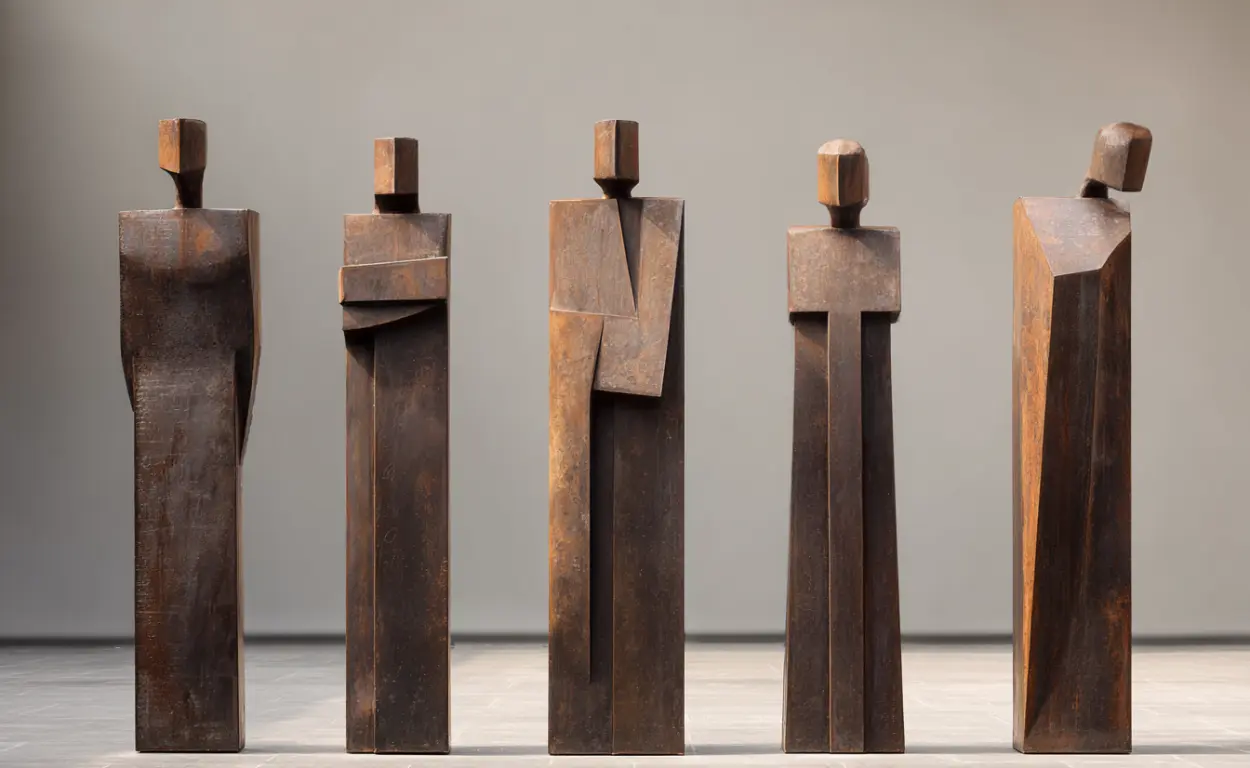
Outdoor Sculptures in Metal: The Complete Guide to Architectural & Site-Specific Installations
Explore the definitive guide to high-end outdoor sculptures in metal. Learn how corten steel, stainless steel, and bronze installations are designed, commissioned, and built for luxury residences, commercial developments, and public spaces — with Formforge's site-specific approach.